
Engineered wood has a real oak top layer on a stable core, so it looks, feels and ages like timber. Laminate has a high quality photo of wood under a tough coating, so it costs less and shrugs off scratches, but the wood look is a printed layer. Choose engineered if you want the real thing, laminate if you want a hard-wearing wood look on a tighter budget, and neither for a kitchen or bathroom.
Both are fitted by our own team, and Russell is happy to put them side by side in the showroom. Here is how they compare.
What each one is
Engineered wood is several layers of real timber glued together under high pressure, with the layers running in different directions. That makes an extremely stable board. The top layer is real oak, so every board has its own grain and colour, just like solid wood.
Laminate has a decorative layer, a high quality photo of wood printed on paper, soaked in melamine resin and covered with a protective coating. That layer is bonded to a moisture-resistant high density fibre board, known as HDF. It clicks together as a floating floor.
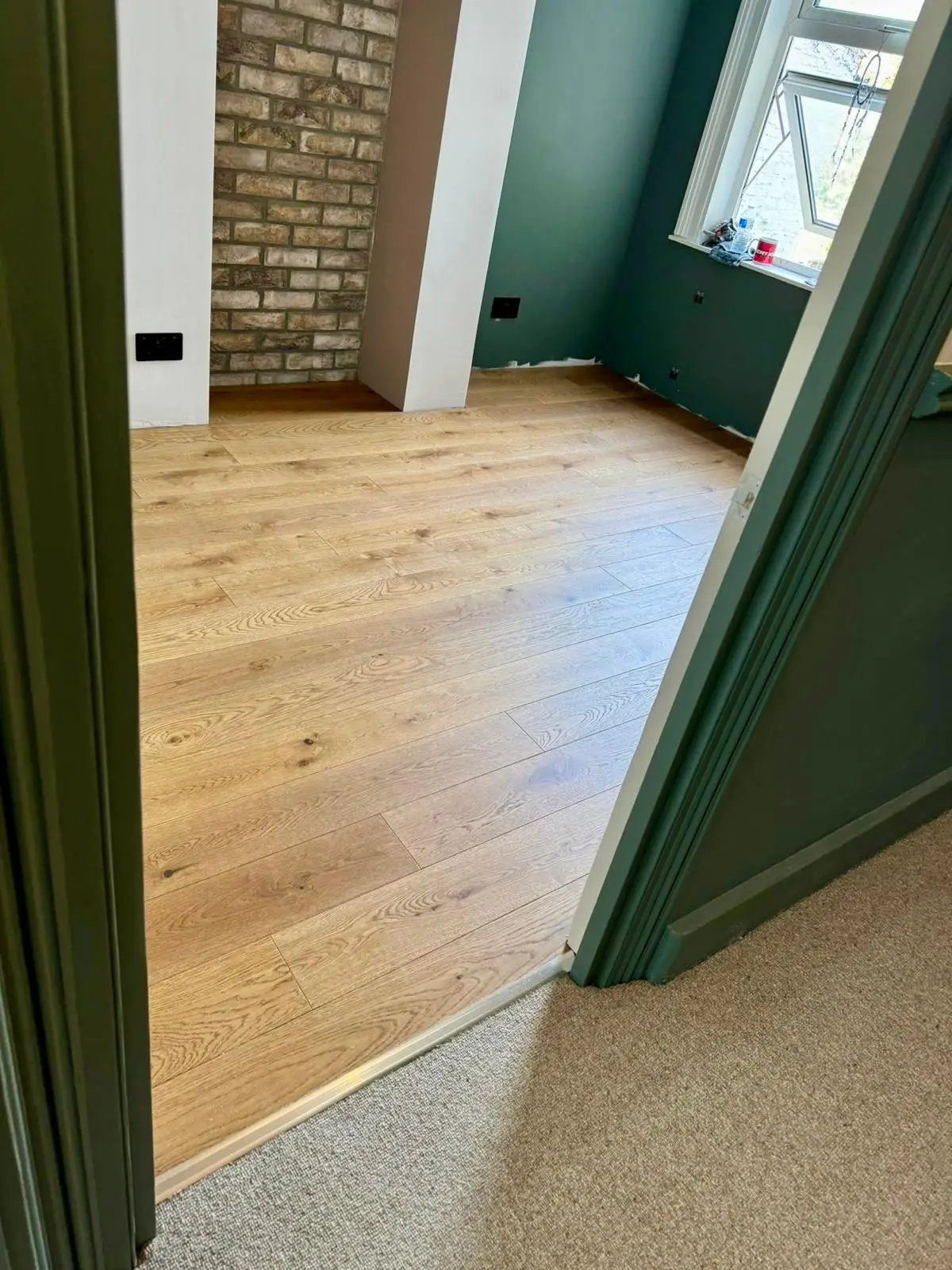
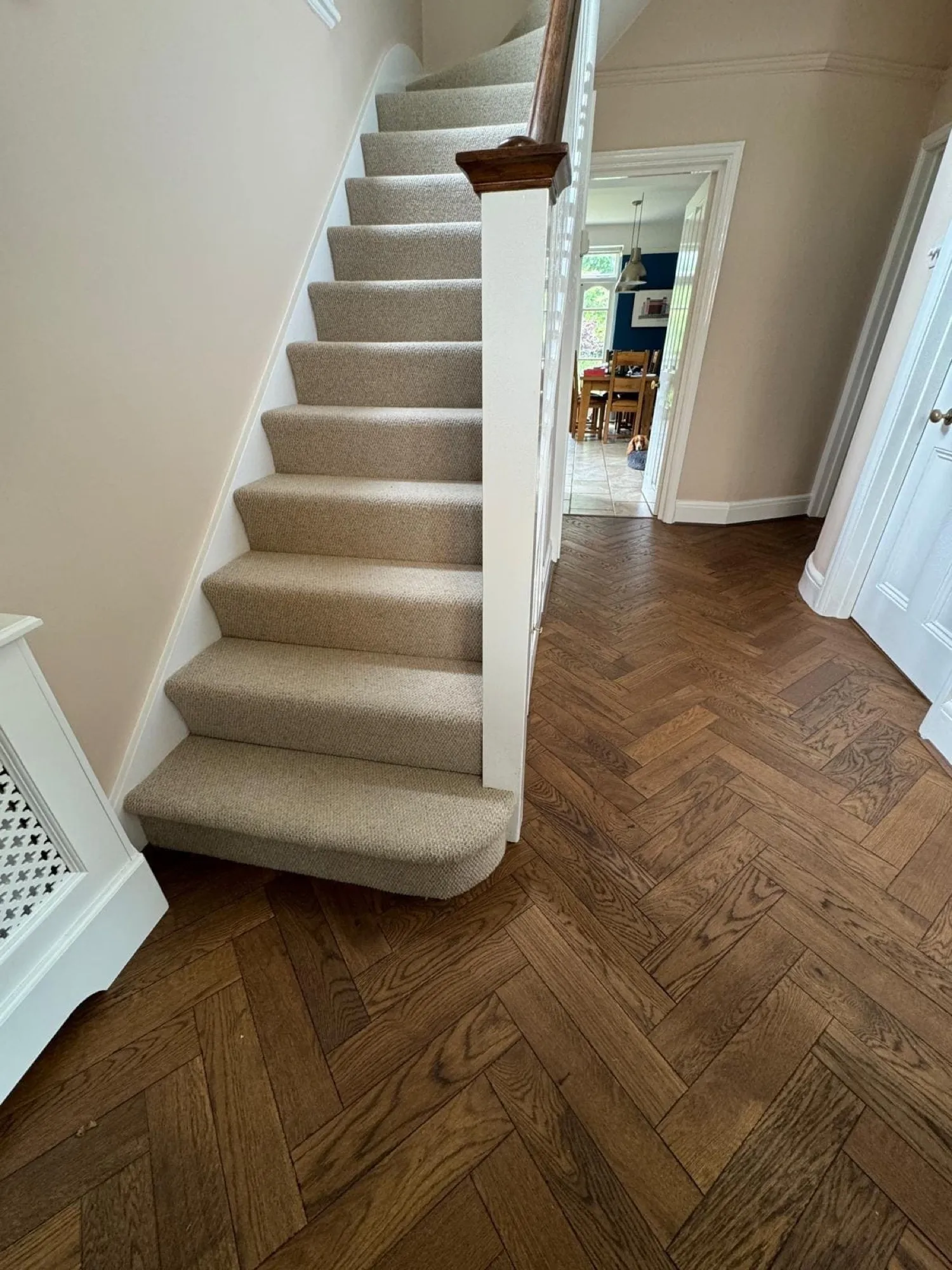
Furlong Next Step engineered oak in Nutmeg, 150mm wide stained oak boards. See the job, Ref 13119
Look and feel
Real wood acts like a piece of furniture. It darkens with age, and every piece is unique. Engineered boards come in lacquered, brushed, oiled and matt finishes, and in shades from pale natural oak to smoked and stained. The Furlong Next Step Long floor at the top of this page is an 18mm engineered oak with a brushed, UV oiled finish, and the Nutmeg floor above is a stained oak. See the Next Step Long job, Ref 13059.
Laminate can look very convincing, especially across a room, but it does not age or change colour the way timber does. For some rooms that does not matter at all. For a living room you want to feel like an old house, it might.
Scratches, dents and repair
This is where the two differ most.
Laminate is highly resistant to scratches and stains, and it is quick to live with: no oiling and no sanding. The flip side is that the wood look is a printed layer, so it cannot be sanded back. If a board is badly damaged, it has to be replaced.
Engineered wood can scratch, as all real wood can, but it is easily repaired. Mats at the doors and felt pads under chair legs prevent most marks, and a brushed or textured finish disguises the rest. Depending on the thickness of the top layer, an engineered board can often be sanded and refinished, so it can last for many years. Our hardwood care guide explains how to look after it.
Kitchens, bathrooms and anywhere wet
Neither is our choice for a kitchen, bathroom or utility room. Anything made with wood expands when it gets wet, and the floor can be ruined beyond repair. Laminate is not fully waterproof either.
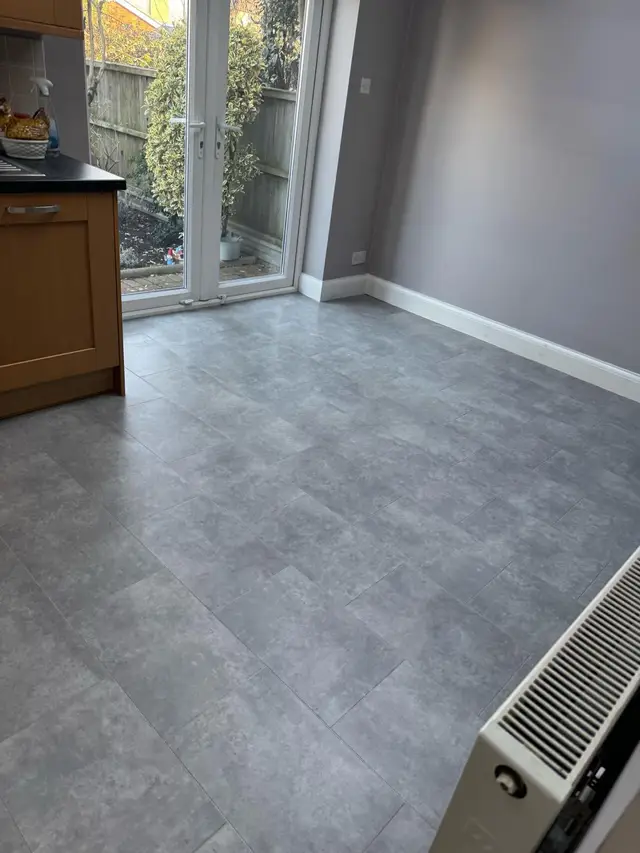
For those rooms we suggest Amtico, which looks like wood but can go in bathrooms, kitchens and anywhere else in the home. You can have wood or laminate in the living rooms and Amtico in the kitchen, with the colours chosen to work together.
Underlay and noise
Above a ground floor, any wood or laminate floor needs extra soundproofing, so the people below do not hear every footstep. On a ground floor in good condition, a basic underlay is fine. There are options for every budget, and we will recommend the right one for your room when we measure. Engineered boards can also be laid as a floating floor where there is no suitable subfloor, which makes them a good fit for flats.
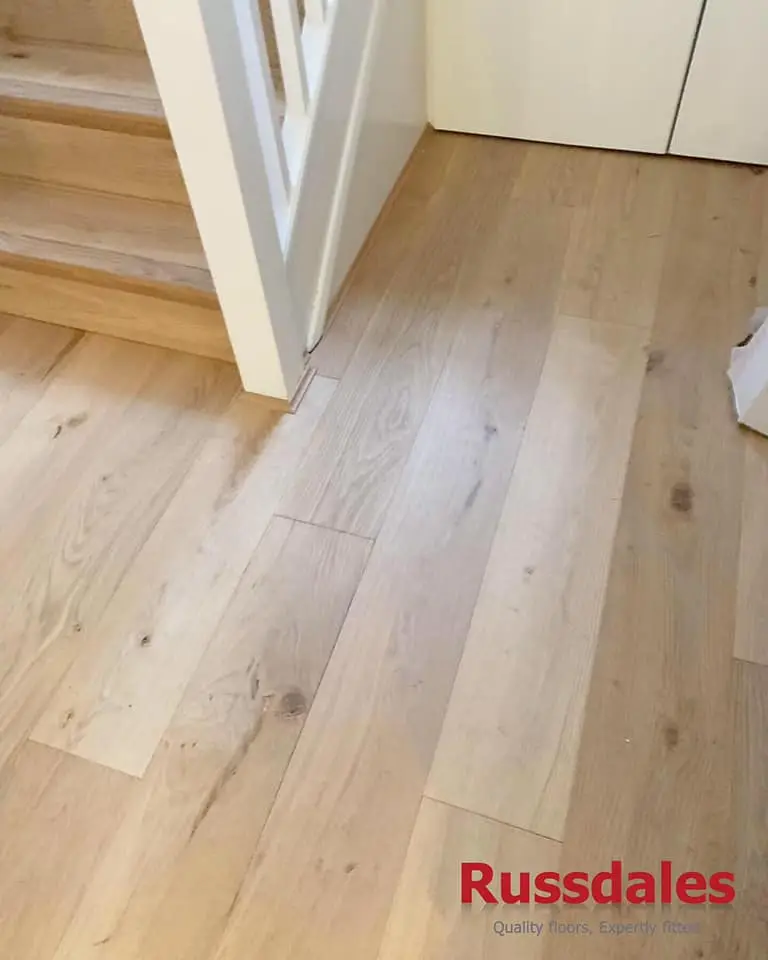
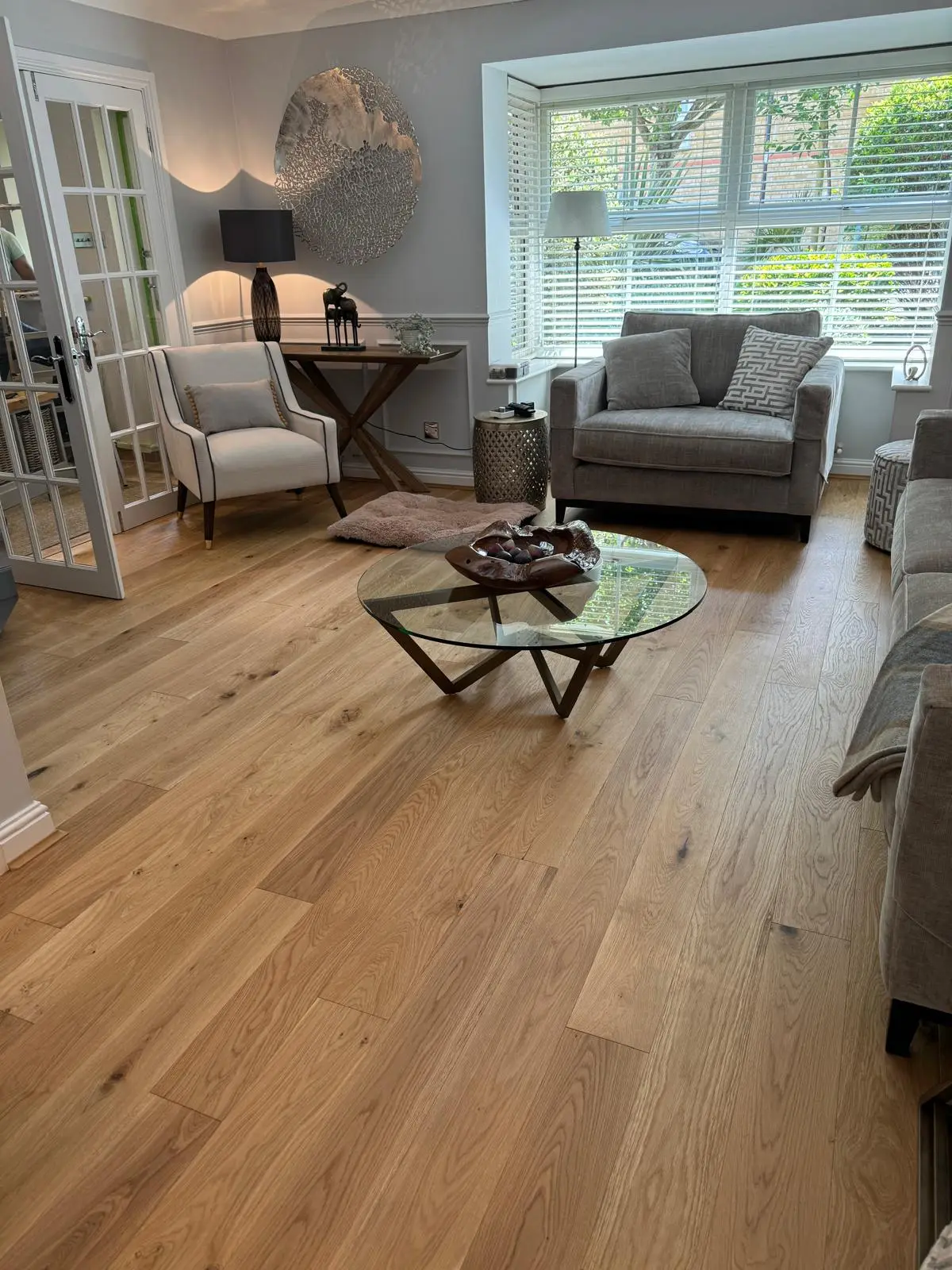
An engineered oak floor fitted by our team. Real oak on top, a stable core beneath. See the job
Price
We don’t publish a price per square metre for wood or laminate, because it depends so much on the range and the room. As a rule, laminate is the more cost-effective way to get a wood look, and engineered oak costs more because the top layer is real timber. Your written quote will set out the flooring, underlay and fitting. If you find the identical floor cheaper at another local shop, bring us their written quotation and our Price Match Guarantee means we will match or beat it.
Fitting
Whichever you choose, the floor is only as good as what is under it. We check the subfloor first and level it where needed, so the boards sit flat and tight. At skirtings and doorways we finish with trims and thresholds to suit, so the edges are as neat as the middle of the room.
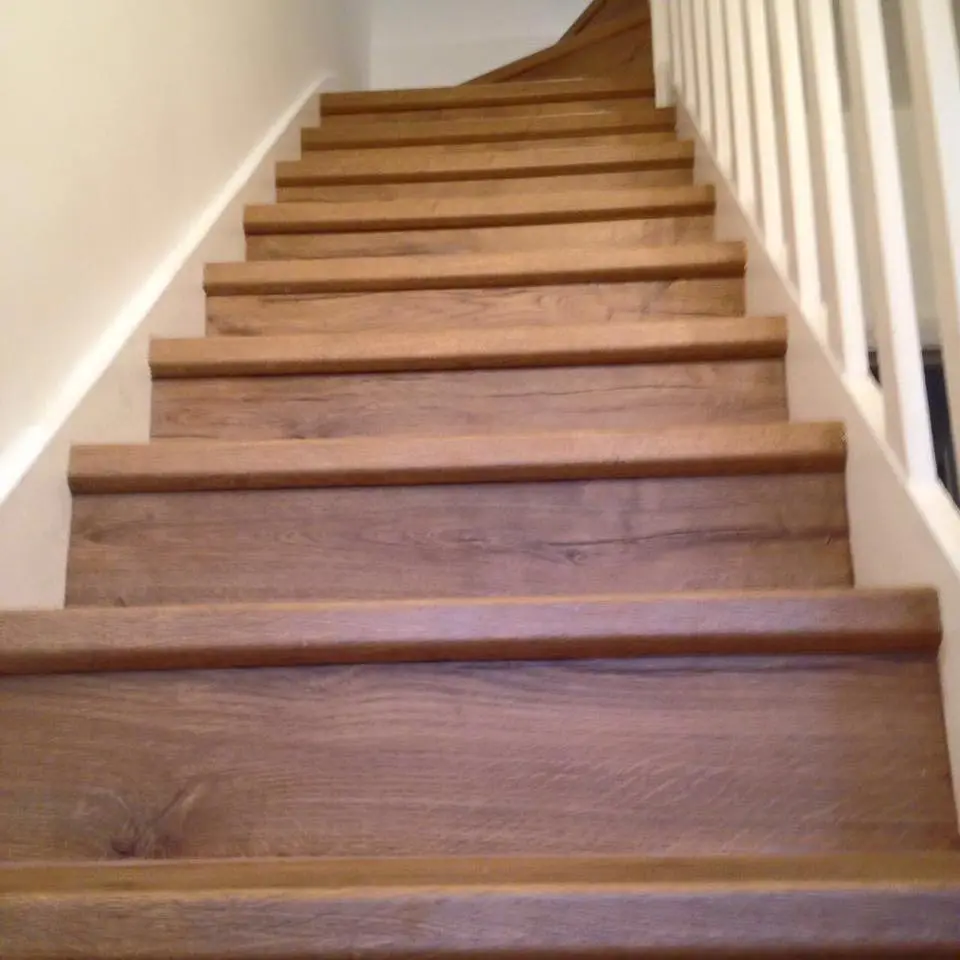
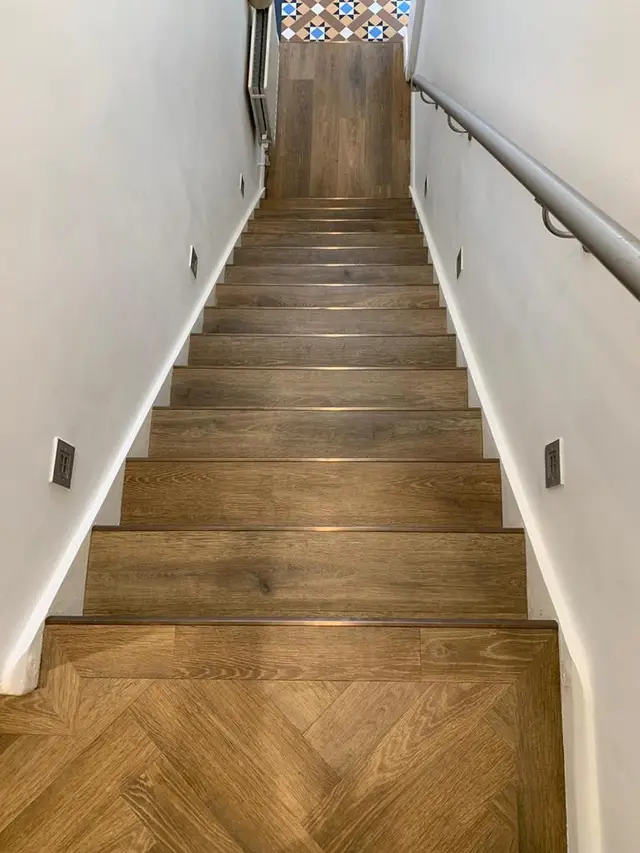
Quick-Step laminate fitted by our team, running up a staircase. See the job
A quick way to decide
- Choose engineered wood if you want real timber that ages well and can often be refinished, in a living room, dining room, hall or bedroom.
- Choose laminate if you want a hard-wearing wood look at a lower cost, in a busy family room or a bedroom.
- Choose Amtico for kitchens, bathrooms and anywhere that gets wet.
For more background, see our older posts on engineered and solid wood and whether laminate is still worth it. We fit Furlong engineered oak and Quick-Step laminate among others.
Compare them with Russell
Seeing real wood and laminate side by side makes the choice much easier. Book a free design consultation with Russell in our showroom at 774 Green Lanes, Winchmore Hill, N21 3RE, and borrow samples to try at home. Book your consultation or call 020 8360 1836.