
Amtico Décor is the part of the Amtico range that does pattern. Victorian star designs, black and white chequerboards and geometric tiles, made in luxury vinyl. It gives you the look of an original tiled hall in a floor that is warmer and quieter underfoot and easy to clean. Each design has its own DC reference, and most can be framed with a border.
We fit a lot of it, mostly in the halls of Victorian and Edwardian houses across North London. Here are the designs we have laid, how the borders work and what it takes to fit a pattern well.
Why Décor suits a period hall
Many of the older houses round here were built with geometric tiled halls. Some still have them. Many more had them lifted, covered or broken up long ago, and the owners want that look back.
Décor recreates it without the drawbacks of real tiles. Ceramic is cold and hard underfoot. Amtico is a vinyl floor, so it feels warmer, it is quieter when people walk on it, and it wipes clean. In a hall, where wet shoes, bikes and buggies all come through the front door, that matters. Our post on hard-wearing hallway floors compares the other options.
The Décor designs we have fitted
These are some of the Décor floors in our portfolio, each with its reference so you can see the photos.
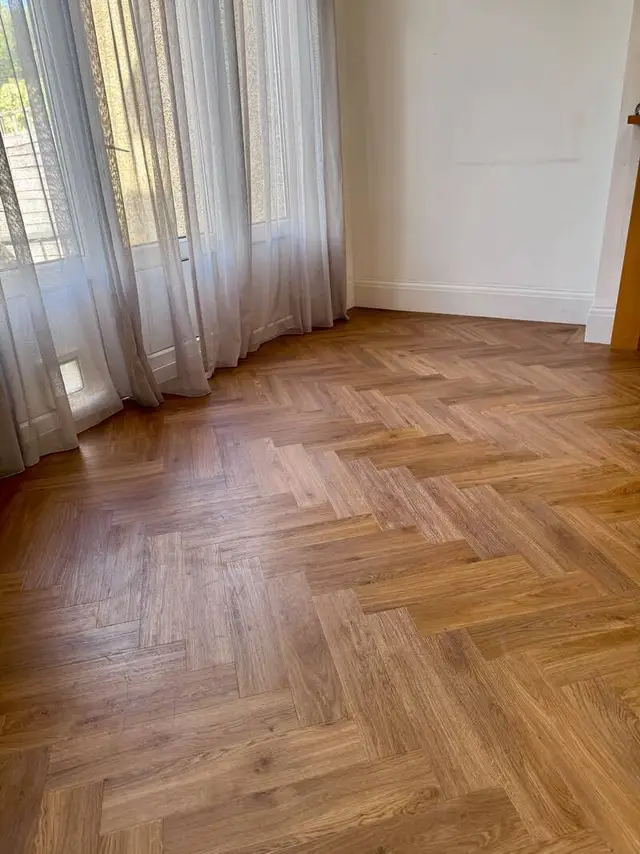
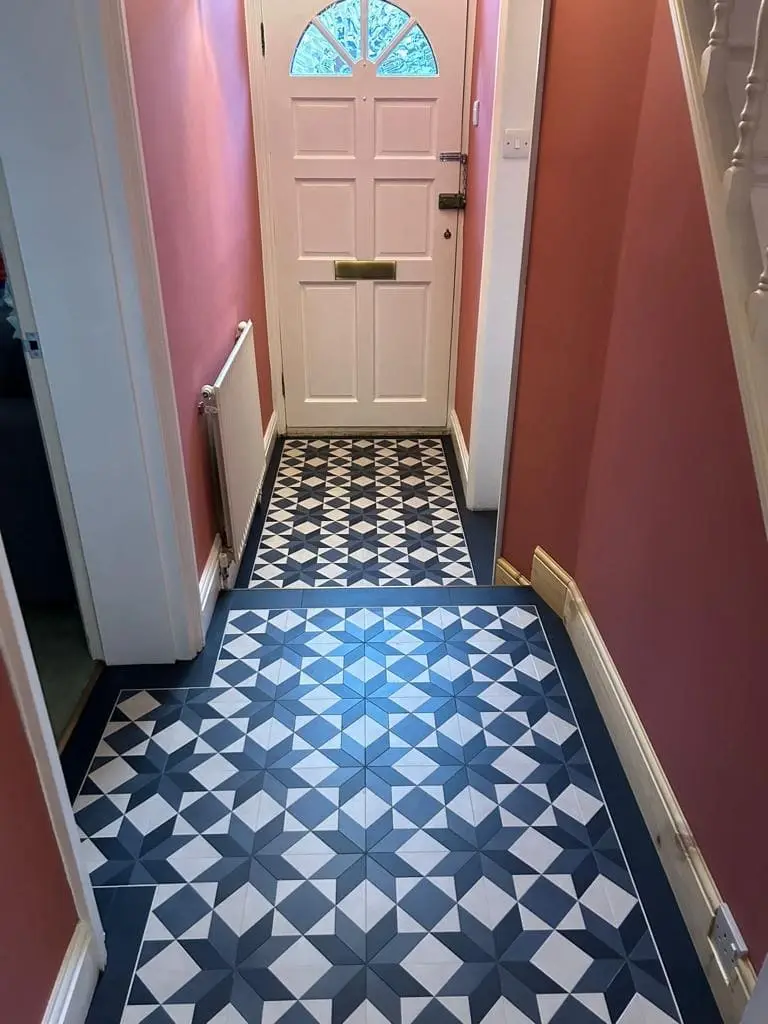
Victorian Star DC495. A star pattern in blue, grey and white. In the hall at the top of this page it is framed with an indigo border and runs through to a living room in Amtico Royal Oak small herringbone, joined with antique brass trims (Ref 12692).
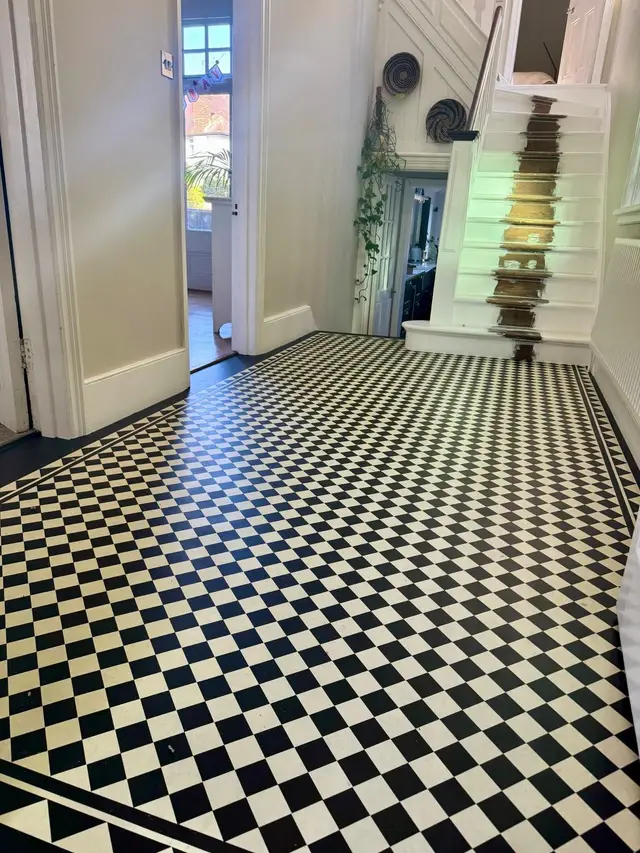
Classic Mono DC257. A black and white geometric design that looks most like an original Victorian hall. We have fitted it with a diamond border (Ref 12895) and with a plain Graphite Slate border in a Winchmore Hill hall (Ref 13212).
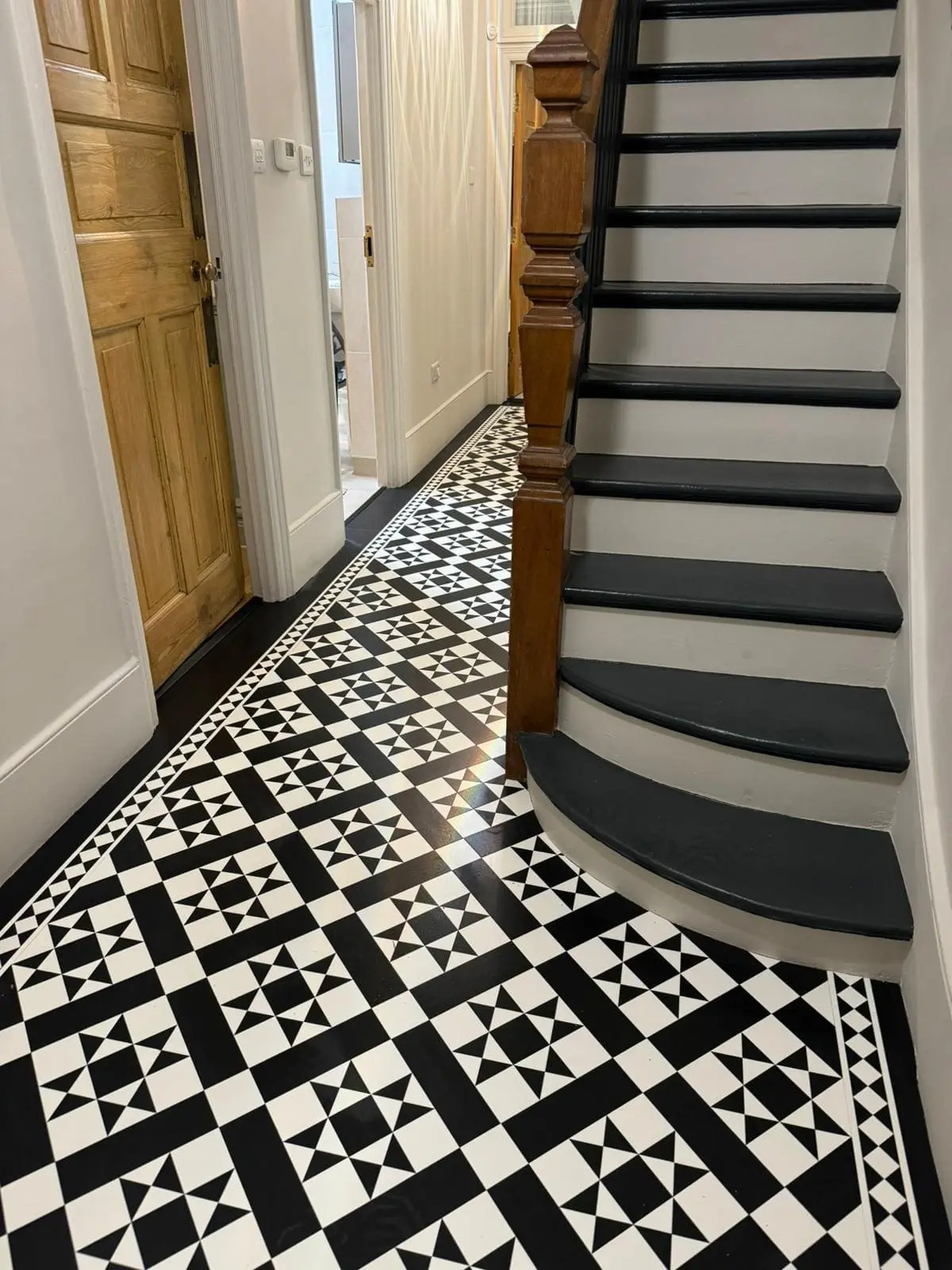 Amtico Décor DC257 in black and white with a diamond border, North London. See the job, Ref 12895
DC485 in graphite and white. Small 4 inch squares laid as a chequerboard, with a slate border round the edge (Ref 12827). Crisp and simple, and it suits a modern house as well as an old one. Our post on black and white floors looks at chequerboards in more depth.
Aquamarine DC486. A softer star design in pale blues and greys. We have fitted it with a diamond border (Ref 12858) and with a charcoal border (Ref 12629).
We have also laid Corona Mono and Corona Sepia, Echo Ink and Goldstone. The Amtico Décor page shows more of them.
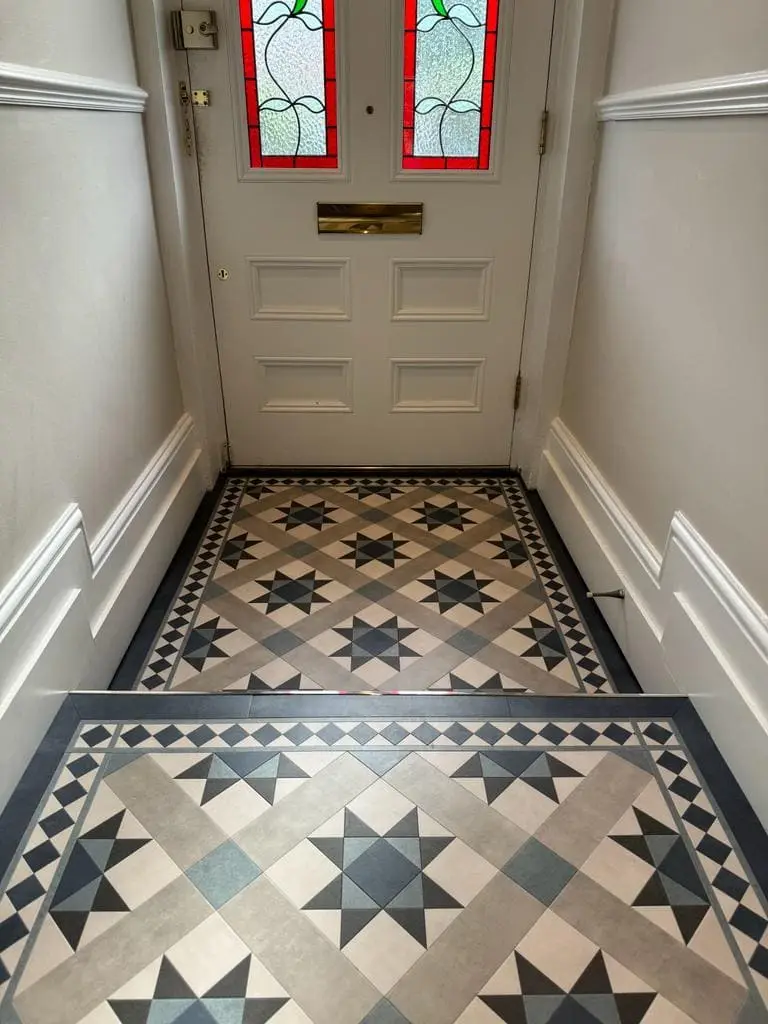 Amtico Décor Aquamarine DC486 with a diamond border, North London. See the job, Ref 12858
Borders: the frame round the picture
A border is what makes a Décor floor look finished. Without one, the pattern can look as if it simply stops at the skirting.
- Diamond borders are the traditional choice. A row of small diamonds frames the pattern, as in the DC257 and Aquamarine halls above.
- Plain borders in a single colour are calmer. Graphite Slate, indigo and charcoal have all worked well.
- Stripping is a thin line, from 3mm, set between the pattern and the border. It gives a sharp edge and can pick up a colour in the design.
Laying the pattern on the diagonal can make a narrow hall feel wider. We explain more about borders and pencil lines in our post on Amtico parquet and borders, and in Amtico border designs explained.
Joining Décor to the rest of the house
Most halls lead somewhere, and Décor works well next to other floors. In Ref 12692 the star pattern meets a wood-look herringbone at the living room door. In Ref 12800 we went the other way and set a panel of Décor Goldstone, with a diamond border, inside a Mulled Oak herringbone kitchen floor.
On the stairs, a runner picks up the colours. In the Winchmore Hill hall below, the Classic Mono stops at the bottom step and a runner carries on up. Our post on Victorian stair runners has ideas for colours, borders and rods.
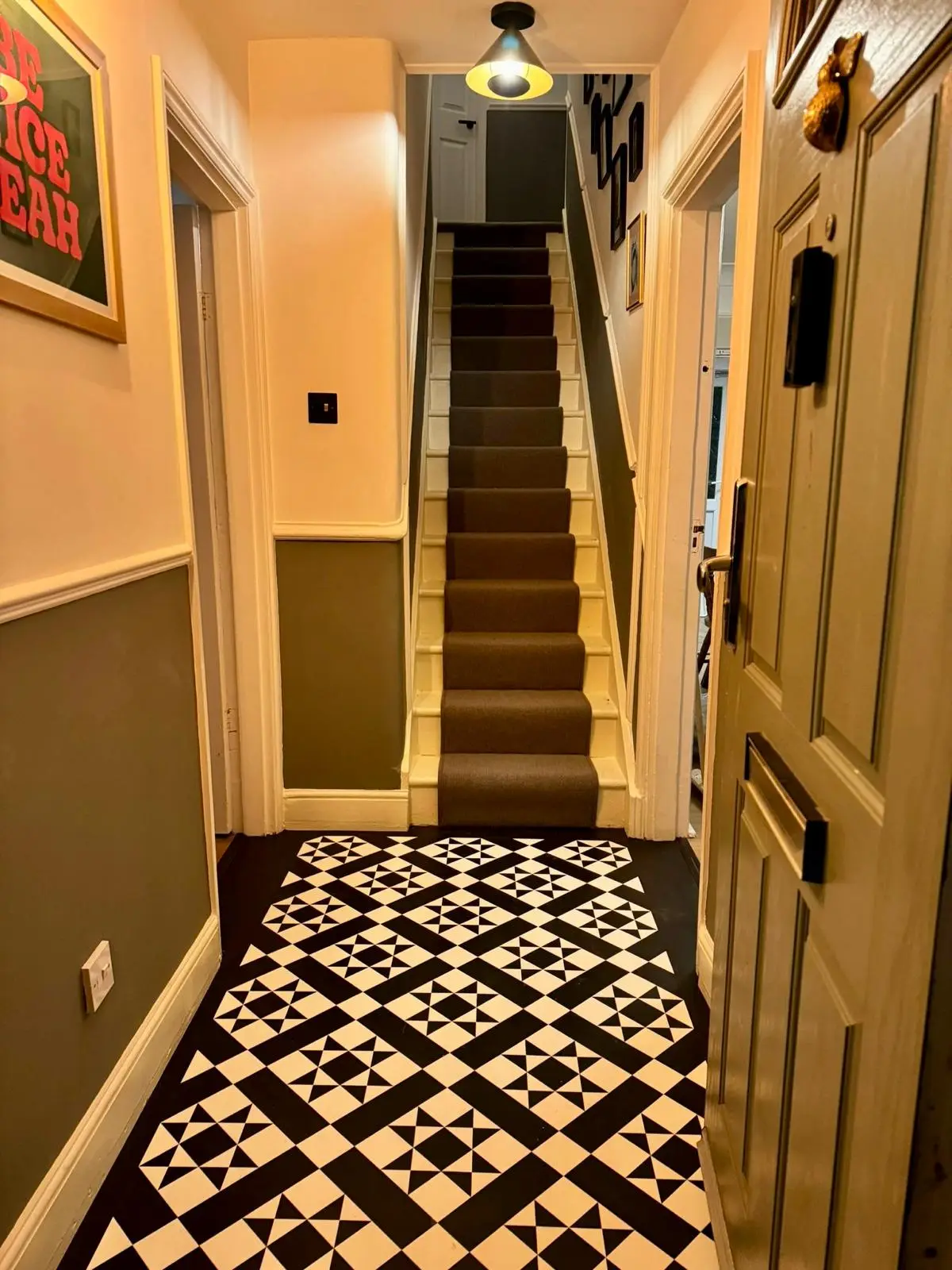 Amtico Décor Classic Mono DC257 with a Graphite Slate border, Winchmore Hill N21. See the job, Ref 13212
Fitting a pattern properly
A pattern shows every mistake. If the design is not centred, or drifts off square down a long hall, everyone will see it. So the setting out matters as much as the cutting. We plan the floor so the design sits centred and square to the room, then cut every piece round the door frames by hand.
Underneath, Amtico needs a very flat base. Concrete is screeded with a smoothing compound about 3mm thick, and timber floors are ply-boarded with the joints filled and sanded. Our post on how we fit Amtico explains each step. Décor can also go over underfloor heating, as long as the floor stays at or below 27°C; see Amtico and underfloor heating.
What it costs
As a guide, Amtico costs from about £30 to £130 per square metre, and fitting from about £30 to £60 per square metre depending on how complex the design is. A border and a diagonal lay both add to the fitting time. We confirm everything in your written quote.
Plan your hall with Russell
Bring a photo of your hall and a rough size, and Russell will talk you through the designs, borders and colours that suit your house. Book a free design consultation in our showroom at 774 Green Lanes, Winchmore Hill. Book a consultation or call 020 8360 1836.