
A Victorian staircase suits a runner that lets the stair show: a border of 100mm to 150mm of painted or stained wood either side, a stripe or flatweave that leads the eye up the flight, and rods in brass or antique brass to finish. If you want a lighter touch than a full rod, Victorian clips sit at each edge of the runner instead.
North London has a great many Victorian and Edwardian houses, and their staircases are some of our favourite work. Here is how we approach them.
Start with the staircase you have
Before choosing a carpet, look at what the house already gives you. Turned spindles, a carved newel post, painted strings and a tiled hall floor are all part of the scheme. A runner should sit with them, not fight them.
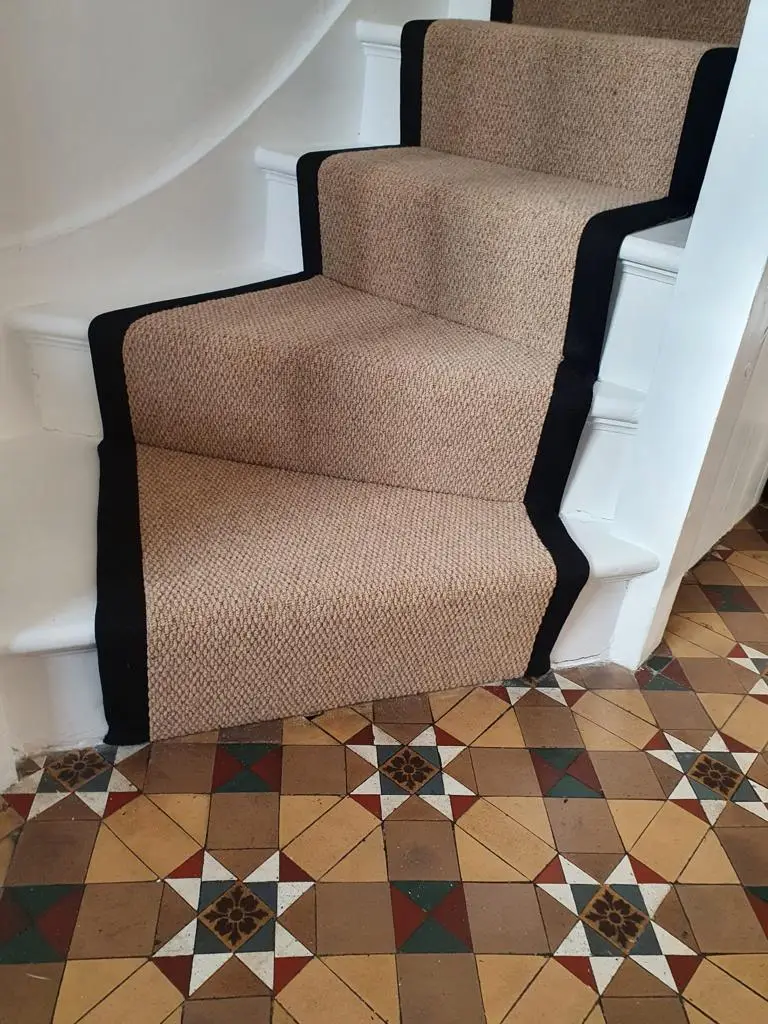
Many Victorian and Edwardian homes in North London were built with tiled halls, and where those tiles survive they are often the best guide to colour. In a Victorian house in Winchmore Hill with a black and white tiled hall, we fitted Roger Oates Sudbury in Lichen: soft stripes that suit the floor without competing with it.
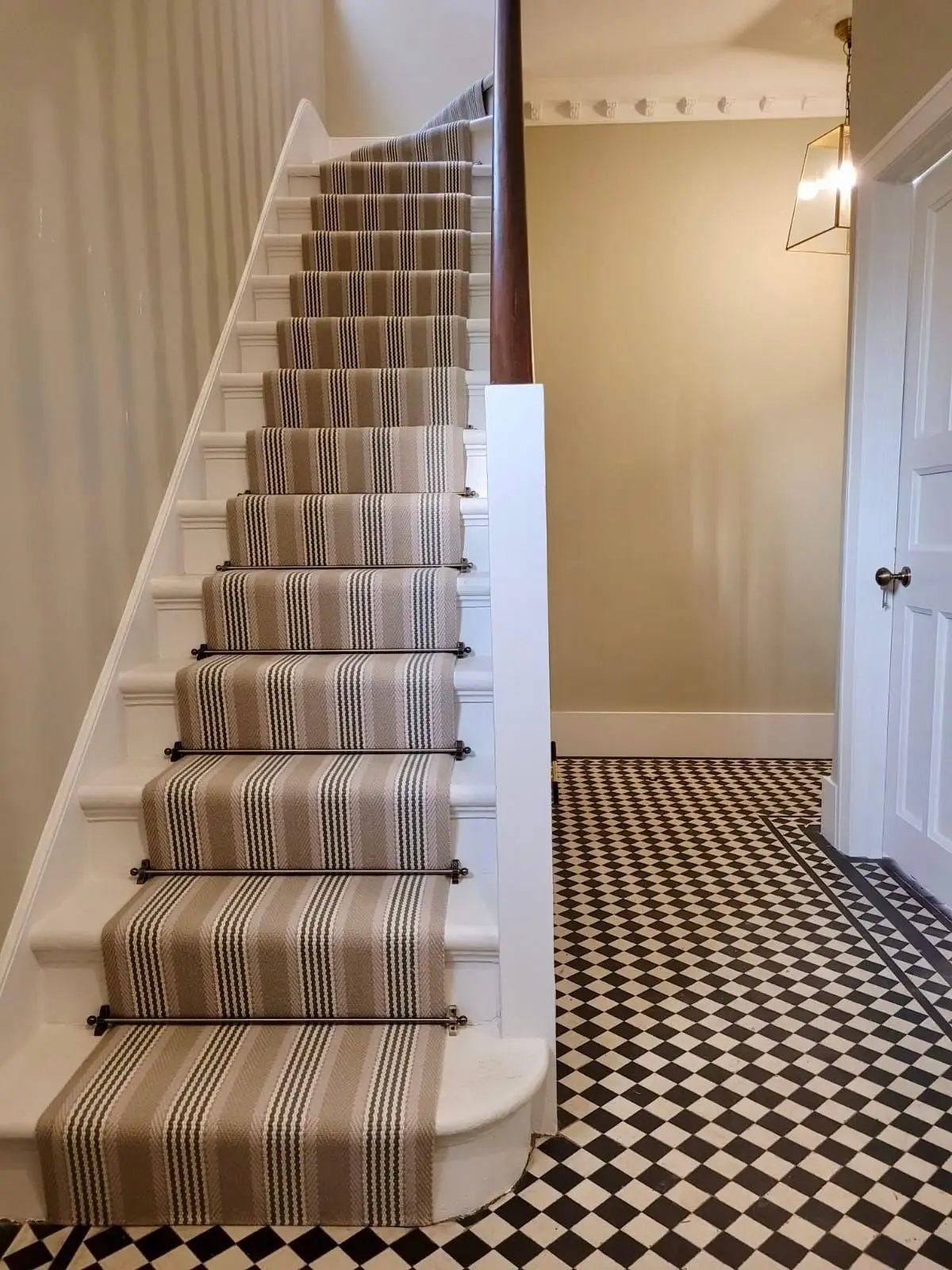
Roger Oates Sudbury in Lichen with antique brass Jubilee rods in a Victorian house in Winchmore Hill, N21. The runner follows three winders. See the job, Ref 13220
Colours that suit a period hall
There is no single right colour, but a few approaches work again and again:
- Soft stripes and naturals with black and white or geometric tiles, as in Winchmore Hill.
- Natural sisal for a warm, textured look that suits painted spindles.
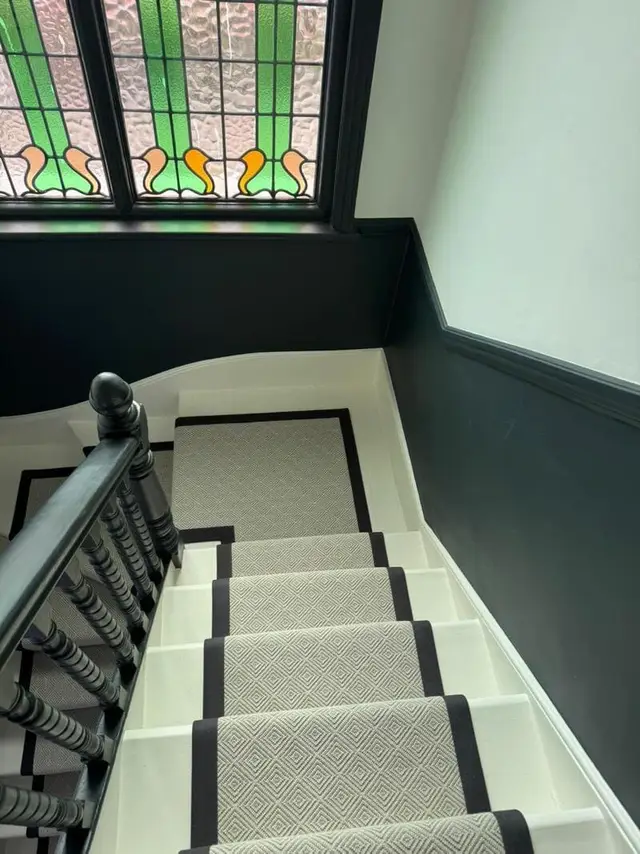
- Deep colours with dark painted woodwork. In Southgate, a Roger Oates Swanson runner in Juniper sits against dark painted stairs and skirting.
- Black and white stripes for a crisp, graphic staircase, like the Roger Oates George runner we fitted in Palmers Green.
- A pale runner with a dark edge to outline the stairs against a busy tiled floor, like the Malabar runner at the top of this page.
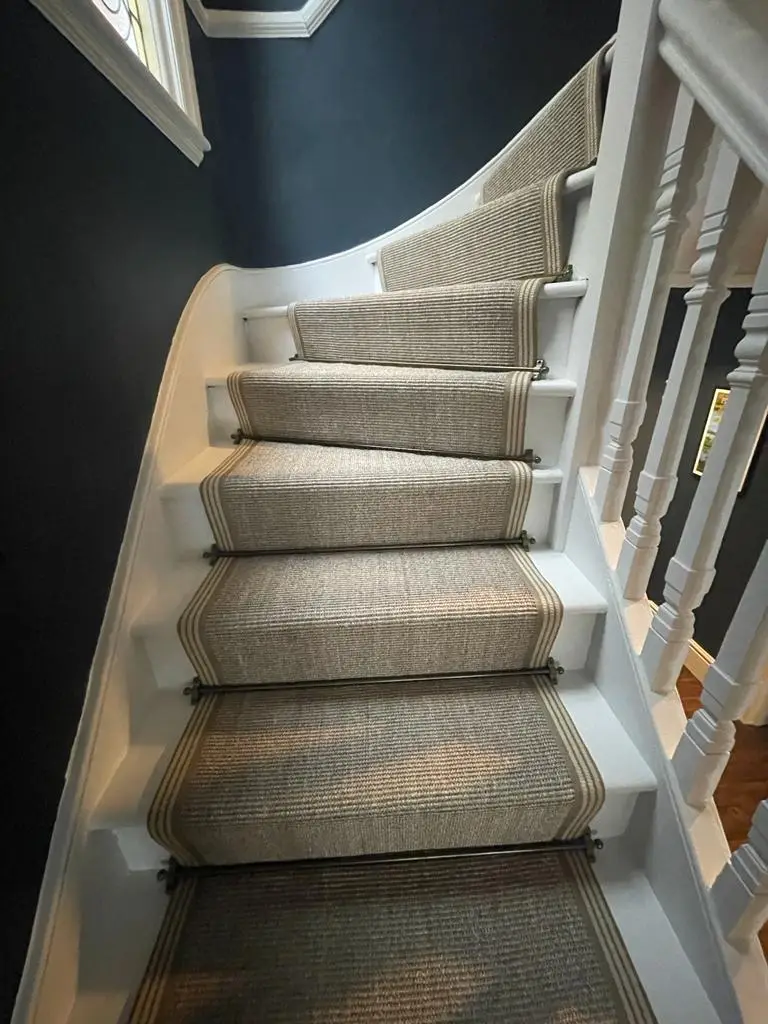
Sisal in Moonstone in a period house in N21: top stairs and landing fully fitted, the lower flight a runner with a striped Mushroom fabric edge and bronze Jubilee rods. See the job, Ref 12534
Stripes and flatweaves
Stripes and flatweaves are a natural match for period stairs. A stripe leads the eye up to the landing, and a flatweave is woven very flat, so the design stays crisp on every tread. We are authorised to supply and fit Roger Oates and Fleetwood Fox flatweave runners in North London, and both have designs that look at home in a Victorian hall.
Flatweave is specialised to fit, and older staircases are not always perfectly square. Our own fitters measure every step and keep the border even from the bottom to the top. In Winchmore Hill, the Sudbury runner had to follow three winders, which we templated on a separate visit so the runner could be made to fit them.
Getting the border right
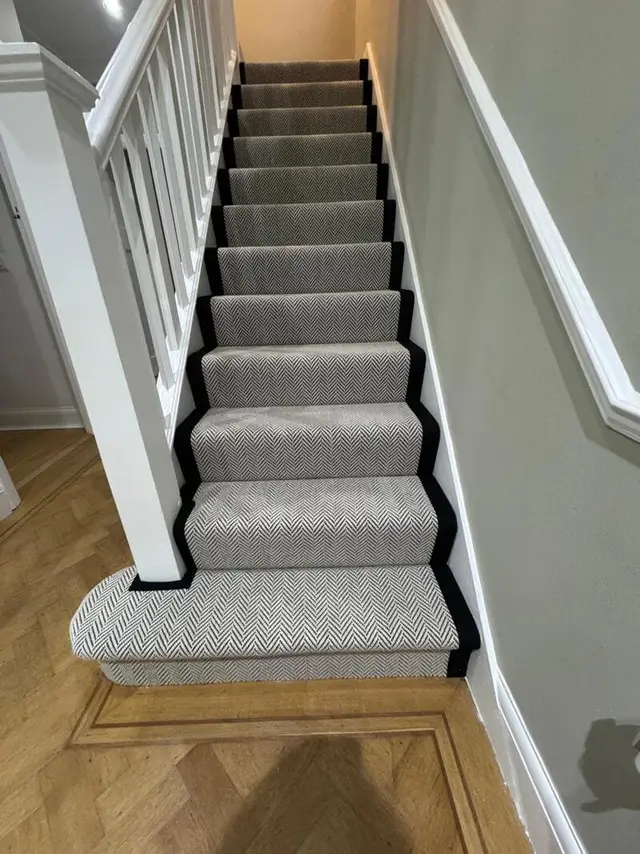
We recommend a border of at least 100mm and up to 150mm either side of the runner. Every runner is made to order, so it can be any width. The right border depends on the width of the stairs and how much of the paintwork or timber you want to show.
If you are repainting the stairs, do it before the runner goes down, so the border is fresh from the start.
Edges that suit period stairs
A taped edge frames the runner and is a good way to bring in a colour from the tiles or the paint. A whipped edge keeps the look quieter, so the carpet and the woodwork do the talking. Our post on whipped and taped edges explains the difference and the price of each.
Brass rods or Victorian clips
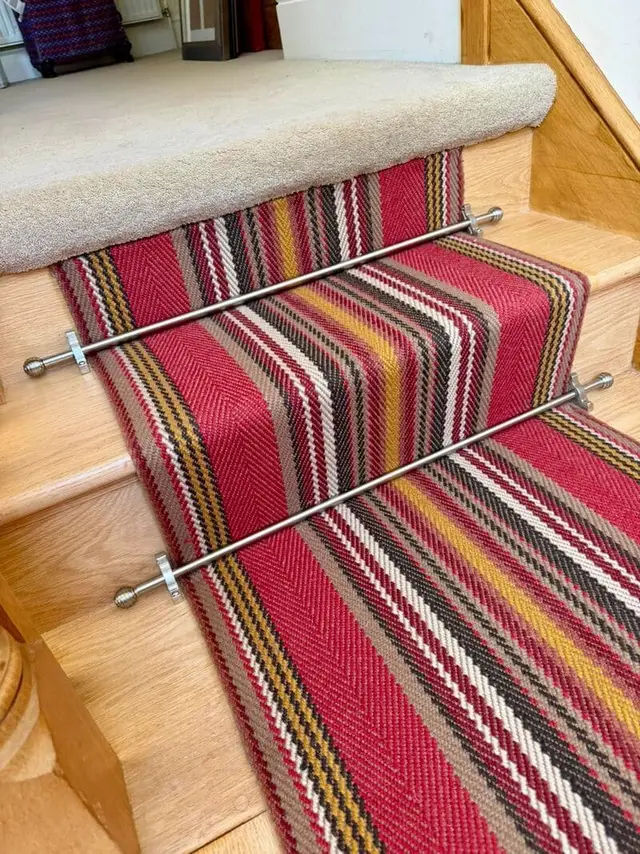
Rods are decorative, because the runner is held by grippers and underlay, but on a period staircase they are often the finishing touch. Brass, antique brass and bronze suit most Victorian halls. Antique brass Jubilee rods finish the runners in Winchmore Hill and Palmers Green, and bronze Jubilee rods the sisal runner in N21.
For a lighter look, Victorian clips sit at each edge of the runner instead of a rod across the step, so more of a painted or stained stair shows. They are £20 a pair. For a grander staircase, the triangular brass Royale and the traditional brass Country ranges have a classic feel. Our post on what stair rods do covers all eleven ranges.
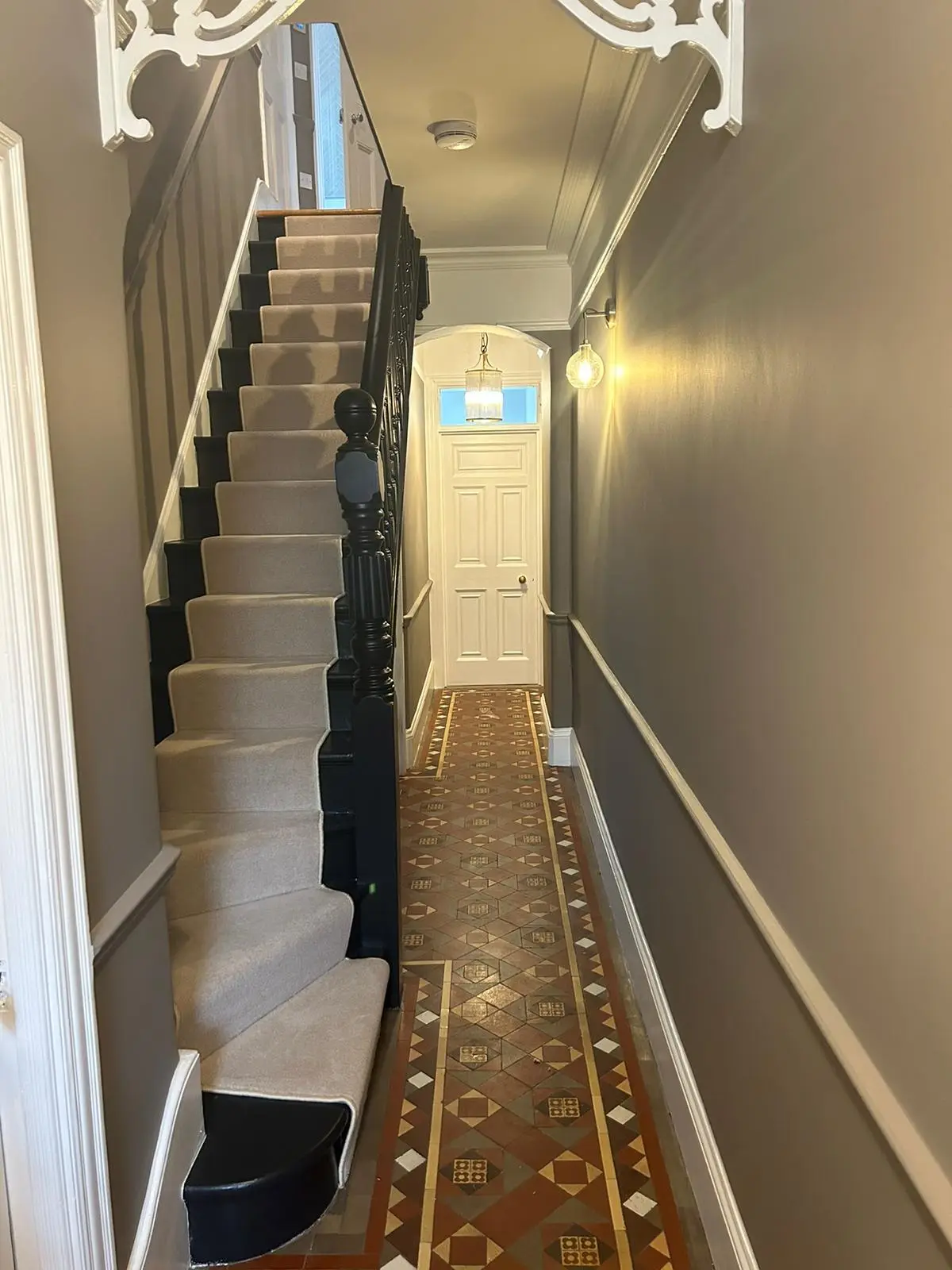
Cormar Hampstead in Pacific Pearl, made into a runner with a whipped edge, rising from a long tiled hall. See the job, Ref 12974
The landing
Many period houses have a landing that leads straight into the bedrooms. A fully fitted landing in a carpet that matches or complements the runner makes the top of the stairs feel finished. In Winchmore Hill we fitted Victoria Carpets Tudor Loop on the landing above the Sudbury runner. Our post on herringbone on stairs shows the same idea with herringbone.
What it costs
As a guide, a runner on 13 straight stairs costs £1,000 to £2,000 with a whipped edge, or £1,300 to £2,300 with a taped edge. A turn adds a templating visit of £150 to £300, and rods are £15 to £60 each plus fitting. See what a stair runner costs for the full breakdown.
Bring us a photo of your hall
The best way to choose is with your own stairs in mind. Book a free design consultation with Russell in our showroom at 774 Green Lanes, Winchmore Hill, N21 3RE, and bring photos of the hall, the tiles and the spindles. Book your consultation or call 020 8360 1836.