
The best hallway flooring for a busy family home is a hard floor by the front door, such as Amtico or Marmoleum, with a proper mat to catch the grit and a hard-wearing runner or carpet on the stairs. The hall takes every school shoe, wet coat and bike wheel in the house, so it needs a floor that wipes clean and keeps its looks. Here is how we plan a hall that copes.
Why the hall works harder than any other room
Late August is when a lot of families look at the hall and wonder how it will survive another school year. Everyone comes in and goes out the same way. Shoes bring in grit, rain and mud. Bags get dropped, buggies and bikes get wheeled through, and the dog waits by the door.
That is tough on any floor. Grit scratches. Water marks. Soft carpet flattens along the walking line. So a good hall floor has three jobs: shrug off the wear, clean easily, and still look welcoming when you open the front door.
Amtico: wood, stone or pattern that wipes clean
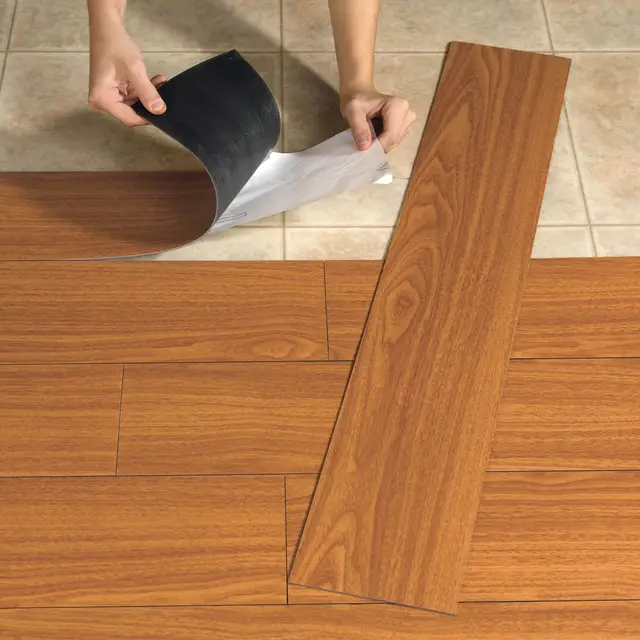
Amtico is our first suggestion for most busy halls. It is a luxury vinyl tile (LVT): PVC vinyl tiles or planks made to look like wood, stone or ceramic. Most of it is stuck down to a very flat subfloor, so there is nothing to lift or curl, and a damp mop deals with muddy footprints.
The ranges differ mainly in the wear layer, which is 0.3, 0.55, 0.70 or 1.00mm thick depending on the range. For a hall with heavy traffic we steer people towards the thicker wear layers. Guarantees run from 15 years to lifetime, again depending on the range.
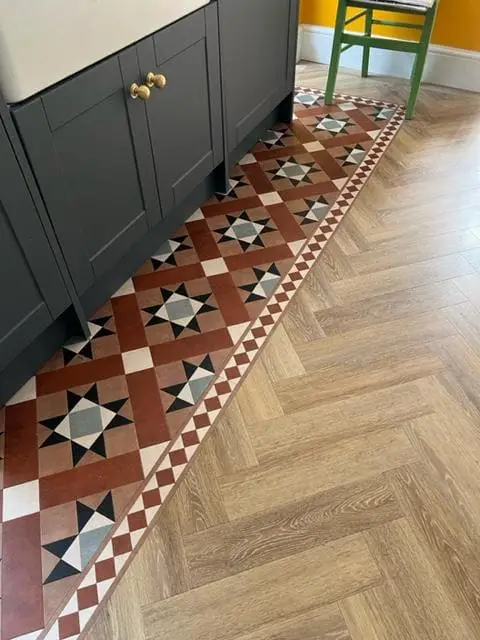
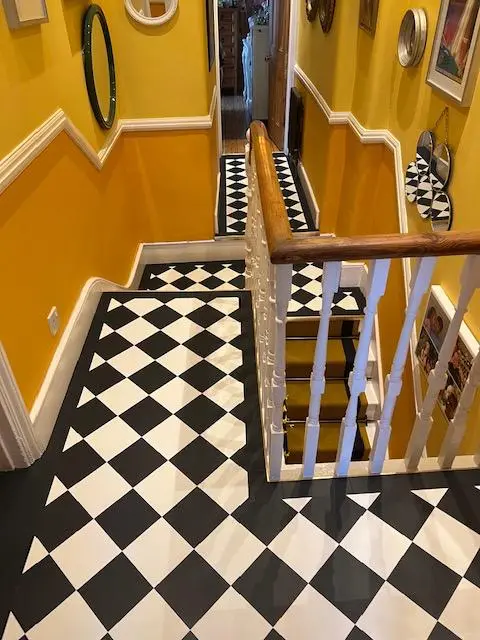
You can keep it plain with a wood look, or make the hall a feature. A chequerboard with a border, like the hall at the top of this page, suits a period house. A wood-look herringbone works in almost any home. If pattern appeals, our guides to black and white floors and Amtico parquet and borders go into more detail.
As a guide, Amtico costs from about £30 to £130 per m², and fitting is about £30 to £60 per m² depending on how complex the design is. Halls are usually small rooms, so it is worth pricing a pattern or a border here before you rule it out. We confirm everything in your written quote.
Marmoleum: a natural floor for the hall
Marmoleum is a natural floor made by Forbo, and it is another good choice for a hall. It comes as sheet, tiles and click planks, and like Amtico it needs a smooth, flat subfloor before it goes down.
Small tiles can be laid as a mosaic or a chequerboard with a border, which gives a hall real character. In the job below, 50 x 50mm Marmoleum tiles were laid with a black border, and a grey loop runner went up the stairs. Find out more on our Marmoleum page.
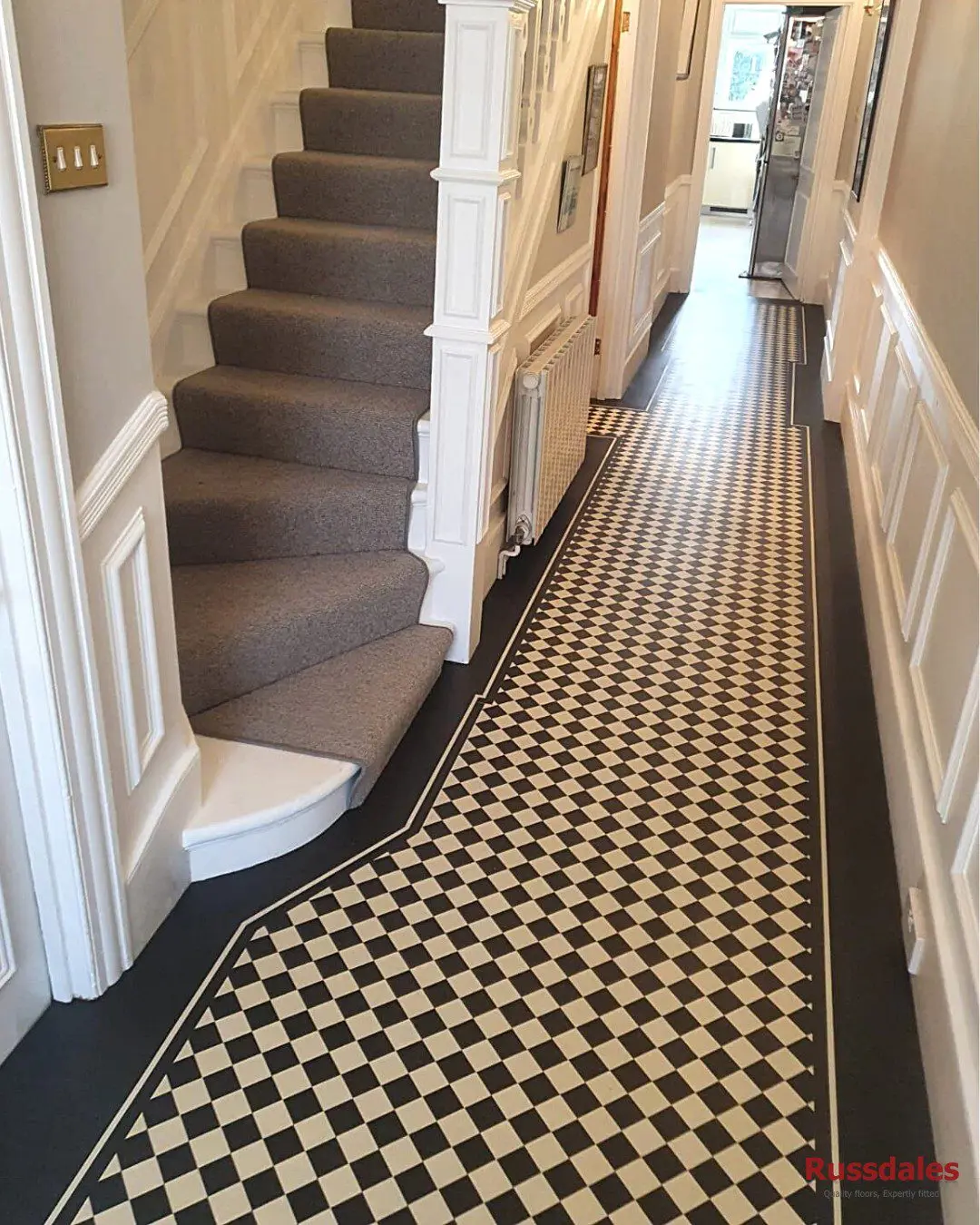 50 x 50mm Marmoleum tiles with a black border and a grey loop stair runner. See the job, Ref 12334
Stop the grit at the door
Whatever floor you choose, the cheapest protection is a good mat. Grit carried in on shoes scratches any hard floor over time, so the aim is to catch it before it reaches the hall.
In one Enfield home this spring, we fitted natural coir matting at the entrance, so the Amtico Royal Oak in the hall starts where most of the dirt has already been left behind. A mat inside the door and another outside makes a real difference in a family home. Shake or vacuum them often, because a mat full of grit stops doing its job.
The stairs: a runner or a tight weave
The stairs and landing take nearly as much traffic as the hall, and the front edge of each stair takes the most. Russell’s rule for stairs is a low, tight pile or weave. Nothing thick or soft, because it wears on the nosing.
A stair runner works well with a hard hall floor. It covers the middle of each step where the feet go, and the painted or timber edges either side are easy to wipe. Our guide to stair runner costs has Russell’s guide prices, and what goes under a stair runner explains the underlay.
If you have young children or pets, look at an easy-clean sisal look. It has the woven texture of natural sisal, which suits a hall, but it copes with spills far better than real sisal, which can mark with water. Alternative Flooring’s Anywhere range, fitted below, is one we use.
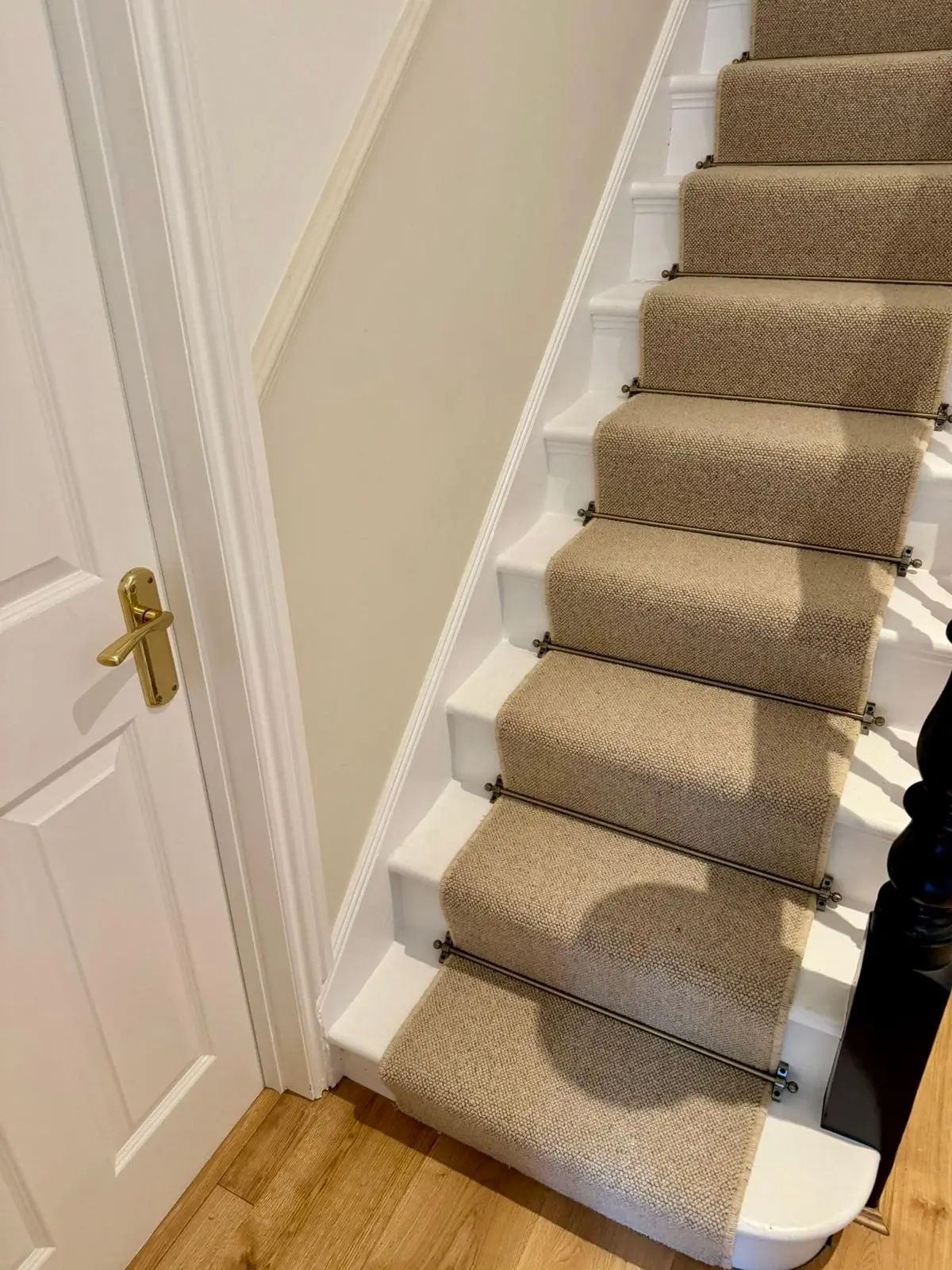 Alternative Flooring Anywhere sisal look in colour 3202, fitted in N21. See the job, Ref 13374
Putting the hall together
The best halls are planned as one scheme from the front door to the landing. That Enfield job shows how: natural coir matting at the entrance, Amtico Royal Oak through the hall, Amtico Gallery Concrete in the kitchen and utility, and Cormar Pembroke in Chrome on the stairs and landings. Each floor suits the job it does, and the colours sit well together.
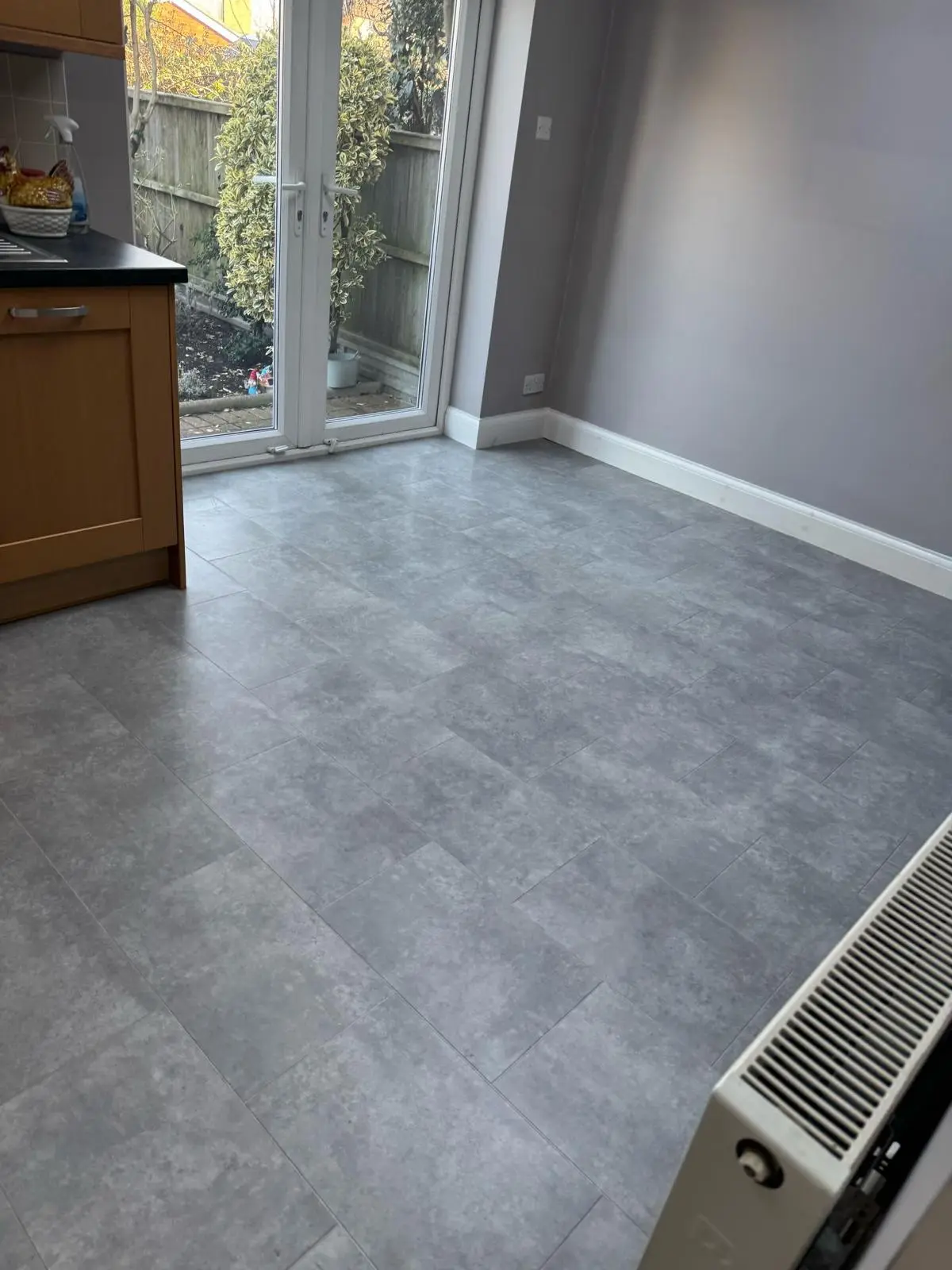 Amtico Gallery Concrete in the kitchen of the Enfield home, with Royal Oak in the hall and Cormar Pembroke on the stairs, EN1. See the job, Ref 13304
When you plan yours, think about:
- Where the hall floor meets the kitchen or living room, and which threshold suits.
- Whether the stairs get a runner or a full carpet, and how it meets the landing.
- Where the mat goes, and how big it needs to be to catch the grit.
- Whether you want us to lift and take away the old floor. We offer uplift and disposal for a small extra charge.
Fitting a hall is quicker when the space is clear, so move the coats, shoes and bikes out before the fitters arrive. If you will be out at work, ask about our key-holding service.
Plan your hall with Russell
Bring a photo of your hall and stairs and some rough sizes to a free design consultation with Russell in our showroom at 774 Green Lanes, Winchmore Hill. You can see Amtico, Marmoleum and runner samples side by side and talk through what will last in your home. Book your consultation or call us on 020 8360 1836.