
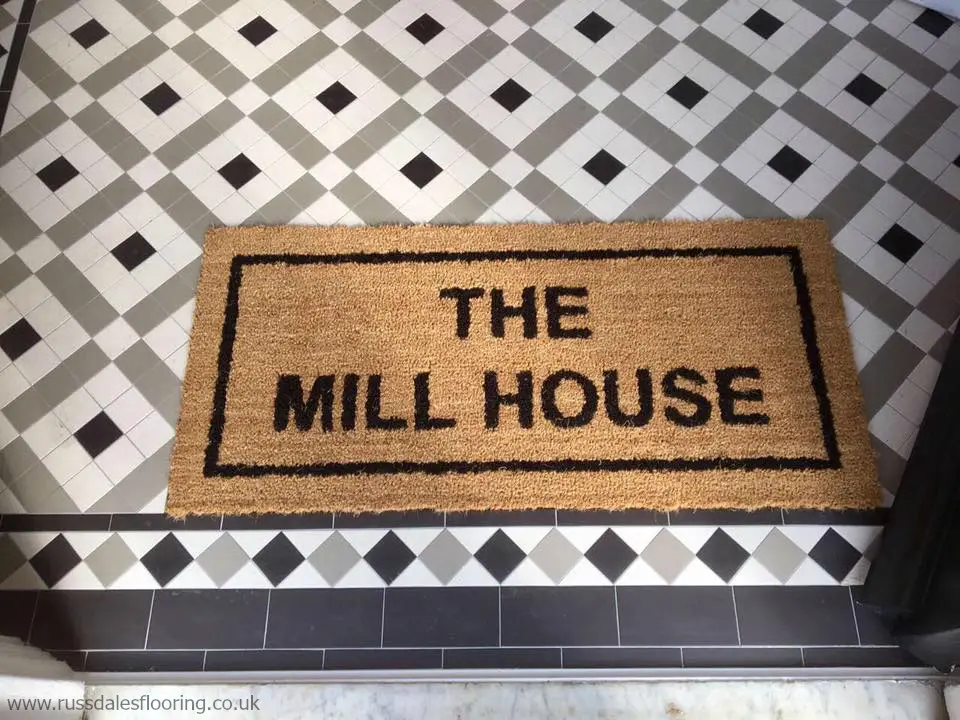
Coir matting in a door mat well is a simple way to protect a new floor. The coarse natural fibre scrapes grit off shoes the moment people step inside, and because the mat sits level in its well, nobody trips on it. Add a mat at every outside door and far less grit ever reaches your wood, Amtico or carpet.
Autumn is well under way. The leaves are coming down, the pavements are wet, and everything that sticks to a shoe is heading for your hall. This is the week to sort out your mats.
Why grit matters
Grit is the enemy of every floor. On wood and Amtico, grit underfoot acts like sandpaper, dulling the finish a little more with every step. On carpet, dirt and grit work down to the base of the tufts, where they act as an abrasive and wear the carpet early.
You cannot stop grit coming in, but you can stop most of it at the door. That is the whole job of an entrance mat, and it is worth getting right.
Why coir works so well
Coir is a natural fibre with a coarse, bristly texture. It is very good at trapping dirt at the door before it spreads through the house, because the stiff fibres scrape the soles of shoes clean. It also looks right in a period hall or next to natural floors such as sisal, and it suits a wood or Amtico floor too.
The mat at the top of this page is a bespoke coir entrance mat, made to fit its space. See the job.
Mat wells: level and tidy
A mat well is a recess in the floor just inside the door, made so the mat sits level with the floor around it. A mat that fills the well neatly stays where it is, does not curl at the corners and is easy to step over.
If your hall has one, coir cut to fit it is a classic choice. In an Enfield house we fitted natural coir matting at the entrance, Amtico Royal Oak in the hall, Amtico Gallery Concrete in the kitchen and utility, and Cormar Pembroke carpet on the stairs and landings. Each material suits its own area, and the coir takes the first hit from wet shoes.
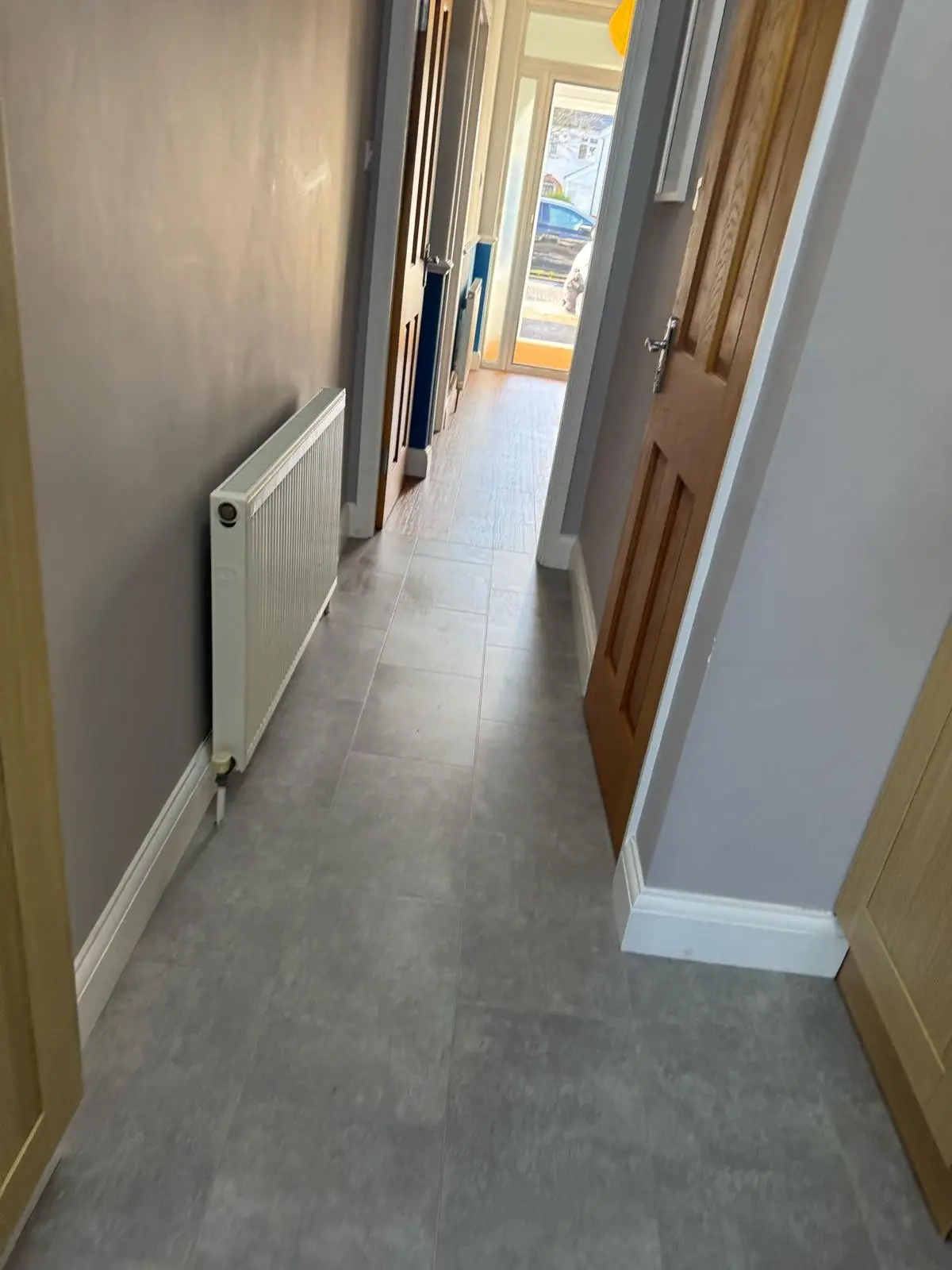 Amtico Gallery Concrete in the same Enfield house, EN1, where natural coir matting went in at the entrance. See the job, Ref 13304
If you are having a new floor laid up to an existing mat well, tell us when we measure. That way the new floor and the mat can be planned to finish neatly together.
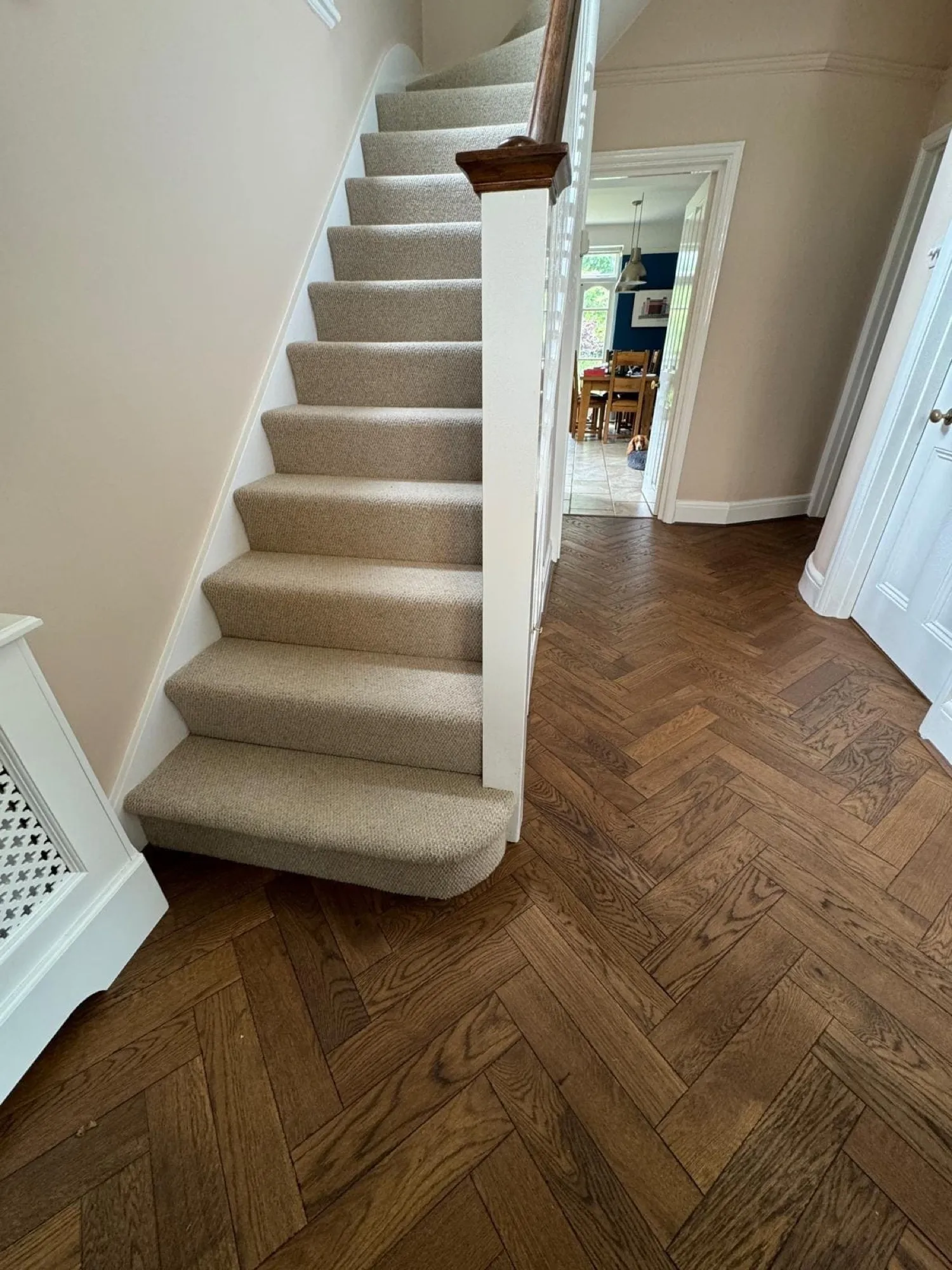
The hall below shows the same idea with real wood. We laid V4 Tannery Oak parquet in herringbone, with entrance matting set inside the front door to protect it, and Cormar Malabar on the stairs.
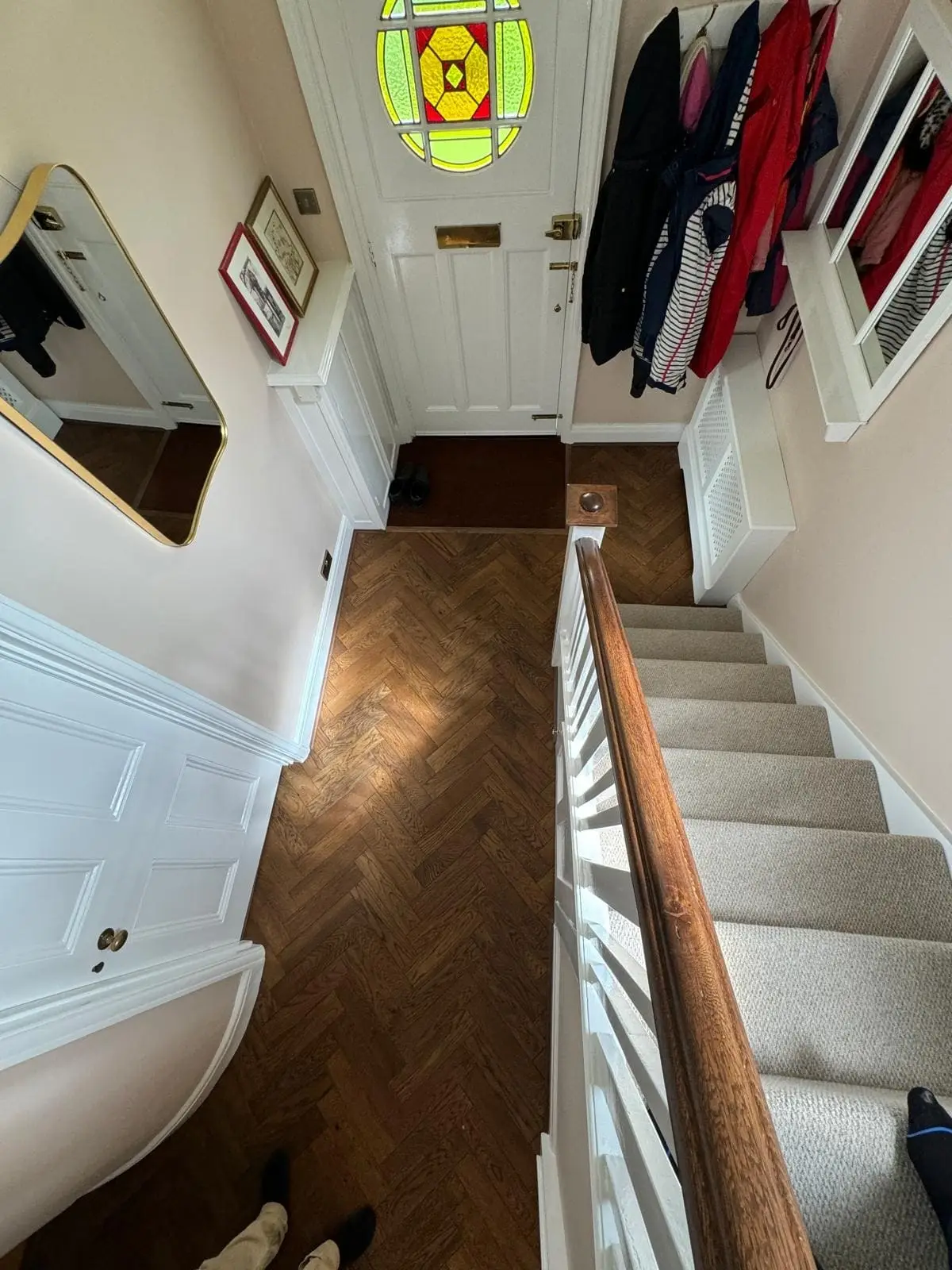 V4 Tannery Oak parquet with entrance matting inside the front door, and Cormar Malabar on the stairs, North London. See the job, Ref 13042
Every outside door, not just the front
Front doors get the attention, but back doors and garden doors bring in just as much. Think about:
- The back door, especially if it opens onto a garden or a side passage.
- Patio and French doors that lead out to the garden.
- The door from a garage or utility room.
The advice in our hardwood care guide is simple: use good quality entrance mats and dirt trappers at every outside door. Where carpet meets an outside door, use a rug or mat there too, to catch dirt and grit.
Mats made from your own carpet
Not every door suits coir. If you have leftover carpet from a new fit, we can whip and bind it into a mat, rug or runner that matches the room. A whipped edge, stitched in yarn, is around £8 to £10 per linear metre. A taped, fabric or leather edge is around £30 to £40 per linear metre. Our guide to making a rug from carpet explains the options, and you can see more on our rugs page.
Looking after your mat
A mat only works while it has room to trap more grit. Vacuum it often, or take it outside and give it a good shake. If it gets soaked, let it dry out before it goes back down. And when it stops doing its job, replace it: a worn mat is cheaper than a worn floor.
Protecting each kind of floor
The mat is the first line of defence. Each floor then needs a little care of its own:
- Amtico: sweep or vacuum regularly to lift grit, and wipe spills. Our guide to how to clean Amtico floors covers the rest.
- Real wood: felt pads under furniture, and a slightly damp mop, never a wet one. See protecting your floors in winter and does your wood floor need a new coat?
- Carpet: vacuum slowly and often, especially near the doors. Our carpet care guide has the full routine.
- Natural floors: if you have sisal or a sisal look runner, read how to look after a natural sisal runner.
Ask us about your entrance
If you are planning a new hall floor, or your current mat is past its best, come and talk to Russell. He will help you plan the floor, the stairs and the mat together. Book a free design consultation at 774 Green Lanes, Winchmore Hill, N21. Book a consultation or call 020 8360 1836.