
For a 1930s house, the plan that usually works best is a hard floor through the hall and the downstairs rooms, in engineered oak or Amtico, with a runner or fitted carpet on the stairs and carpet on the landing and in the bedrooms. The hall takes the most wear, so it gets the toughest floor. Upstairs is where softness pays off. Here is how we approach each part of the house, with jobs from N14 and N21 to show what we mean.
The 1930s houses around us
Southgate has two characters. The old village is round Southgate Green, where Georgian and Victorian houses still stand. Then in 1933 the Piccadilly line arrived, with Charles Holden’s round station at Southgate Circus, and within a few years the fields around it were covered in new semis and detached houses. That 1930s housing is most of Southgate today: bay-fronted semis and detached houses, many now with a kitchen extension at the back.
Winchmore Hill is a mix. The railway came in 1871, and the streets between Green Lanes and Grovelands Park filled up over the next sixty years. So alongside the late Victorian and Edwardian houses there are plenty of interwar semis, many of them a short walk from our showroom on Green Lanes. Southgate Circus is just over a mile away, across Grovelands Park.
The hall: the floor that works hardest
In most 1930s houses the front door opens into a hall with the stairs rising from it and doors off to the front and back rooms. Everyone walks through it, usually in outdoor shoes, so it needs a floor that copes with grit and wet days and is easy to clean.
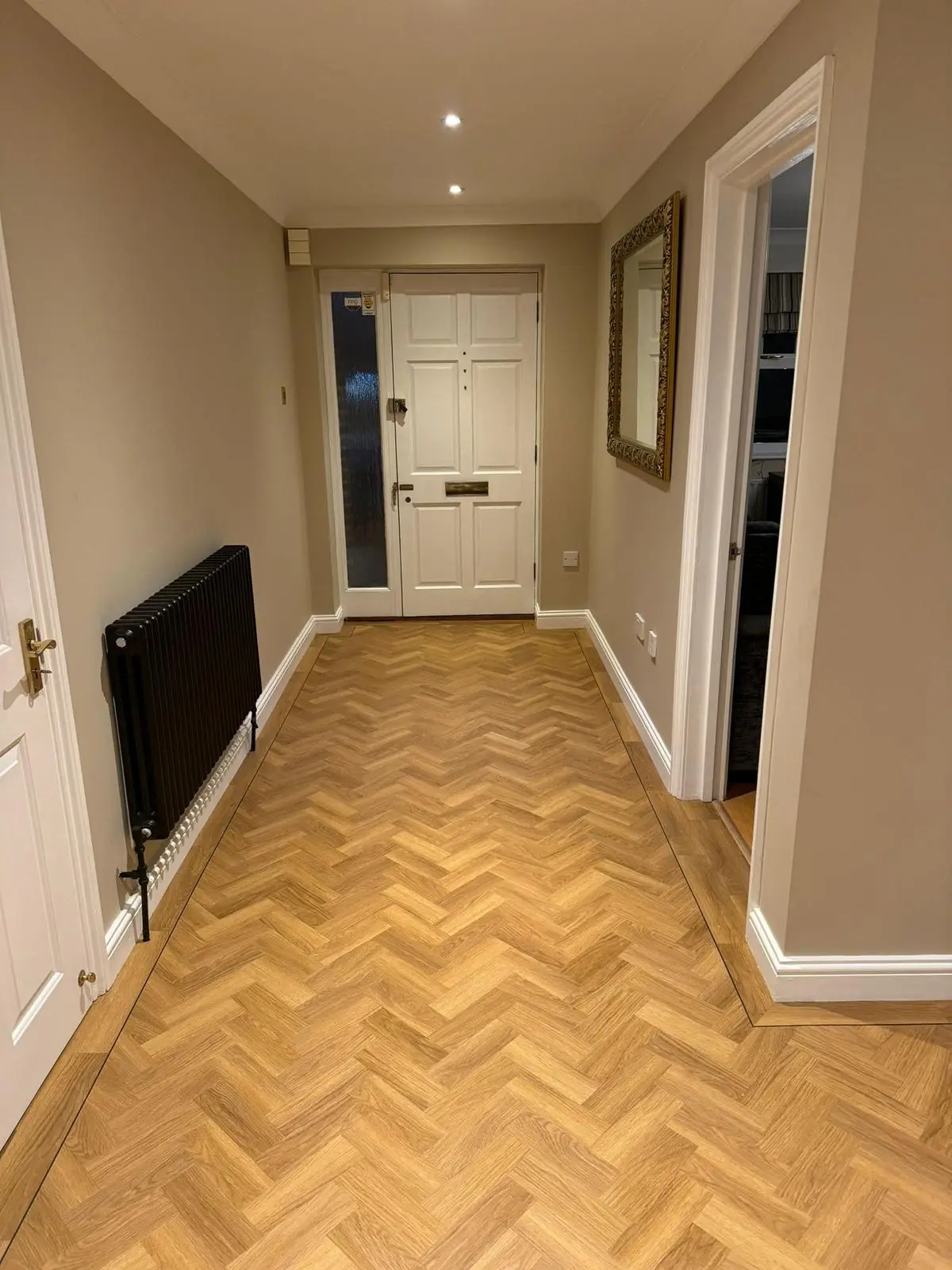
Amtico is a popular choice here. A wood look laid as parquet suits the period, and a border gives a long hall a neat frame. In the hall in our main photo, in Winchmore Hill, we laid Amtico Honey Oak small parquet in herringbone, with a plank-on-edge border and a black pencil line around the edge (Ref 13311). The stairs went up in carpet from there.
If you would rather have real timber, engineered oak is the better choice for most halls. It copes with central heating better than solid boards. We showed some examples in engineered oak floors we have fitted. Whichever you choose, a good mat at the front door saves the floor a lot of wear. Our guide to hard-wearing hallway floors goes further.
Downstairs rooms and the extension
Many 1930s houses have had the back of the ground floor opened up into a kitchen and family room, often with an extension. That raises a practical point: you may have two different subfloors. The original rooms often have timber floorboards on joists, and a modern extension will usually have a concrete floor.
That is fine. We prepare each to suit. Timber floors get plywood boards with the joints filled and sanded smooth, and concrete gets a smoothing screed about 3mm thick. Once the base is flat, one floor can run all the way through and tie the old house to the new space. Read how we fit Amtico and preparing uneven floorboards for the detail.
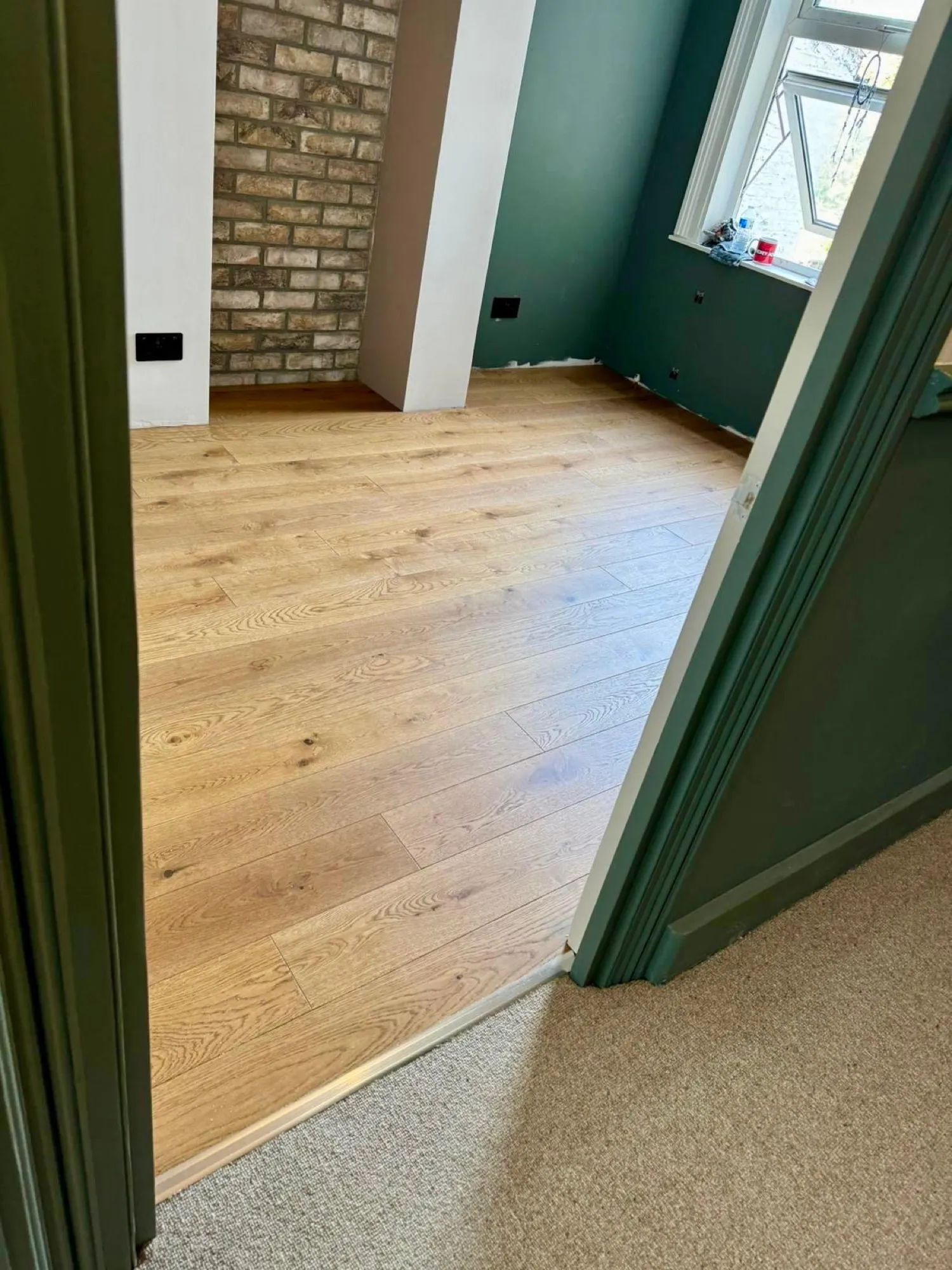
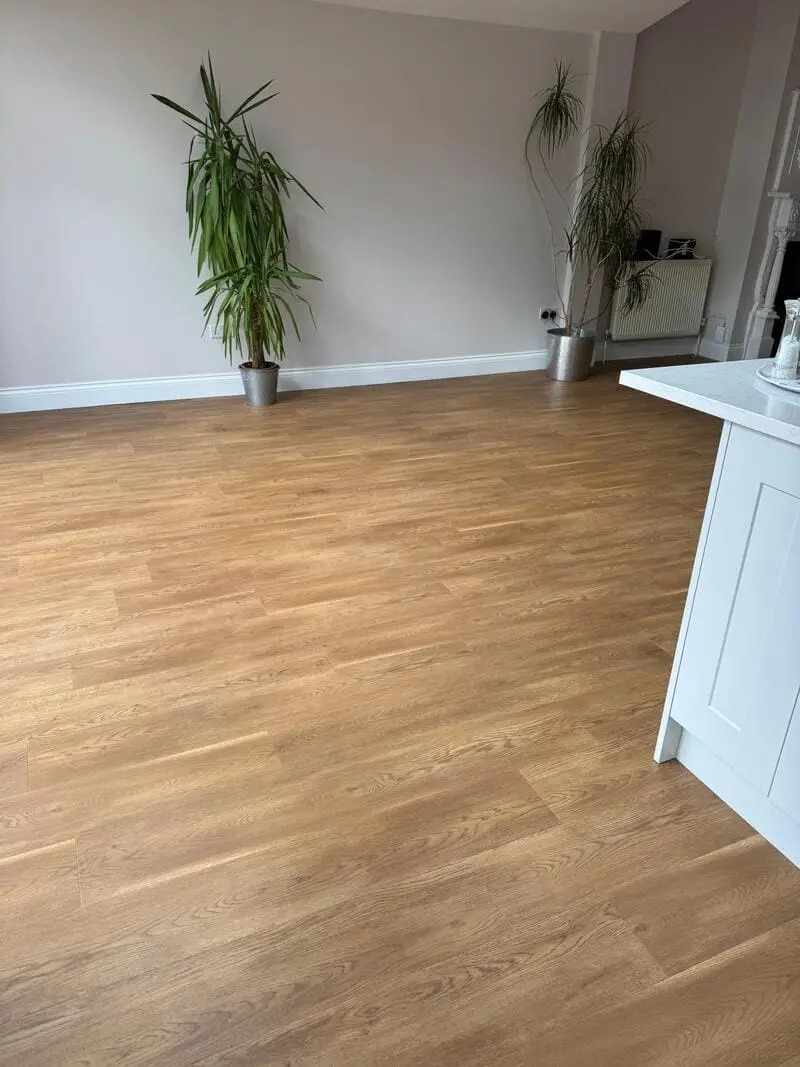 Amtico Spacia New England Oak wide planks, straight laid in a new extension in Southgate N14. See the job, Ref 13437
In another N14 house we laid Amtico Spacia Honey Oak in a large herringbone with a plank-on-edge border around the room (Ref 12597). In Grange Park, N21, a kitchen got Amtico Form Thornton Oak in large parquet herringbone with a 3mm polished brass pencil line (Ref 13596). Amtico can go over underfloor heating too, as long as the floor surface stays at or below 27°C.
Stairs and landing
The staircase is where you choose between a runner and a fully fitted carpet. A runner leaves a border of painted or stained stair either side and makes the staircase a feature, which looks good when the hall below has a hard floor. A fully fitted carpet is warmer and quieter and hides a tired stair. Either way, choose a low, tight pile or weave. Anything thick or soft wears quickly on the stair nosing.
In Southgate we fitted a Roger Oates Swanson runner in Juniper up a staircase painted a dark colour, skirting and all, and mitred it at the quarter landing (Ref 13257). In another Southgate house, Caviler Pennine Heathers, an 80/20 wool twist in a warm Heapy shade, went throughout (Ref 13475).
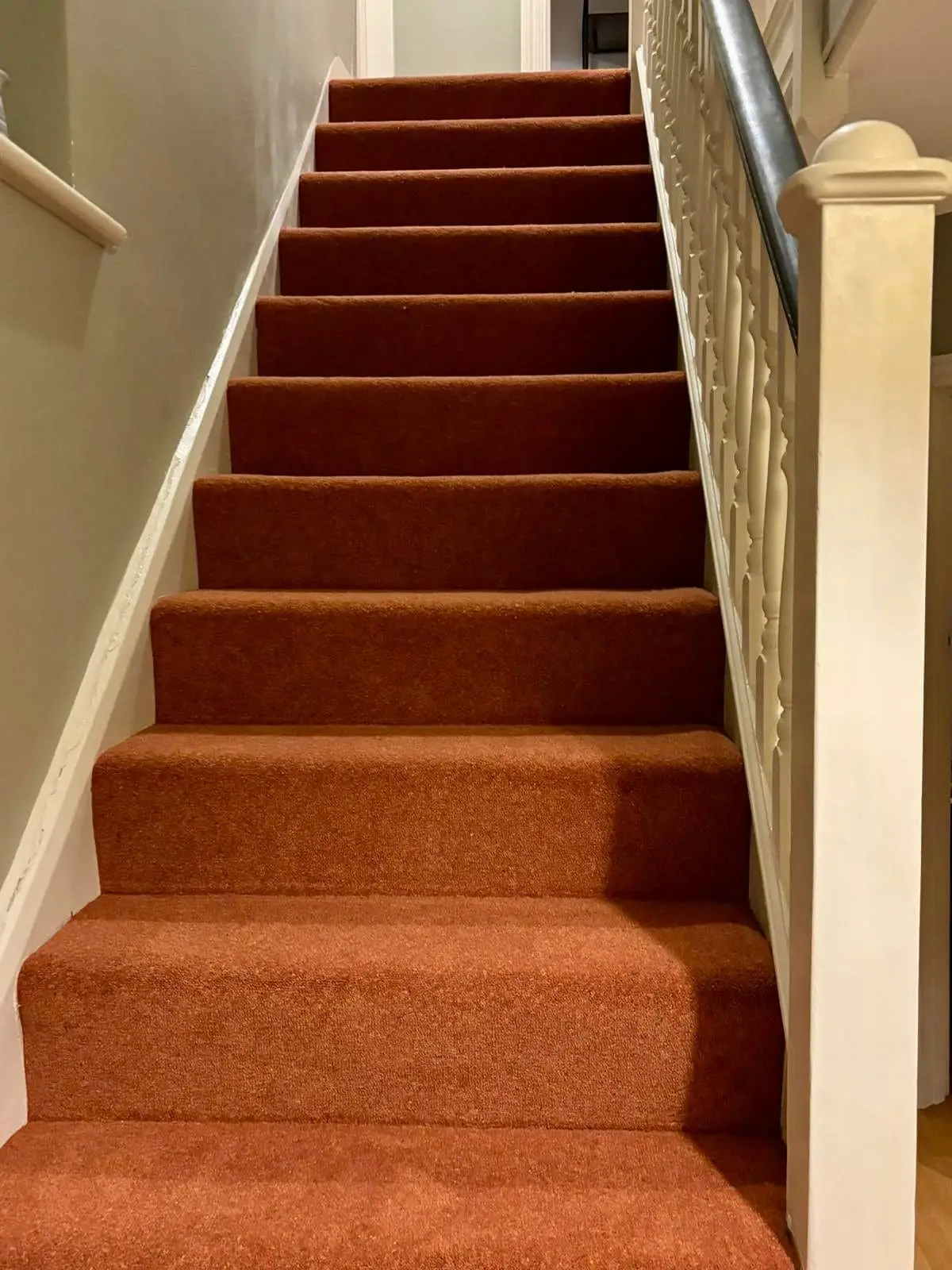 Caviler Carpets Pennine Heathers in Heapy, fully fitted to the stairs in Southgate N14. See the job, Ref 13475
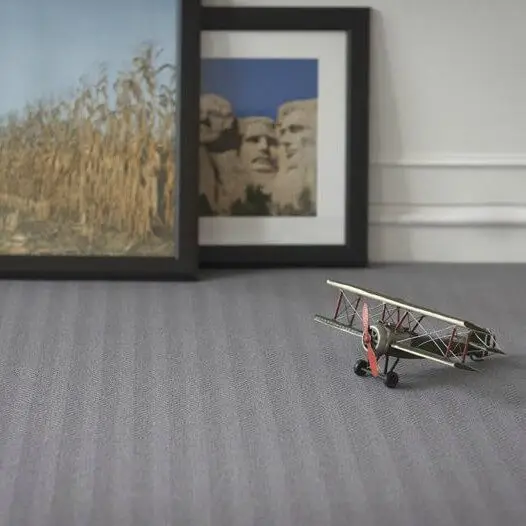
A popular middle way is to fully fit the landing and make the stairs into a runner in the same carpet. That is what we did in Winchmore Hill with Fibre Flooring flatweave herringbone in Luna, finished with a charcoal taped edge and satin nickel Homepride rods.
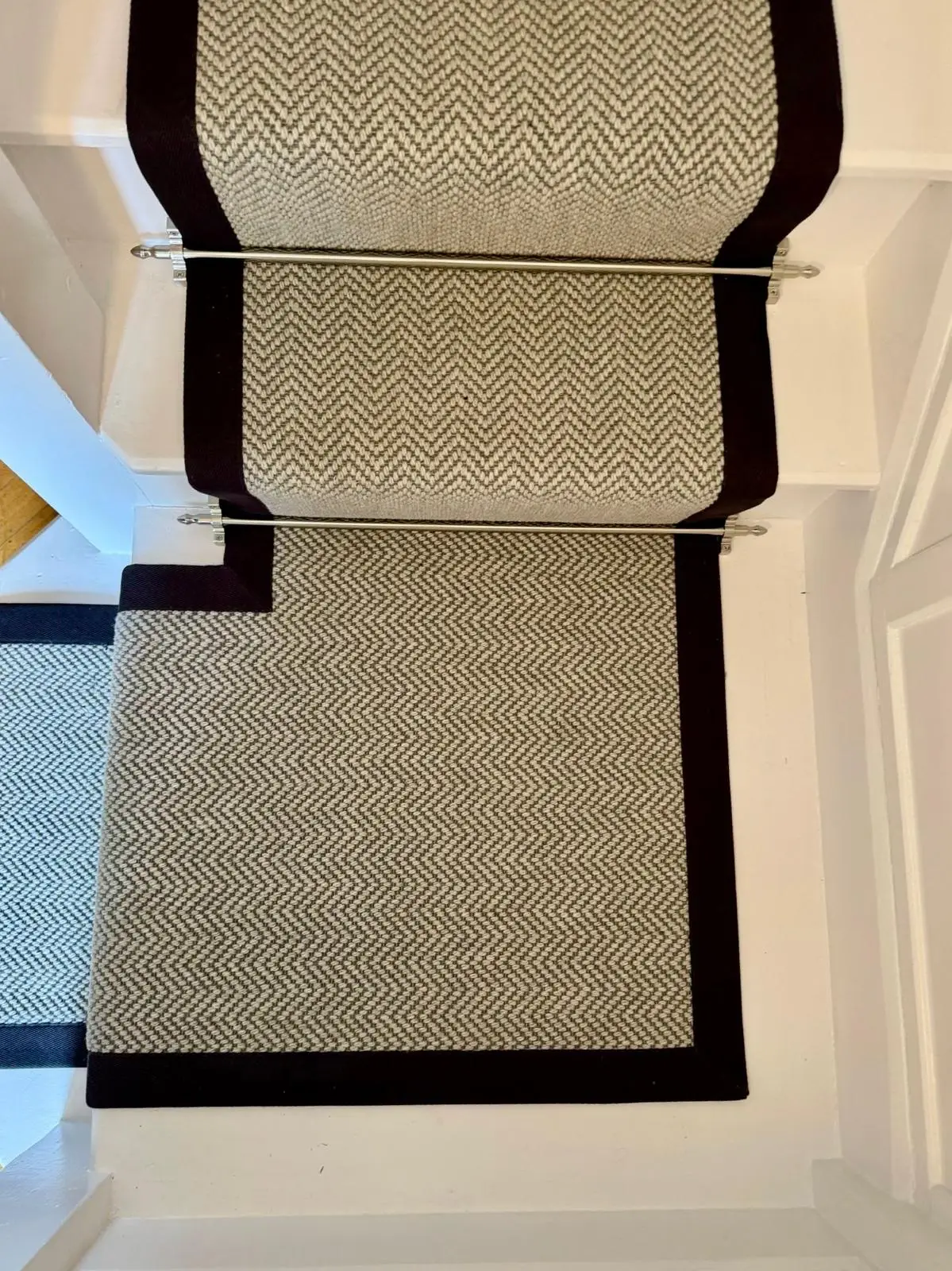 Fibre Flooring flatweave herringbone in Luna, fitted to the landing and made into a runner on the stairs in Winchmore Hill N21. See the job, Ref 13347
As a guide, a runner on 13 straight stairs is £1,000 to £2,000 with a whipped edge, or £1,300 to £2,300 with a taped edge. If your stairs turn, a second visit to template the turn is £150 to £300.
Bedrooms
Upstairs, carpet is the comfortable choice. A soft twist or velvet is fine in a bedroom, where there is less traffic than on the stairs. Our guide to choosing bedroom carpet compares twist, loop and velvet. Do not skimp on underlay: we recommend Cloud 9, and good underlay can help a carpet last up to 40% longer.
Book a design consultation with Russell
Being this close makes the practical side easy for both of us. Book a free design consultation with Russell in the showroom at 774 Green Lanes, Winchmore Hill, and bring a rough floor plan or a few photos of your hall and stairs. Measuring is free, and we can bring samples to your home so you can see them in your own light. Book online or call us on 020 8360 1836.