
A stair runner goes on a contract double-stick underlay, a firm underlay similar to Cloud 9 Contract 8mm, with grippers on each step that are low or medium pin to suit the thickness of the carpet. A thick, soft underlay is the wrong choice on stairs. It lets the runner move and flex over the nosing with every step, which is exactly where stair carpet wears first.
Underlay is the part of a runner nobody sees, so it is easy to overlook. It makes a real difference to how the runner looks on the day and how it wears for years after. Here is what we use and why.
Contract double-stick underlay
Every runner we fit sits on a contract double-stick underlay, similar to Cloud 9 Contract 8mm. Contract underlays are made to take heavy use, and stairs are one of the hardest working floors in any house. Fitted with the grippers, a double-stick underlay holds the runner firmly, so it sits tight over each nosing and stays put.
Grippers: low or medium pin
Grippers are strips fixed along each step, with small angled pins that hold the back of the carpet. We use low or medium pin grippers, chosen to suit the thickness of the carpet.
A thin flatweave suits a low pin, and a thicker carpet made into a runner suits a medium pin. Getting this right is part of the reason we use our own fitters, never subcontractors: they know how each carpet behaves on a stair.
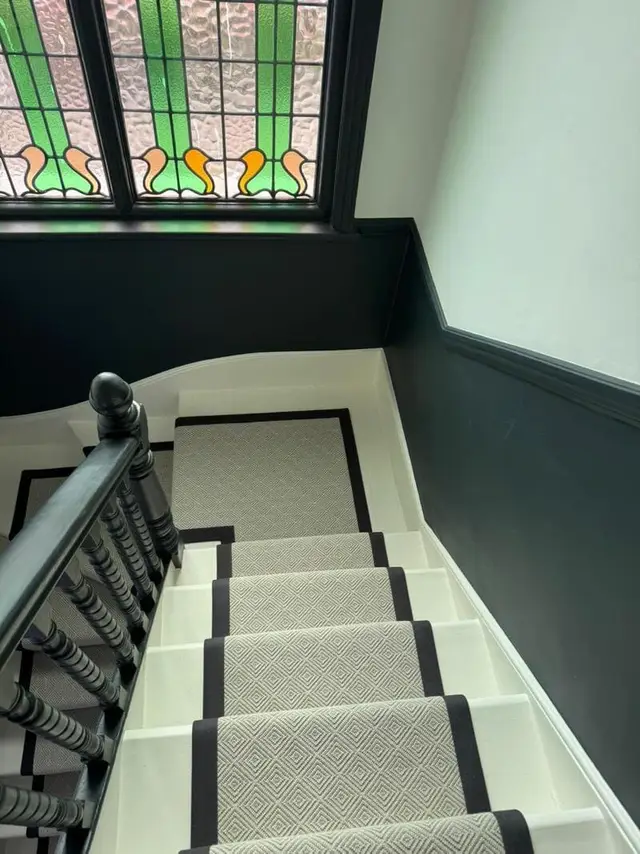
The Cormar Fairisle runner at the top of this page, in London E5, is a carpet cut and made into a runner with a whipped edge, so it sits on the same firm base as any flatweave. See the job, Ref 13401.
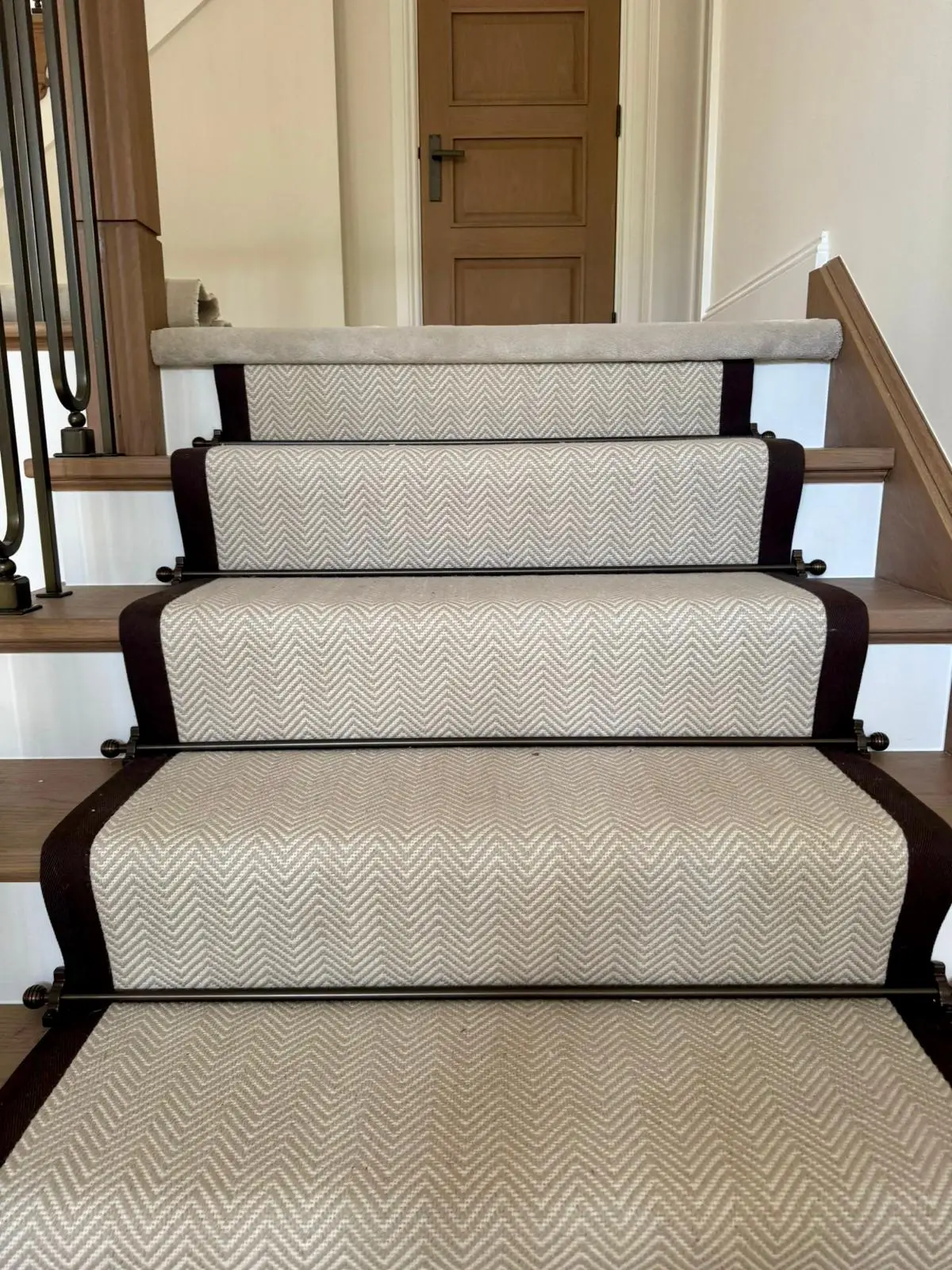
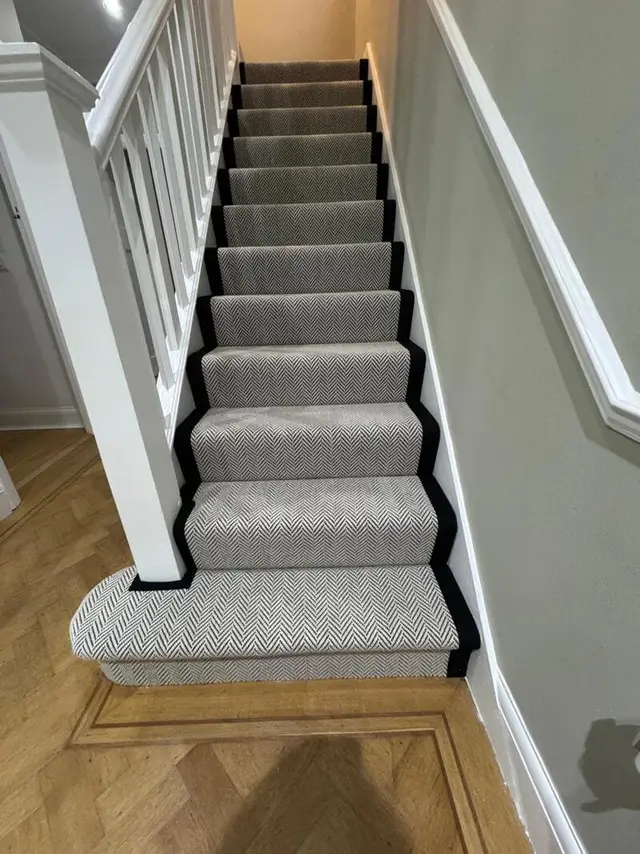
Riviera Sorrento flatweave herringbone in Canella, with a fabric edge in Arabica and Vision Sphere rods in antique bronze, Hadley Wood, EN4. See the job, Ref 13341
Why thick, soft underlay is wrong on stairs
A soft underlay feels lovely under a bedroom carpet. On stairs, it causes problems.
- The runner moves. A soft underlay squashes under every footstep. The runner flexes over the front of each step instead of sitting tight.
- It wears faster. The nosing, the front edge of each stair, takes the most wear on any staircase. The more the carpet flexes there, the sooner it shows.
- It looks less crisp. A flatweave is meant to sit flat so the pattern shows. On a soft base it loses that sharp line over every nosing.
The same thinking applies to the carpet itself. Russell always recommends a low, tight pile or weave for stairs, because anything thick or soft wears early on the nosing. Our older guide on what carpet is best for stairs explains more.
Rods don’t do the holding
It is a common belief that stair rods keep a runner in place. They don’t. The runner is held by the grippers and the double-stick underlay, and rods are decorative. They finish the staircase and, on a turn, help disguise the joins. Our post on what stair rods do explains the difference.
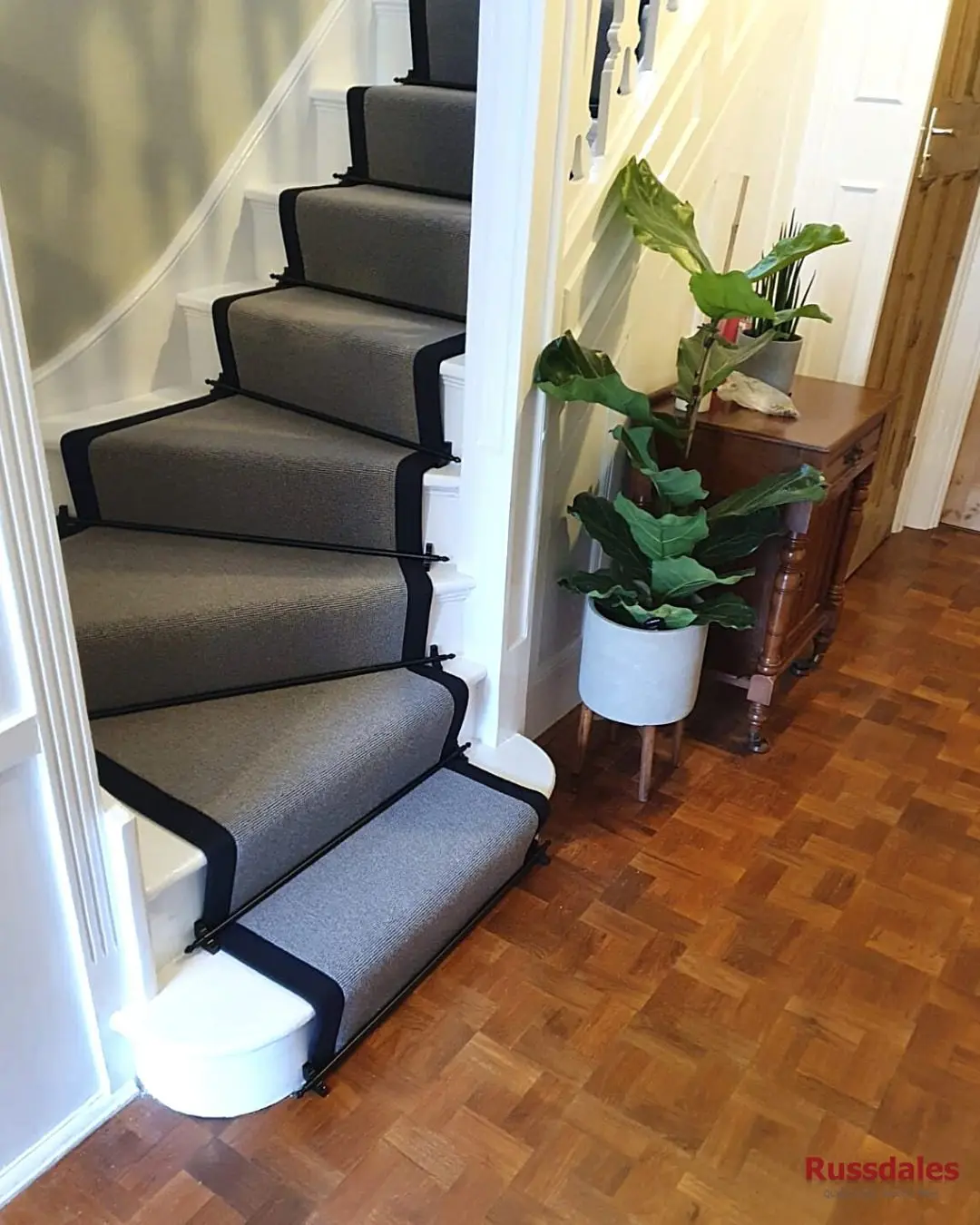
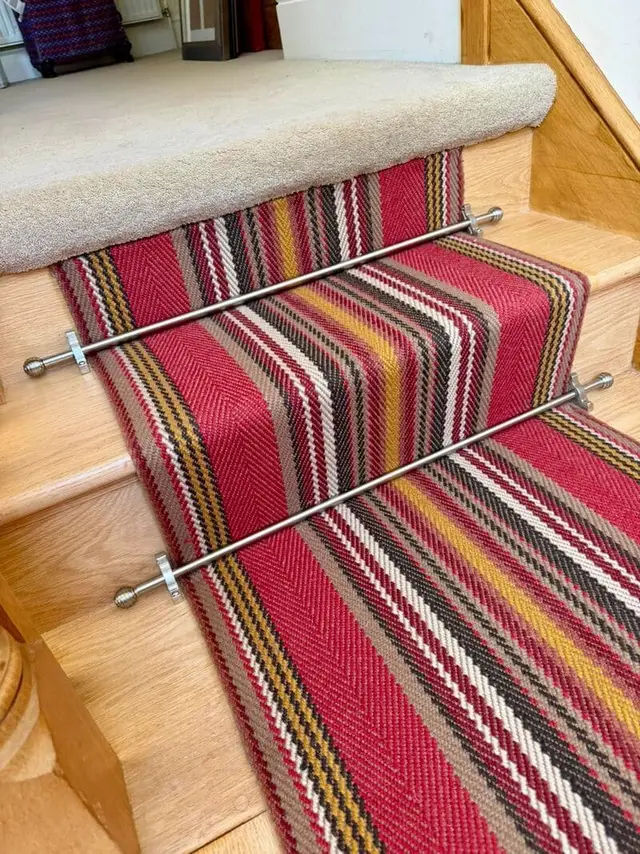
Mayfair in Basalt with a black fabric edge and black Acorn rods. The rods finish the look; the underlay and grippers hold the runner. See the job, Ref 12286
Flatweaves, herringbones and natural weaves
Flatweaves and herringbones are woven very flat, so a firm, even base matters even more. The Riviera Sorrento herringbone we fitted in Hadley Wood, shown above, sits on exactly that. Our post on herringbone carpet on stairs shows more.
Natural weaves such as sisal are tight and firm by nature, which is why they suit stairs. They are fitted the same way, over the right underlay, with grippers chosen for the thickness of the weave.
Fully fitted stairs and landings
When stairs are carpeted wall to wall rather than with a runner, the underlay covers the whole tread. For carpets we recommend Cloud 9 underlay, and a good underlay can help a carpet last up to 40% longer. Many of our runner jobs have the landing fully fitted and the stairs as a runner, and we choose the right underlay for each part.
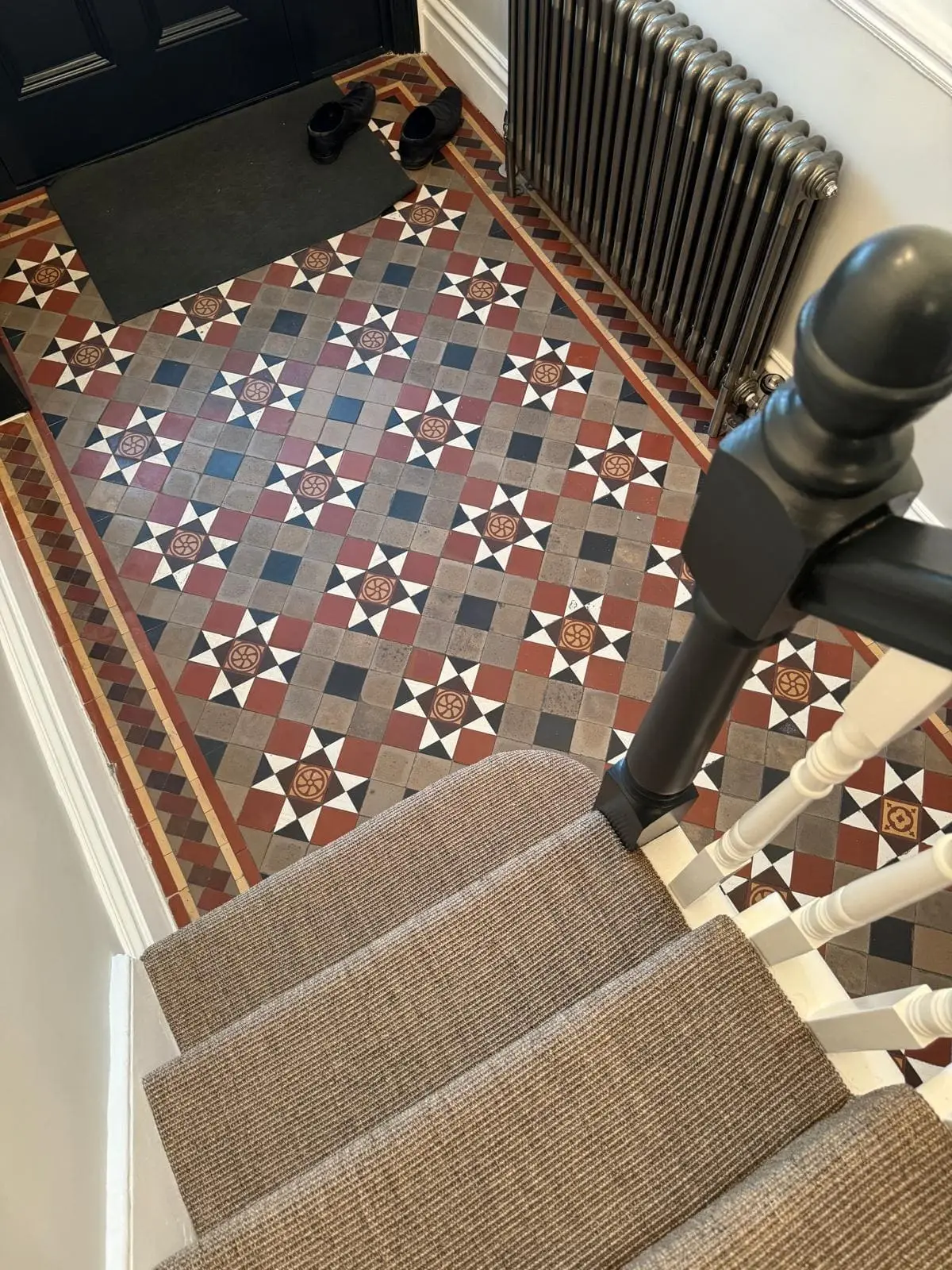
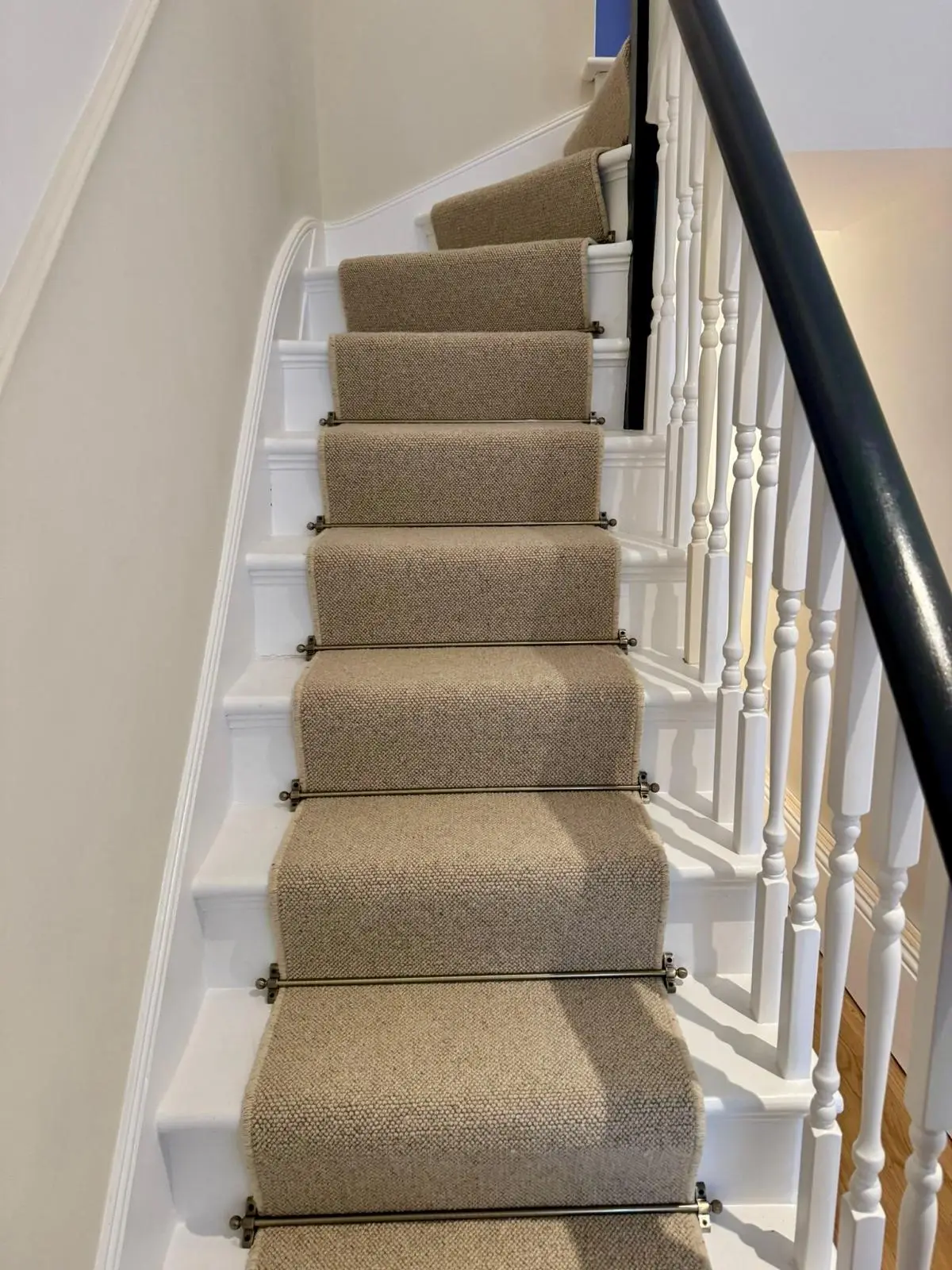
Kersaint Cobb Sisal Mini Bouclé in Pewter, fitted wall to wall on the stairs and landing, N12. See the job, Ref 13045
Part of every runner we fit
Underlay and grippers are part of every runner we fit, not an afterthought. As a guide, a runner on 13 straight stairs costs £1,000 to £2,000 with a whipped edge, or £1,300 to £2,300 with a taped edge. See what a stair runner costs for the full picture, and we confirm everything in your written quote.
Ask Russell about your stairs
If you are not sure what is under your current stair carpet, or what your new runner needs, book a free design consultation with Russell in our showroom at 774 Green Lanes, Winchmore Hill, N21 3RE. Book your consultation or call 020 8360 1836.