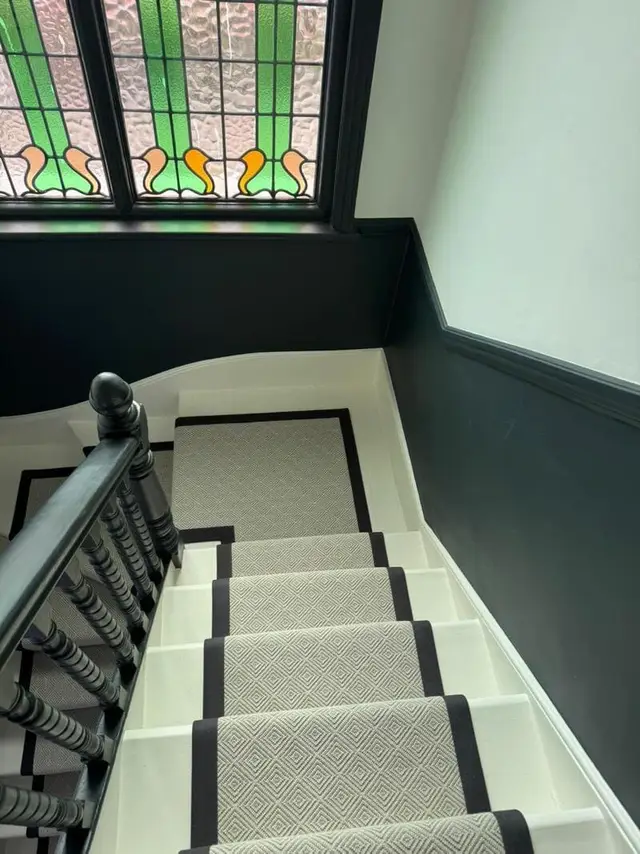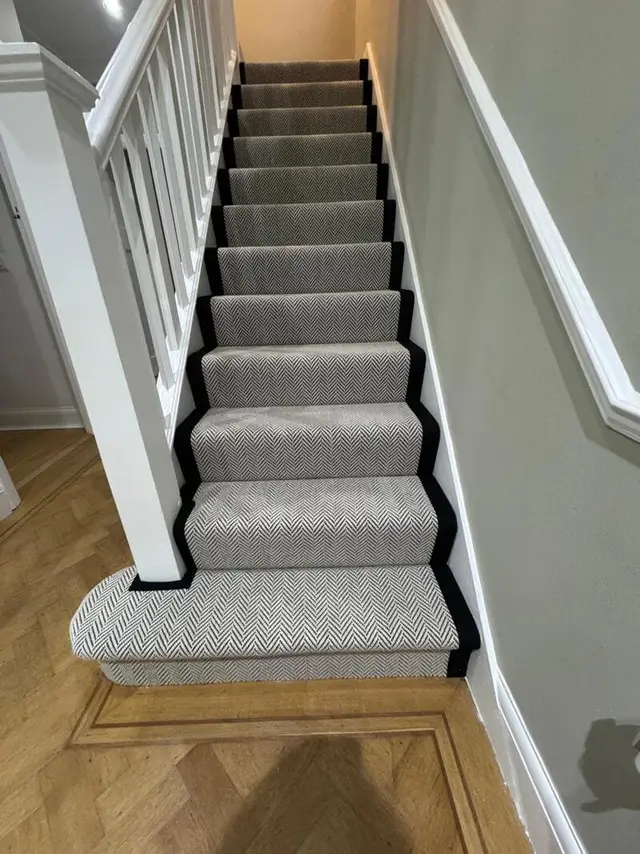

A stair runner should leave between 100mm (4 inches) and 150mm (6 inches) of stair showing on each side. So the right width is the width of your treads, less twice the border you want. We make every runner to order, so it can be whatever width your stairs need, and we measure the whole flight ourselves before it is made.
The border rule
Russell’s recommendation is simple: a border of at least 100mm, and up to 150mm, either side of the runner. Within that range it comes down to taste and to the stairs themselves.
A wider border shows off more of a painted or timber stair. That suits a period staircase with good spindles, or an oak flight you want people to see. A narrower border gives you more carpet underfoot, which feels warmer and softer and is a little quieter on the stairs.
Whichever you choose, the border has to look even. Our fitters keep it the same on both sides from the bottom step to the top, which is a big part of what makes a runner look made for the house.
Real widths from our jobs
Because every runner is made to measure, our jobs show a spread of widths, even within the same design. A few Roger Oates examples:
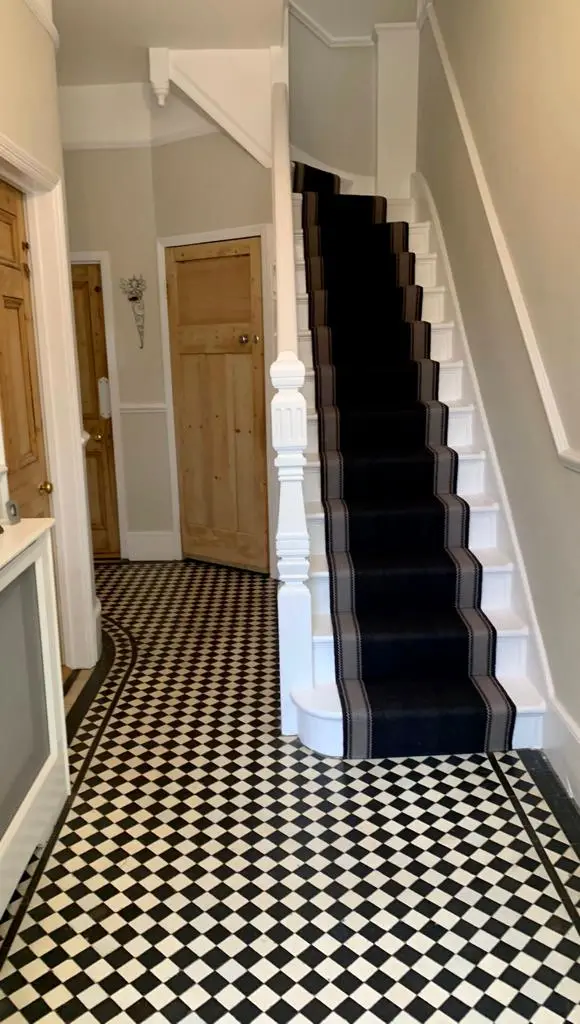
- Henley Soft Black at 60cm (Ref 11938) and at 62cm (Ref 12265, the hall at the top of this page).
- Franklin Indigo at 61cm (Ref 12146), and Franklin Black at 61cm (Ref 12838).
- George in Black at 62cm in Palmers Green (Ref 13345).
- Fitzroy Midnight at 70cm, and Asby Silver at 70cm in Kensington (Ref 12568).
Several of these sit at 60cm to 62cm. The wider stairs took a 70cm runner, so the border stayed in proportion with the flight.
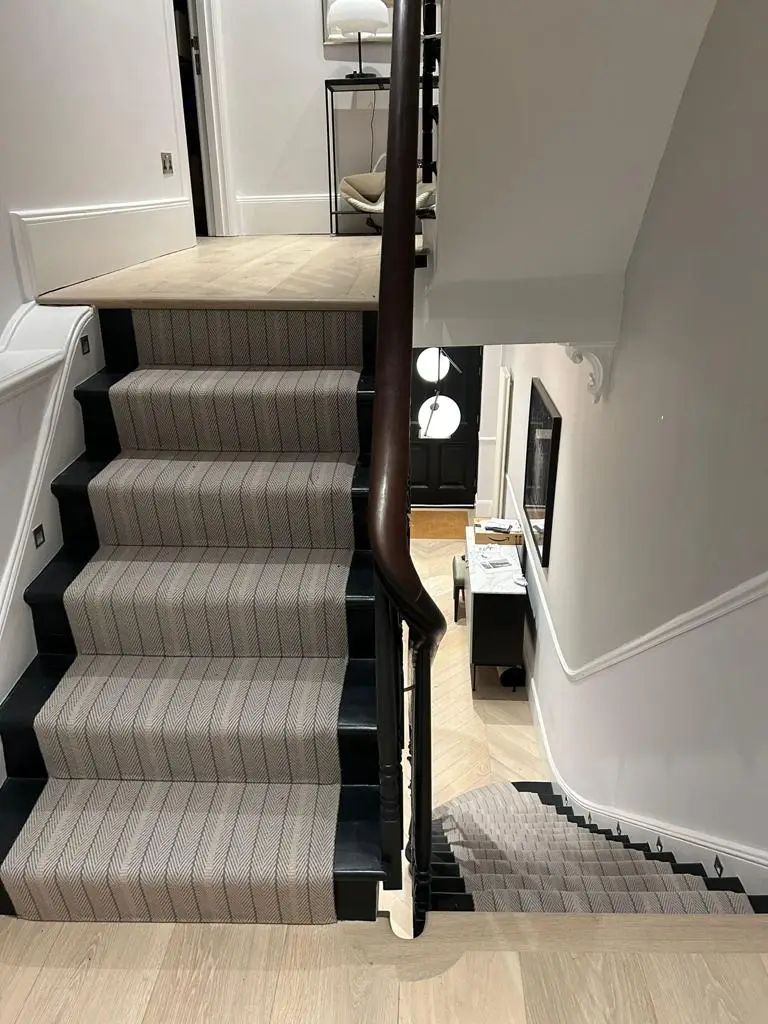 Roger Oates Asby Silver at 70cm wide, Kensington. See the job, Ref 12568
Why we measure the whole flight
Stairs are not always as regular as they look. In older houses the walls may not be perfectly straight, and the bottom step is often wider or rounded. So we measure every stair ourselves rather than one tread and a guess.
That is how we set the width: wide enough to give a generous runner on the narrowest part of the flight, while keeping the border within the 100mm to 150mm range where it matters most, on the long straight run you see from the hall.
Narrow, wide and turning stairs
Narrow stairs. Cottage stairs, basement steps and loft stairs can be tight. Here we usually keep the border towards 100mm, so there is still a decent width of runner underfoot.
Wide stairs. A grand hall staircase can take a 70cm runner, as the Fitzroy and Asby jobs show, and still leave a proper border.
Turning stairs. On winders each step is wider at one end than the other, so the runner has to be planned around the turn. A turn needs a separate visit to template the stairs before the runner is made, and that visit costs £150 to £300 depending on how complex the turn is.
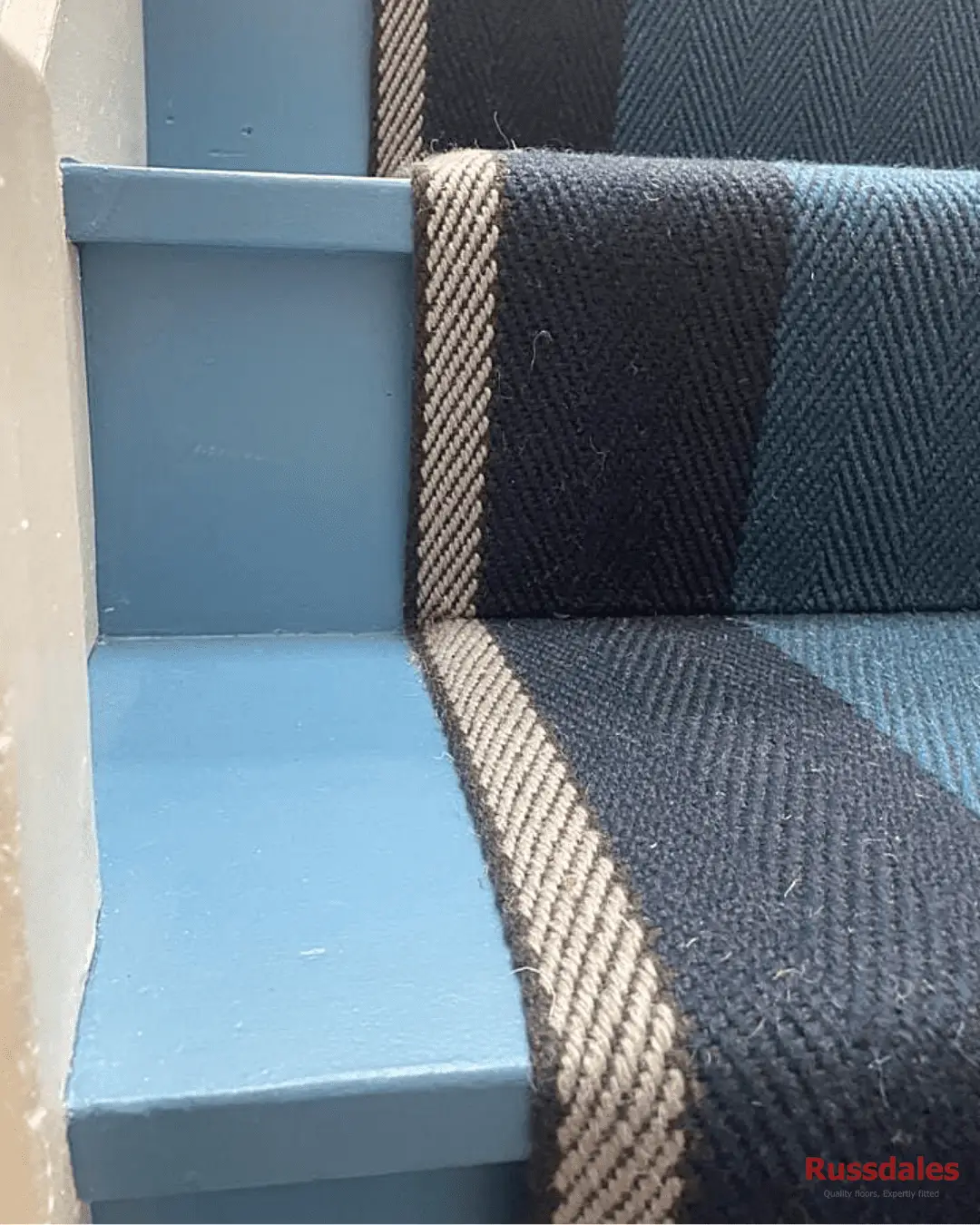 Roger Oates Franklin Indigo at 61cm wide. See the job, Ref 12146
Width, edges and rods
The edge you choose changes how the width reads. A whipped edge is yarn stitched over the edge, usually in the same colour as the carpet, so the runner looks quiet and the border does the talking. A taped edge wraps fabric tape round the edge, usually with about 50mm showing, and often in a contrast colour. That frames the runner and makes the line of the border crisper. Our post on whipped or taped edges compares the two.
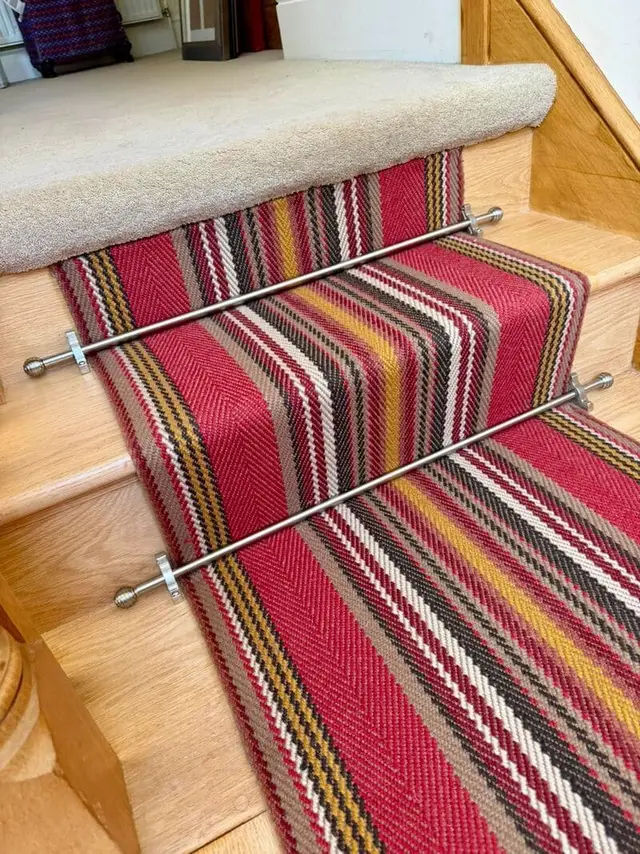
Stair rods run across the runner, so they need to suit its width. Our Jubilee rods are made for runners up to 70cm wide, and other sizes are cut on site. Remember that rods are decorative: the runner is held by grippers and double-stick underlay. Stair rods explained covers what they do.
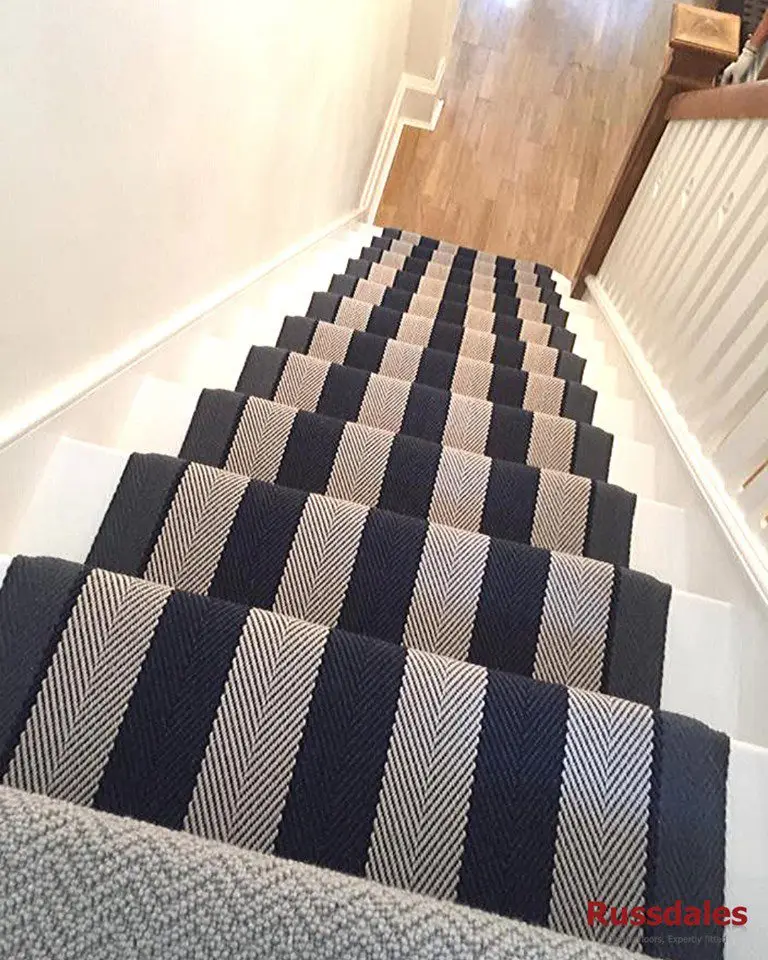 Roger Oates Fitzroy Midnight at 70cm wide. See the job
Does width change the price?
It can. The design and the width decide where your runner lands within Russell’s guide prices. For 13 straight stairs, allow £1,000 to £2,000 with a whipped edge, or £1,300 to £2,300 with a taped edge. A turn adds the templating visit. Our guide to stair runner costs explains what else moves the price.
Try the width before you order
The easiest way to decide is to see it on your own stairs. Measuring is free, and we can bring samples to your home so you can lay them on a tread and judge the border in your own light.
Talk it through with Russell
Bring a photo of your stairs and the width of a tread to a free design consultation with Russell in our showroom at 774 Green Lanes, Winchmore Hill. He will suggest a width and a border that suit your staircase and the design you like. Book your consultation or call 020 8360 1836.