
In a dark hallway, choose a stair runner colour a few shades lighter than the walls and floor around it: stone, ivory, pale grey or a soft natural. A pale runner catches what light there is and leads the eye up the stairs. Then decide how to frame it, with a contrasting taped edge for a crisp outline, and always check the sample in your own hall before you commit.
November is when dark halls look their darkest. If yours feels gloomy by four in the afternoon, this is the right time to think about what goes on the stairs.
Why dark halls are tricky
Many North London halls are long and narrow, with the front door at one end and the only daylight coming through a fanlight or a stained glass panel. Dark painted walls and panelling look rich, but they soak up light. The stairs are often the biggest single surface you see as you come in, so the runner does a lot of work.
A dark runner in a dark hall can make the stairs disappear into the gloom. A lighter one gives your eye something to follow.
Go a few shades lighter
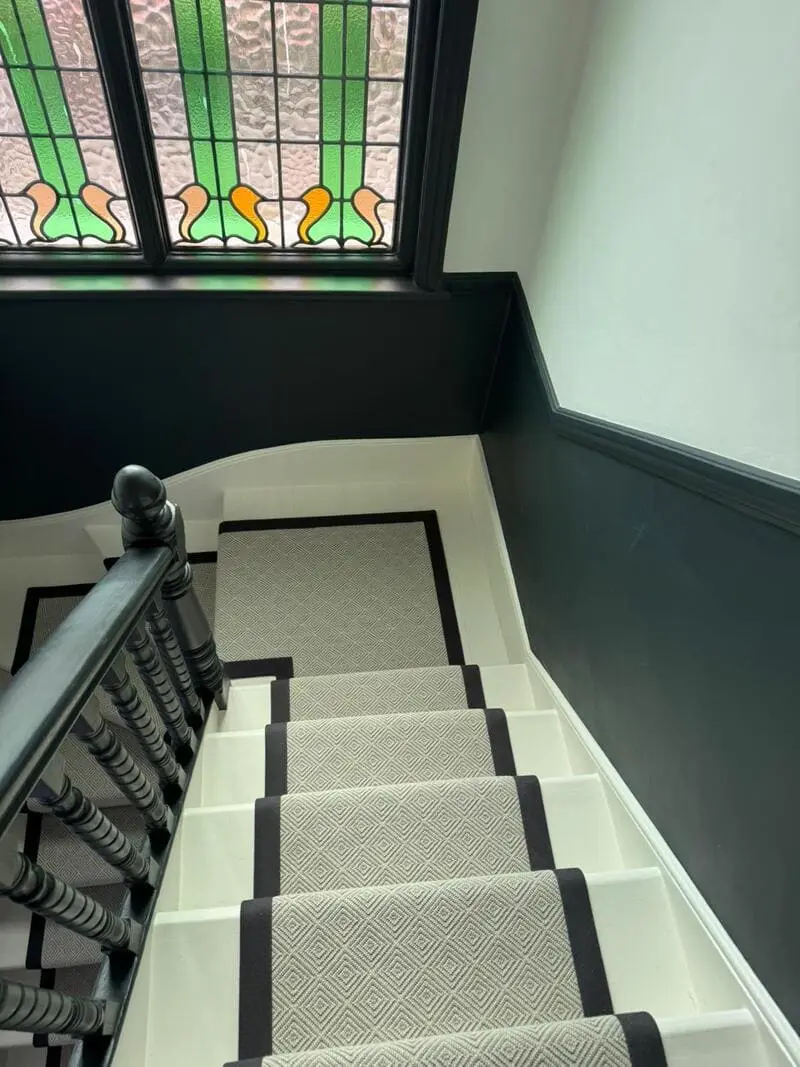
You do not need white. Stone, ivory, chalk, pale grey and soft naturals all lift a staircase without looking stark. The staircase at the top of this page is a good example: a pale grey wool in a small diamond weave, set against dark painted panelling and black banisters. The runner is the lightest thing in the hall, so it draws you up the stairs.
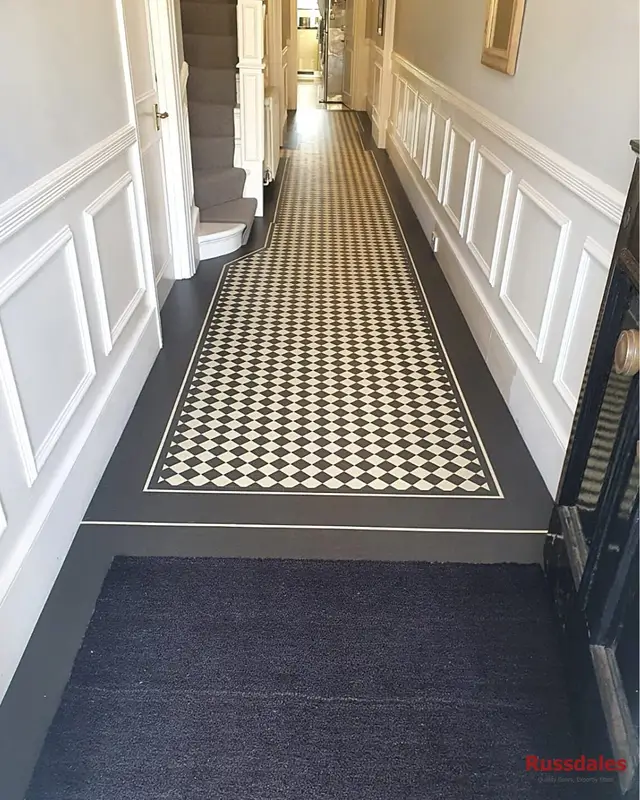
In a long, narrow hall with deep taupe walls and a tiled floor, Cormar Hampstead in Pacific Pearl does the same job. It is soft and pale, with a whipped edge so the runner reads as one calm strip of colour.
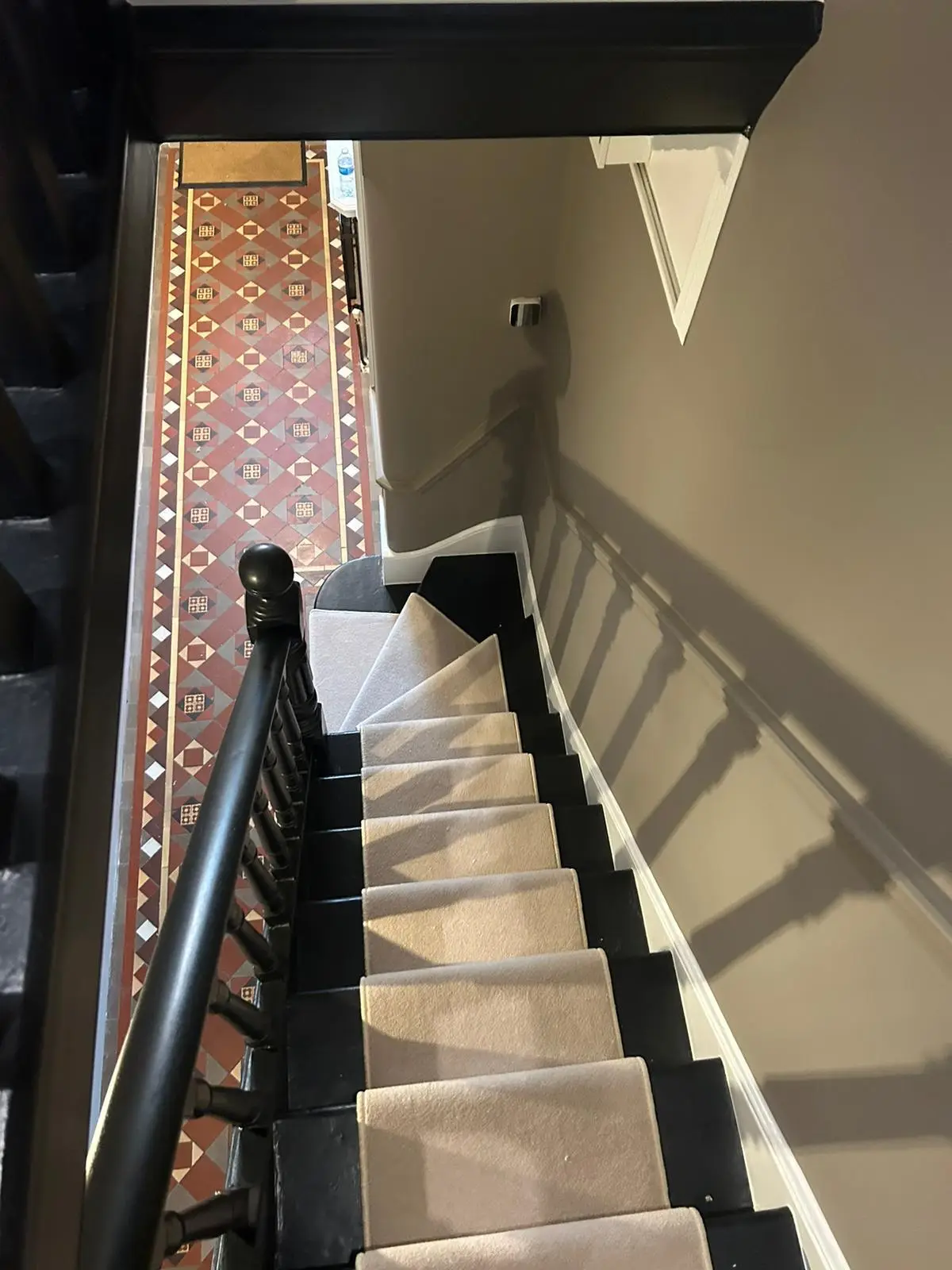 Cormar Hampstead in Pacific Pearl with a whipped edge, North London. See the job, Ref 12974
Texture shows in low light
Plain, flat colour can look dull in a dim hall. A fine pattern, such as a herringbone, a diamond or a small bouclé, gives the light something to catch, so the runner has life even on a grey day. Flatweaves are good at this, and they are hard-wearing on stairs. Flatweave stair runners explained has more.
Think about the dirt
Lighter colours show marks more than darker ones, so be honest about who uses the stairs. For a busy family hall, a mid tone such as pewter, stone or a heathered grey is a sensible middle ground. A textured weave also hides everyday marks better than a smooth plain.
On a staircase and landing in N12, the owners chose Kersaint Cobb Sisal Mini Bouclé in Pewter, a warm grey with a natural texture that sits well with a patterned tiled hall. If you like the look of sisal but have children or pets, read sisal or sisal look? first.
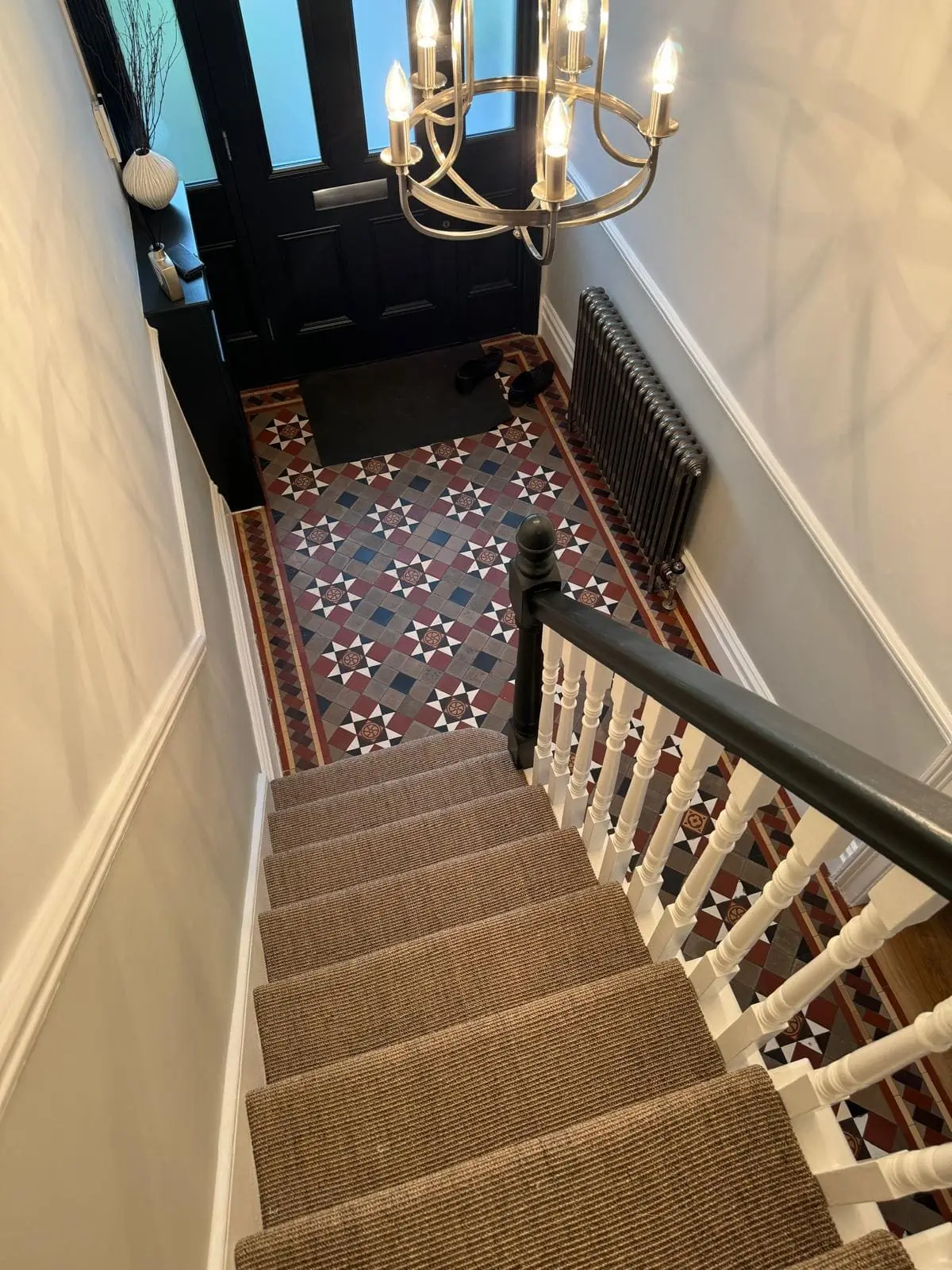 Kersaint Cobb Sisal Mini Bouclé in Pewter on the stairs and landing, N12. See the job, Ref 13045
Stripes that lift
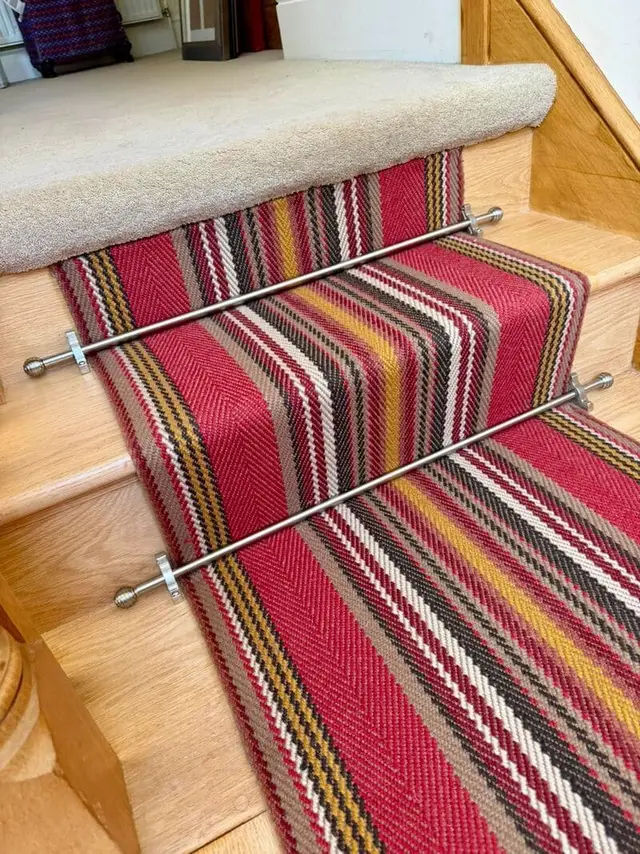
A striped runner adds movement and light, and on a pale ground the stripes lead the eye upwards. Narrow stripes are easier on a turning stair than wide ones. Our guides to striped stair carpets and wool loop stripes show the options.
Edges: pale or dark?
The edge changes how the runner sits in the hall.
- A whipped edge is stitched in yarn, usually the same colour as the carpet. The runner reads as one soft strip, and it looks a touch wider.
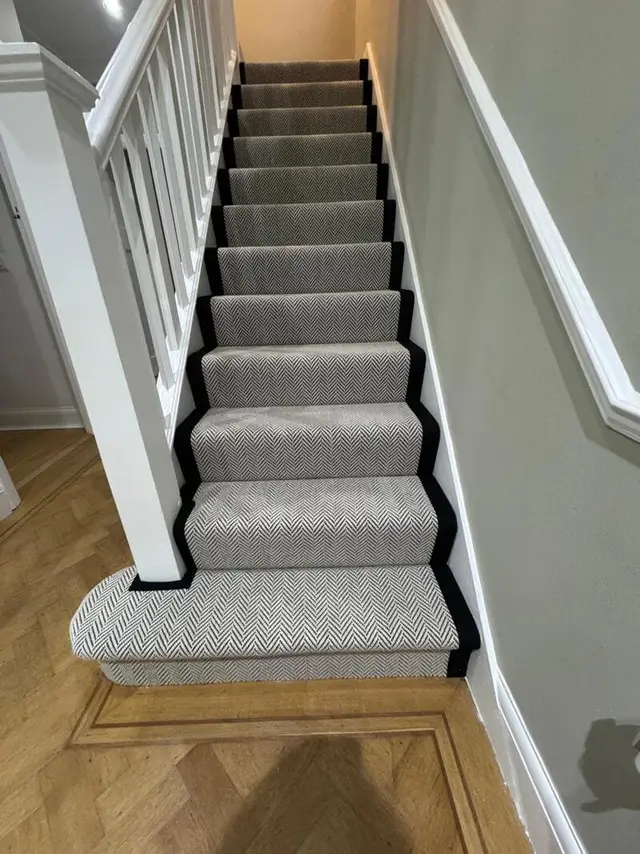
- A taped edge wraps a fabric tape around the edge, with about 50mm showing, often in a contrast colour. On a pale runner in a dark hall, a black or charcoal tape gives a crisp outline that ties the runner to dark walls or banisters.
You can also pick the edge colour from the hall itself. In an Enfield house with green panelled walls, we finished a Fibre Flooring herringbone runner in Zinc with a Cactus green binding to match. Our post on whipped or taped edges has the prices.
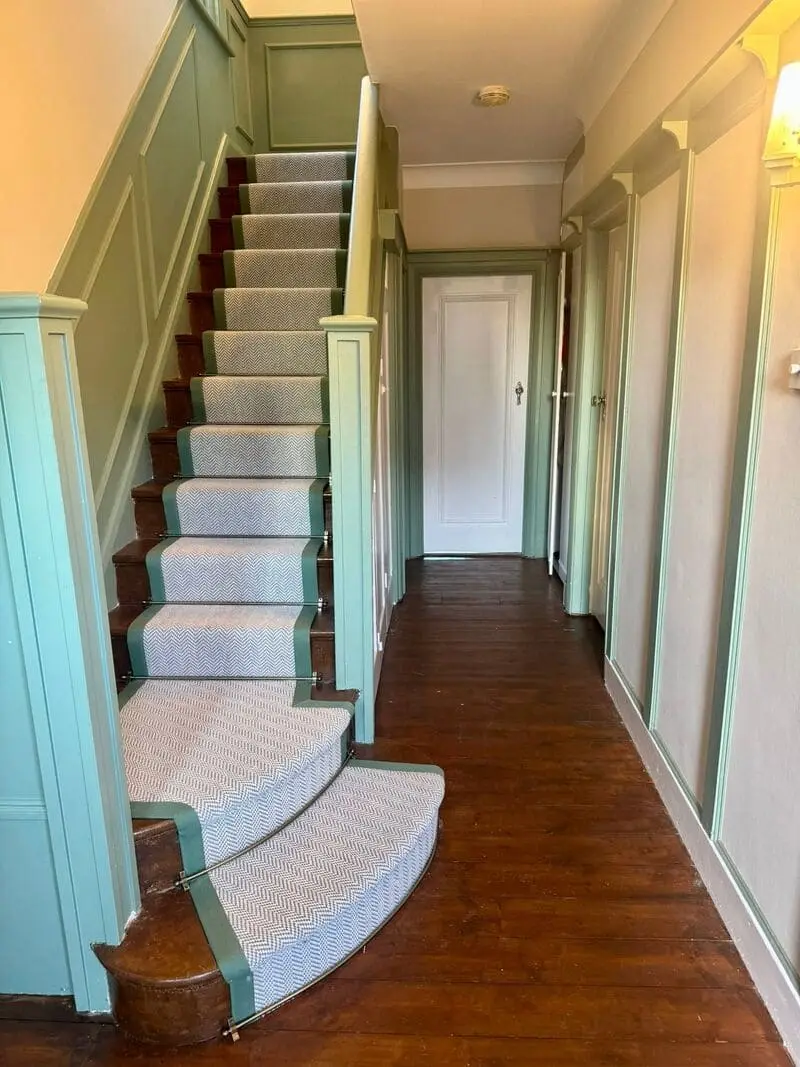 Fibre Flooring herringbone in Zinc with a Cactus fabric binding and antique brass Jubilee rods, Enfield. See the job, Ref 13506
Rods that catch the light
Stair rods are decorative, but in a dark hall they earn their place. Polished brass, antique brass, chrome and nickel all pick up whatever light there is. Our stair rods price guide lists every range, and the stair rod finishes guide compares the finishes.
See it in your own light
This is the most important step. A sample looks different under shop lights from the way it looks in a north-facing hall in November. That is why we visit people at home with samples: it is a good way to see a runner in your own light, morning and evening, before you choose.
If you want a feel for the look first, our new 3D runner designer lets you try colours, edges and rods on a staircase like yours. Then come and see the real thing, because nothing beats a sample on your own stairs.
Find your colour with Russell
Bring a photo of your hall, or the paint colour of your walls, to a free design consultation with Russell at 774 Green Lanes, Winchmore Hill, N21. He will put the lighter colourways and edges side by side for you. Or ask about a home visit with samples. Book a consultation or call 020 8360 1836.