
The right striped carpet for stairs depends on the staircase as much as the stripe. On a straight flight, almost any stripe works. On a turning staircase, a wide stripe will not pattern match round the turn, so a narrower stripe is the better choice, and stair rods help disguise where a stripe runs out. Whatever you choose, see a large sample at home before you decide.
There are a great many striped designs to choose from. Here is how we help people narrow them down in our showroom on Green Lanes.
Bold, or blending in?
Start with the effect you want. A stripe can be the star of the hall, or it can sit quietly alongside the other floors in the house.
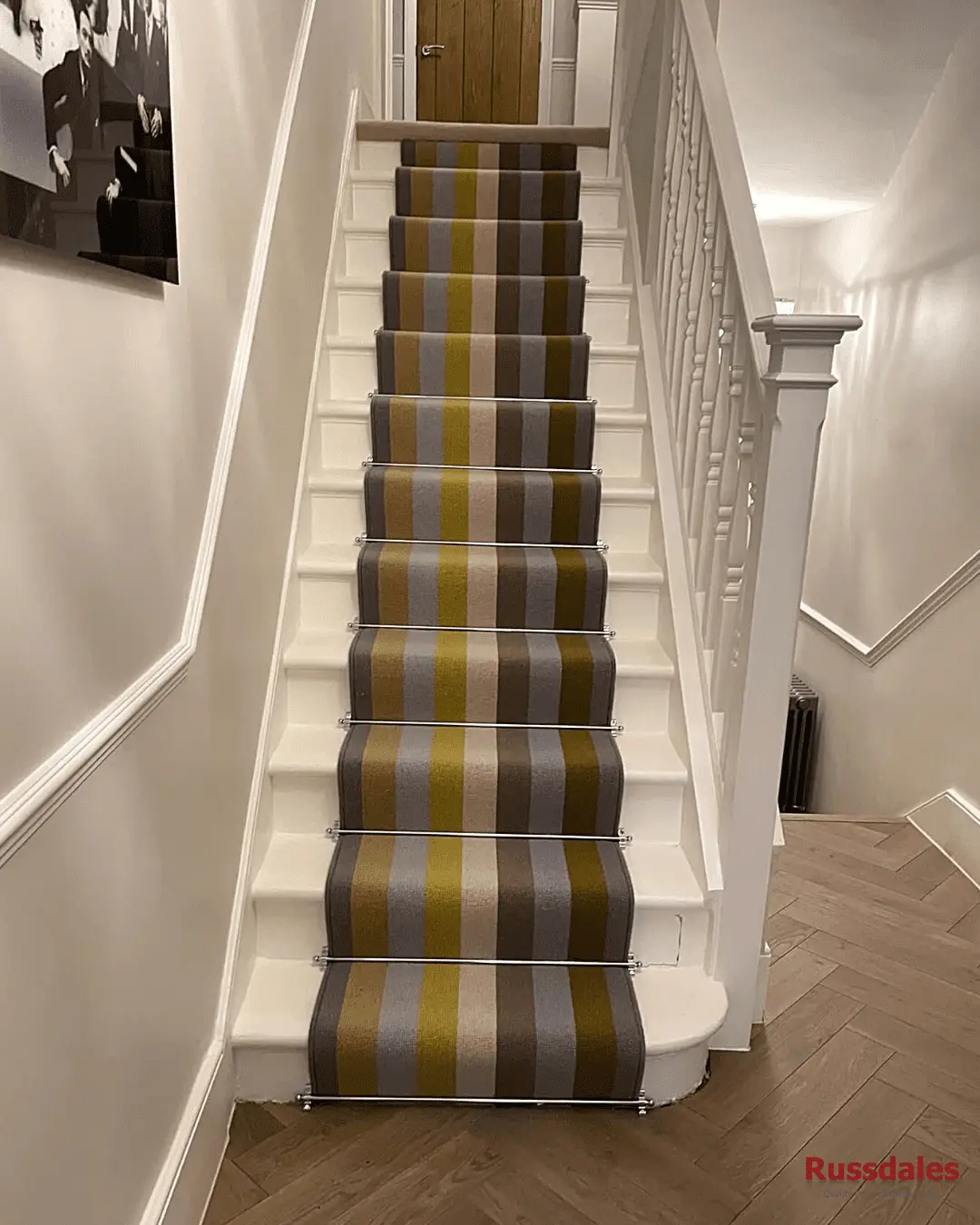
Bold stripes make a statement. Margo Selby’s stripes for Alternative Flooring bring a lot of colour into a plain white hall, like the runner at the top of this page. The Mississippi stripe in Blue and Ginger mixes cool and warm, and Alternative Flooring’s Rock and Roll in Back to Black gives a sharp monochrome look.
Blending stripes add pattern without taking over. Soft greys, naturals and tone on tone stripes suit a hall with a busy tiled floor or patterned wallpaper, and they are easy to live with for years.
Neither is right or wrong. Think about the hall as a whole: the walls, the floor at the bottom of the stairs, the front door and the landing above.
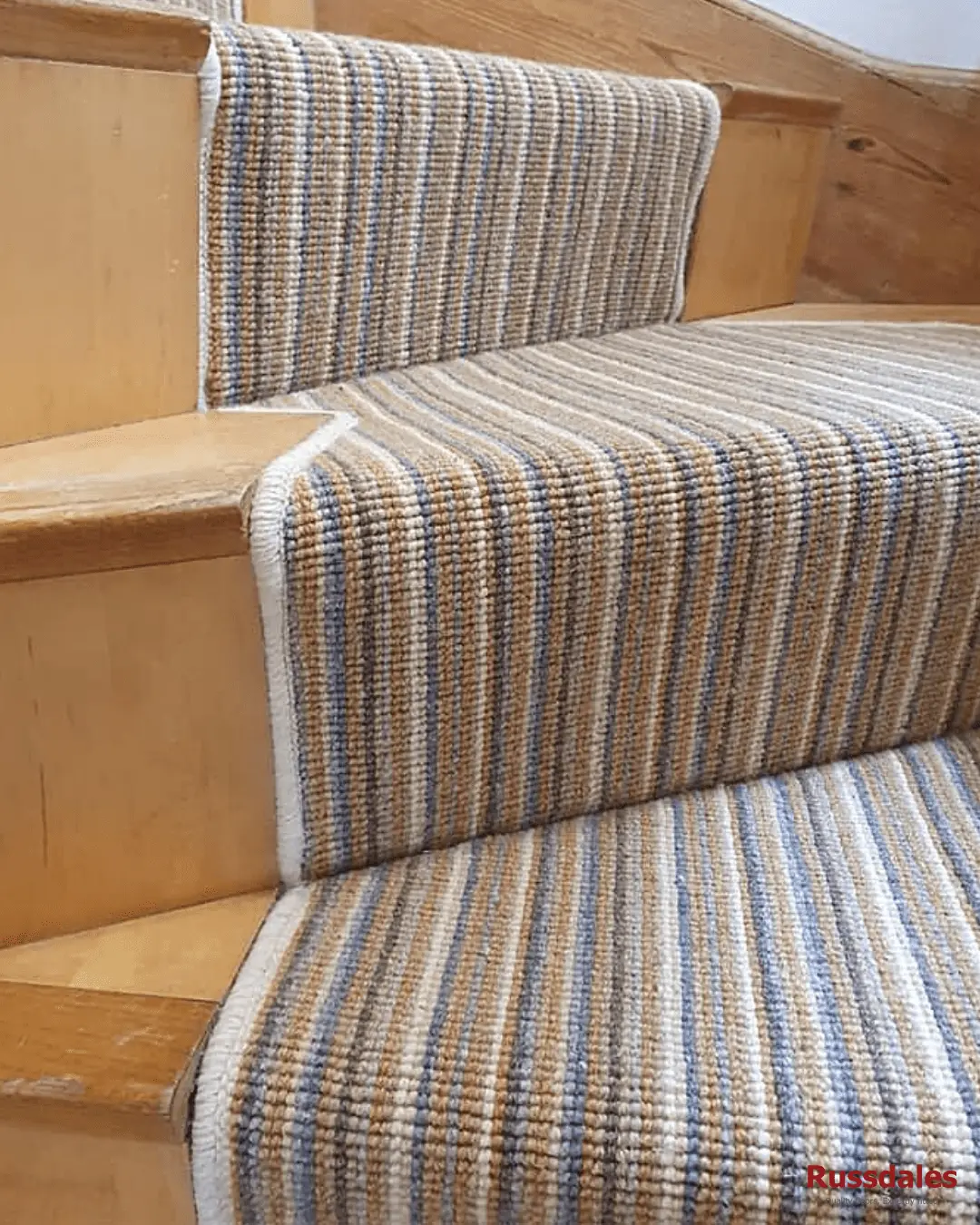
Mississippi stripe in Blue and Ginger, a lively mix that adds colour without covering the whole stair. See the job, Ref 11999
Straight flights and turning stairs
This is the part that matters most, and it is where an honest opinion saves a lot of disappointment.
On a straight flight, the stripe simply runs from the bottom step to the top. Wide or narrow, it lines up.
On a turning staircase, the runner has to change direction at a quarter landing or across winders. The stripes on each piece cannot line up perfectly as they go round. With a wide stripe, that mismatch is obvious, so a wide stripe is not our first choice for stairs with a lot of turns. A narrow stripe works much better, because the matching is less noticeable. Stair rods placed on the turn help disguise where a stripe runs out.
A turn also needs a second visit to template the stairs before the runner is made, at £150 to £300 depending on the turn. Our guide to what a stair runner costs covers that.
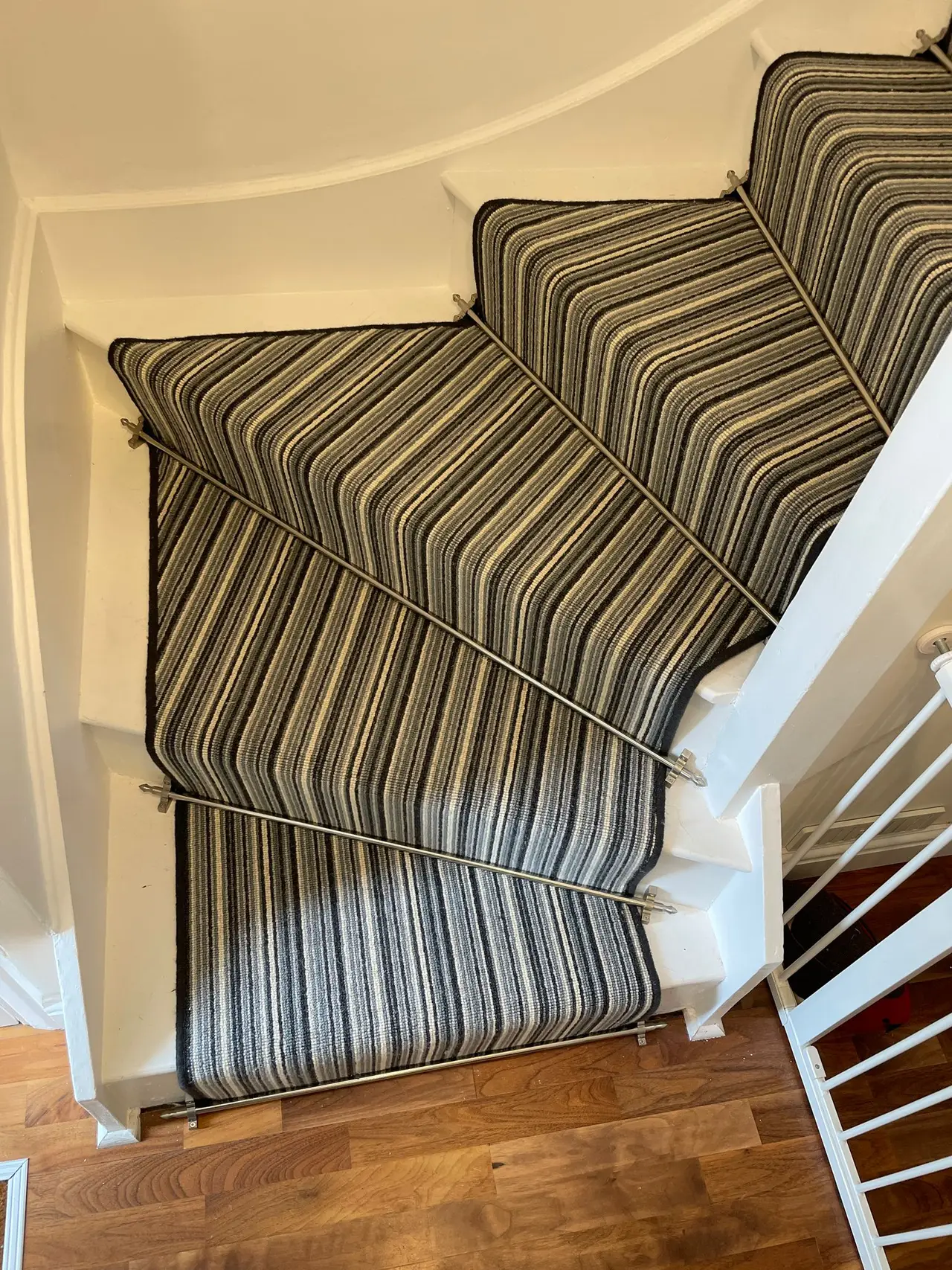
A narrow stripe in the Taruca quality with a whipped edge and Homepride satin nickel rods, turning neatly round the winders. See the job, Ref 12495
Stripe on the stairs, plain on the landing
Many people choose a stripe for the stairs and a plain carpet from the same range for the landing. The colours match exactly, the stripe stays the feature and the bedrooms can carry on in the plain. Ranges such as Cormar’s Avebury and Victoria’s Tudor Co-ordinates are made for it, with a stripe and matching plains.
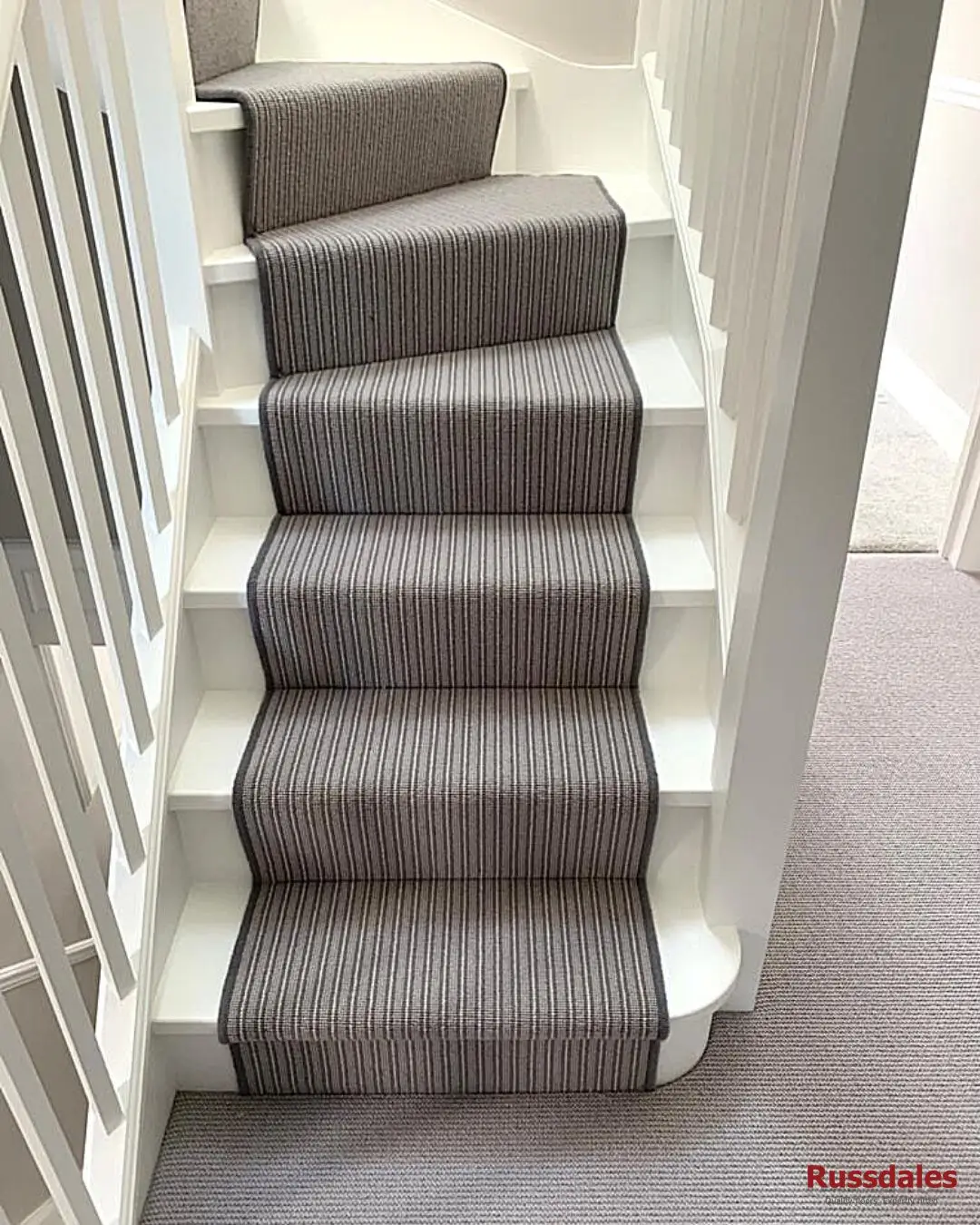
Cormar Avebury stripe as a runner on the stairs, with Avebury plain carpet on the landings. See the job, Ref 11831
Runner or fully fitted
A striped runner leaves a border of painted or timber stair showing either side, usually 100mm to 150mm. That border frames the stripe and makes it look tailored. A fully fitted stripe covers the whole tread and reads as one continuous carpet. Both work; the condition of the stairs and the look of the hall usually decide it.
Edges for a striped runner
A whipped edge is yarn stitched over the edge in a matching colour, so the stripes run right to the edge of the runner. The Taruca runner above and the Rock and Roll stripe both have whipped edges. A taped edge frames the stripes with a band of colour, about 50mm wide. Our post on whipped and taped edges explains the difference and the cost per metre.
Rods with stripes
Rods are decorative, because the runner is held by grippers and underlay, but they suit stripes well. Chrome rods finish the bright Margo Selby runner at the top of this page, and black rods sit with the monochrome Rock and Roll stripe. On a turn, they help hide the joins. Our post on what stair rods do covers the eleven ranges.
Stripes suit period houses too. See our post on Victorian stair runners for stripes alongside tiled halls and brass rods.
Always see a large sample at home
A small swatch in a showroom can’t show you how a stripe will look climbing your own stairs, in your own light. We always recommend seeing a large sample at home, so no mistakes are made. We also offer a free measure and advise service, and Russell will tell you honestly whether a stripe will work on your stairs. See more designs on our striped carpets page.
Choose your stripe with Russell
Bring a photo of your staircase to a free design consultation with Russell in our showroom at 774 Green Lanes, Winchmore Hill, N21 3RE. He will show you stripes from narrow to wide, bold to quiet, and help you pick one that suits your stairs. Book your consultation or call 020 8360 1836.