
A stair runner leaves a border of painted or stained stair on each side and makes the staircase a feature of the hall. A fully fitted stair carpet covers every tread from wall to wall, so it is warmer, quieter and hides a tired stair. Neither is better in every house. Many people choose both: carpet fitted on the landing, with the main flight made into a runner from the same carpet.
What a runner gives you
A runner is a piece of carpet running down the middle of the stairs. We leave a border of stair either side of at least 100mm and up to 150mm, made to order, so the painted or stained edges and the spindles stay on show. That is the main reason people choose one. It makes the staircase look deliberate and lets a period stair be seen.
A runner also suits pattern. Flatweave herringbones, stripes and diamond designs look their best as runners, with a whipped or taped edge framing them. You can add stair rods if you like the look. They are decorative only, but on a turn they help disguise the joins.
The catch is the part that stays on show. The stair either side needs to be in good condition and painted or stained, and it will need touching up now and then. A runner’s edges also have to be finished, which adds to the cost. A whipped edge is £8 to £10 per linear metre, and a taped edge £30 to £40 per linear metre.
As a guide, a runner on 13 straight stairs is £1,000 to £2,000 with a whipped edge, or £1,300 to £2,300 with a taped edge. If the stairs turn, a second visit to template the turn is £150 to £300. Allow 3 to 4 weeks from order to fitting.
What a full stair carpet gives you
A fully fitted stair carpet covers every tread and riser from wall to wall. It is warmer underfoot and usually quieter, because there is no bare timber or paint at the sides for feet to land on. It hides a stair that is worn, patched or made of mismatched timber, and there is nothing to paint.
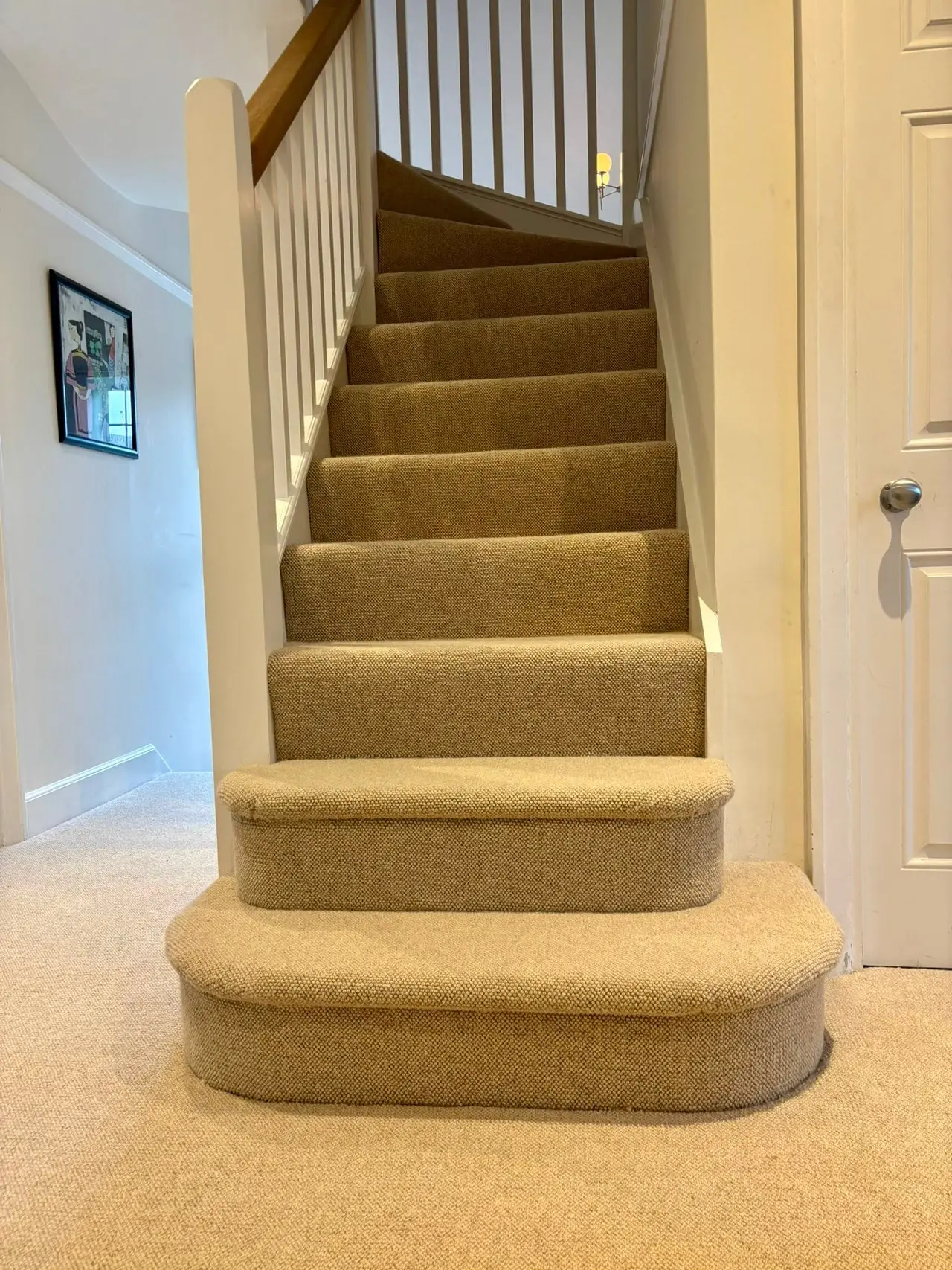
It also makes it easy to keep one carpet running from the hall up the stairs, across the landing and into the bedrooms. Cormar is a good example. Its ranges often come with matching plains and stripes, so you can have a stripe on the stairs and a plain in the bedrooms. In NW11 we fitted Cormar Fairisle in Oatflake throughout the house, as in our main photo (Ref 13473).
The catch is that the stair disappears. If you have a lovely staircase, a full carpet can make it look plainer. For pricing, fitted stair carpet depends on the range you choose, so ask us for a written quote.
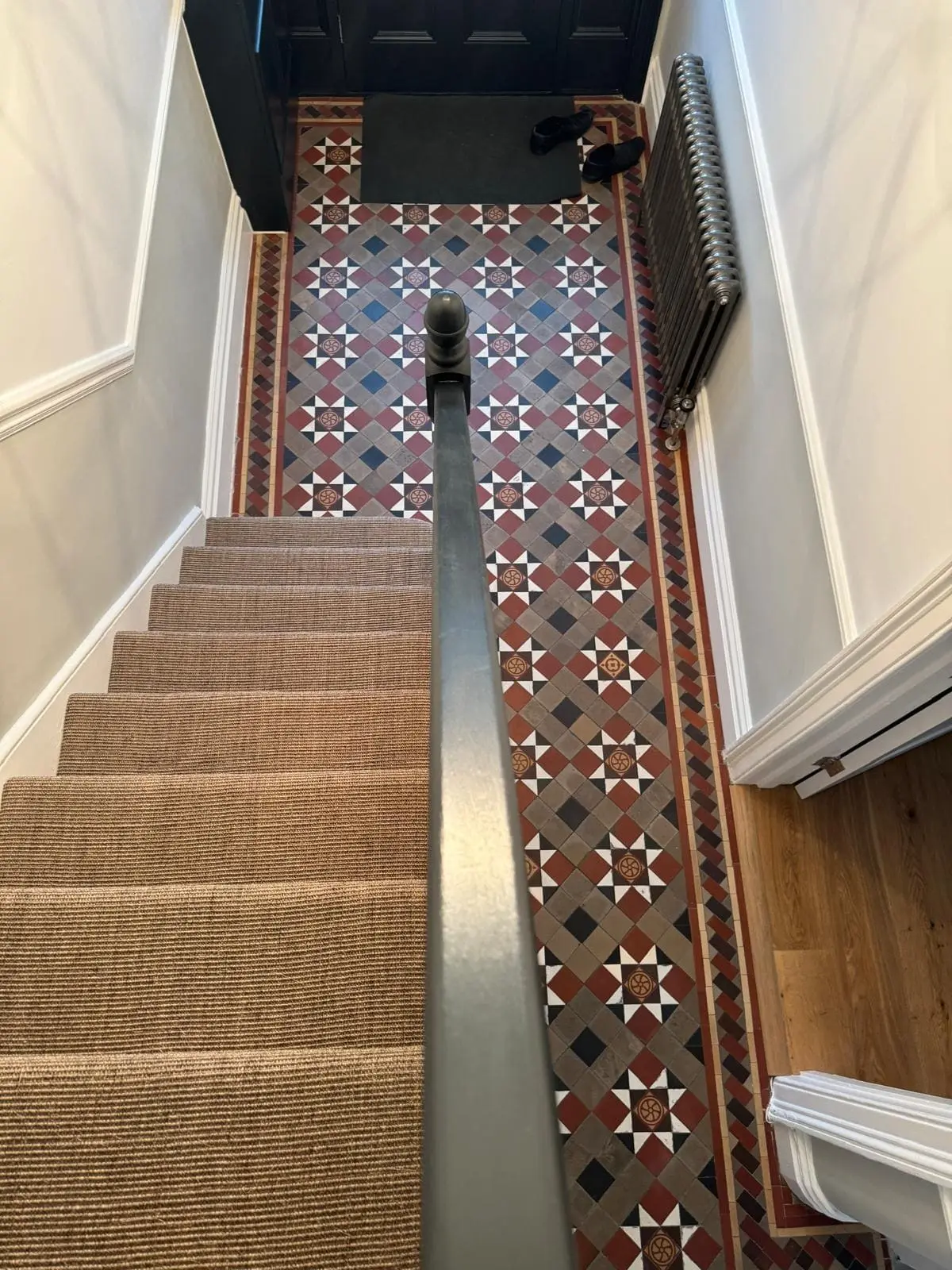 Kersaint Cobb Sisal Mini Boucle in Pewter, fully fitted to the stairs and landings in N12, over a tiled hall. See the job, Ref 13045
Whichever you choose, choose the right carpet
The rule for stairs is the same both ways. Choose a low, tight pile or weave. Nothing thick or soft, because it wears quickly on the stair nosing, where every foot lands and the carpet bends over the edge. We explained why in why stair carpet wears out on the nosing. Underneath, the stair gets a good underlay and gripper so the carpet sits tight on every step.
Painted stairs
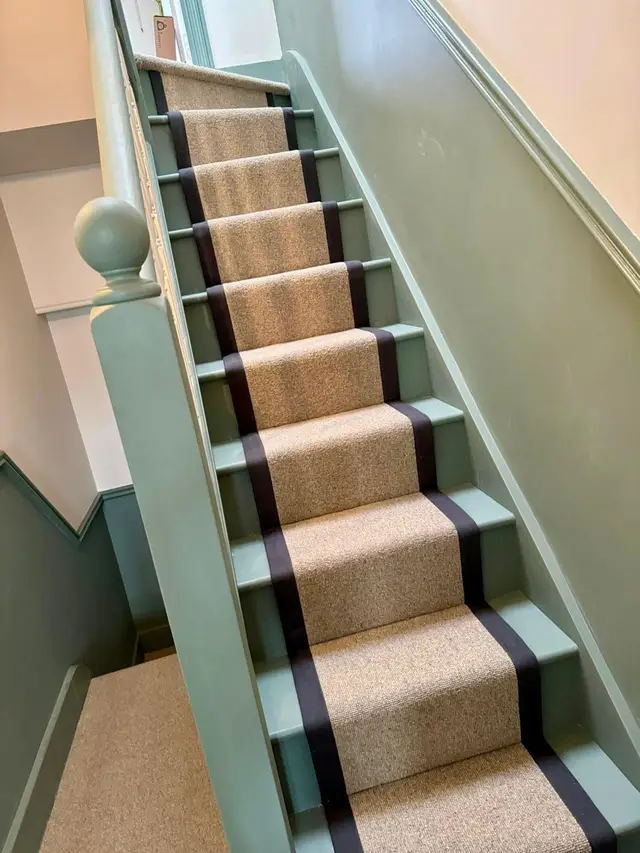
If your stairs are already painted, or you plan to paint them, a runner makes the most of it. In Southgate the homeowners painted their staircase a dark colour, skirting and all, and we fitted a Roger Oates Swanson runner in Juniper up the middle (Ref 13257). The dark paint and the green runner work as one scheme.
If you are painting, do it before the runner goes in, and let it dry properly. Our guide to spring renovations covers the order of work in more detail.
The best of both: a fitted landing with a runner below
This is one of the combinations we are asked for most. The landing is fully fitted, sometimes with the top stairs too, and the main flight is cut and made into a runner from the same carpet. The landing is warm and quiet where you walk barefoot from the bedrooms, and the staircase still shows off its paint and spindles from the hall.
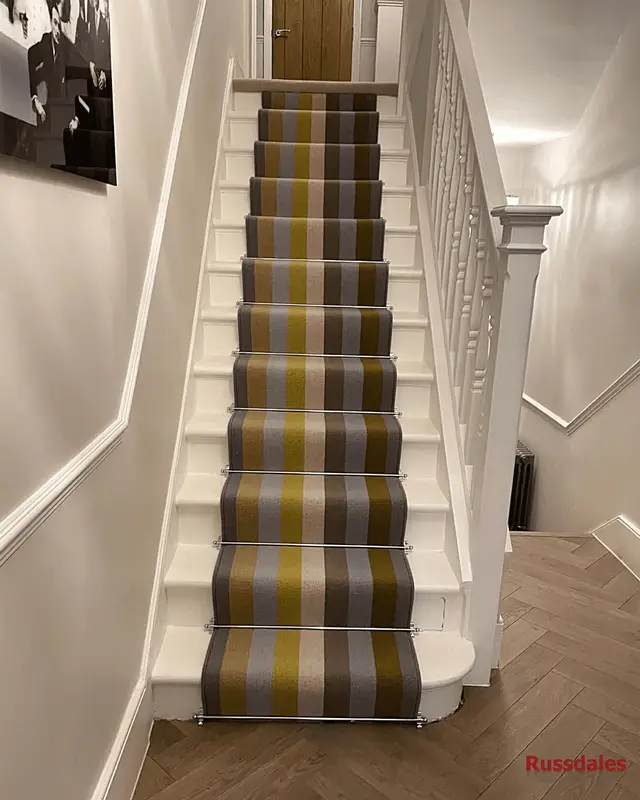
In a period house in N21 we fitted sisal in Moonstone to the top stairs and landing and made it into a runner on the bottom stairs. The runner has an Alternative Flooring stripe edge in Mushroom and bronze Jubilee rods.
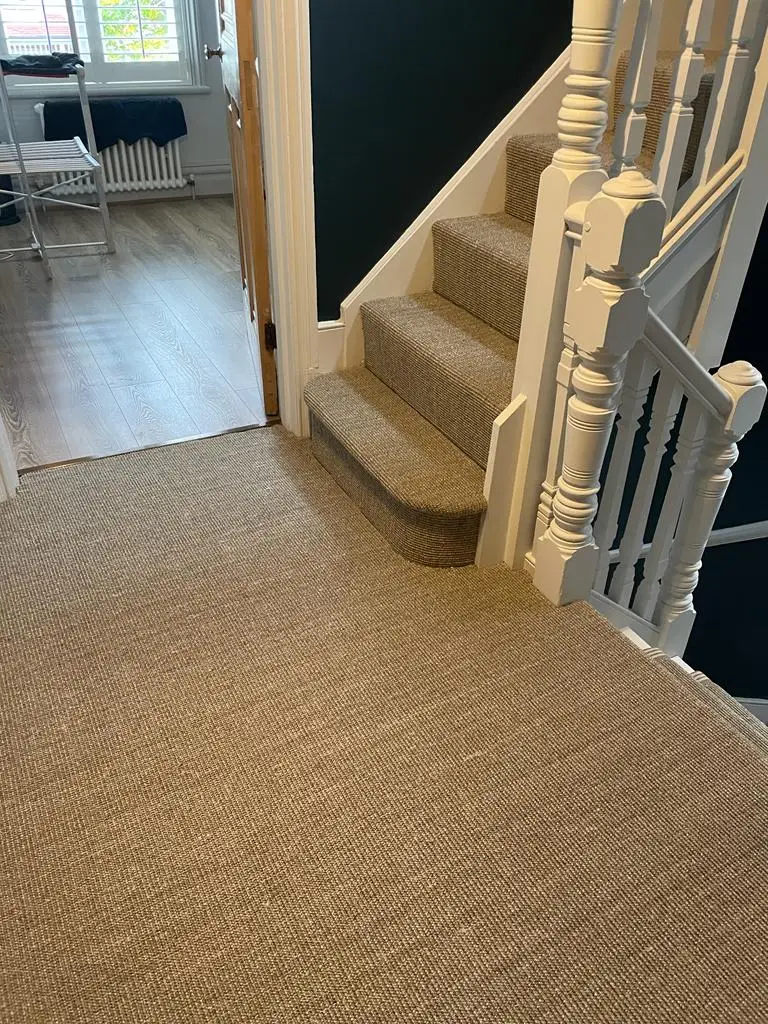 Sisal in Moonstone, fully fitted to the top stairs and landing and made into a runner below, in a period house in N21. See the job, Ref 12534
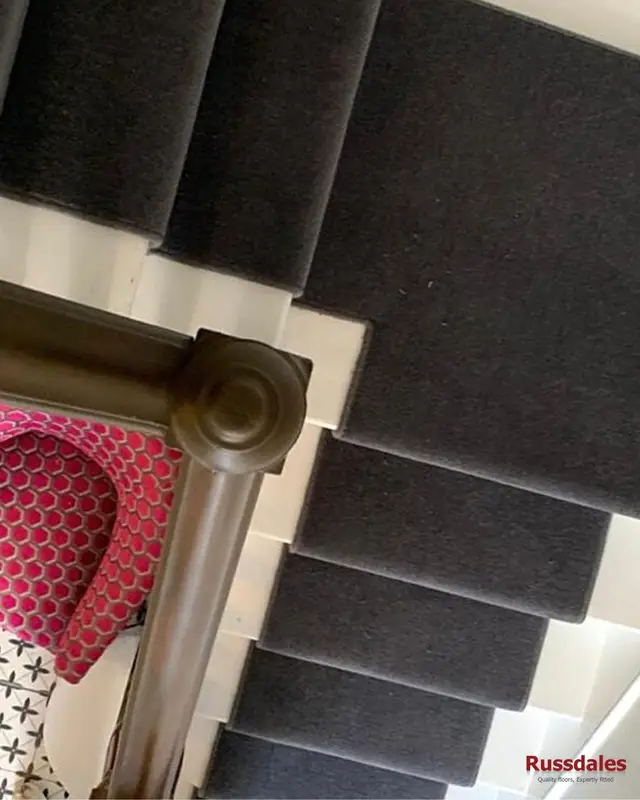
More recently, Fibre Flooring flatweave herringbone in Chalk went fully fitted on the landing and upper stairs, with the lower flight made into a runner with a black fabric edge. The black edge stands out against the patterned tiles of the hall.
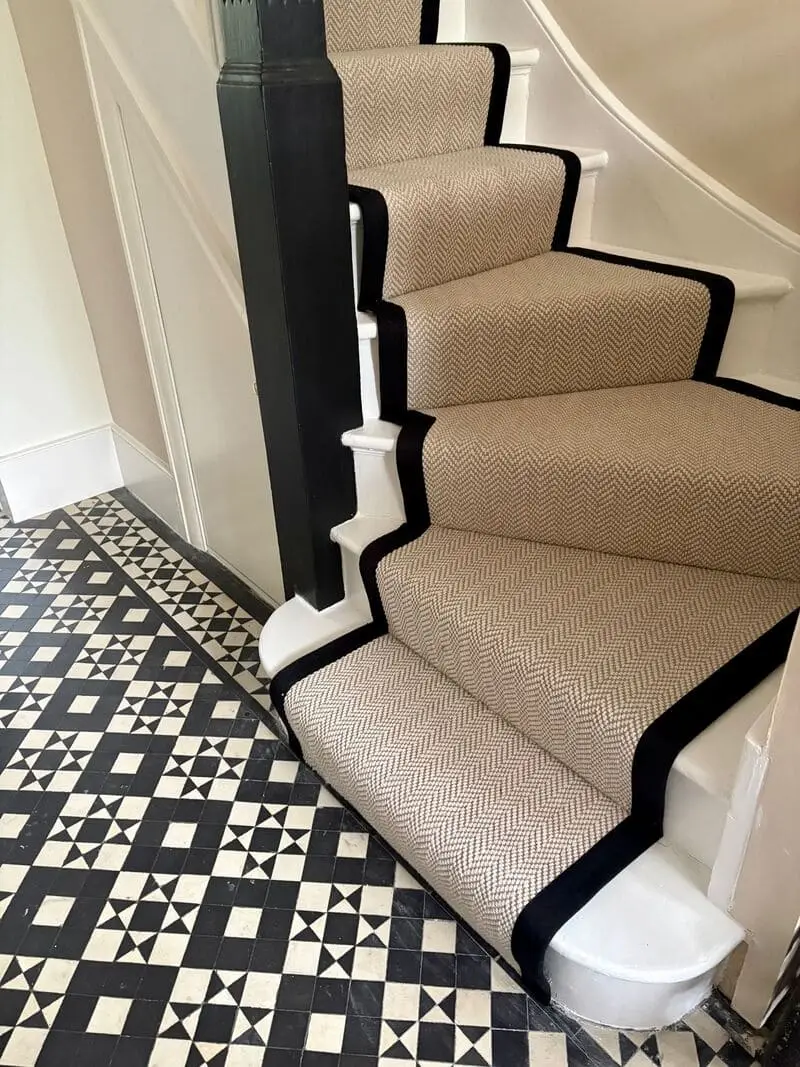 Fibre Flooring flatweave herringbone in Chalk, made into a runner with a black fabric edge on the lower flight, in North London. See the job, Ref 13629
We wrote more on making the two meet neatly at the top step in landing carpets: matching your stairs and landing. If you have your heart set on herringbone, our earlier post on herringbone carpet on stairs looks at that choice in particular.
A quick way to decide
- Choose a runner if you have a good staircase you want to see, a hard floor in the hall, or a patterned flatweave in mind.
- Choose a full stair carpet if the stair is tired or mismatched, you want the warmest and quietest stair, or you want one carpet throughout.
- Choose both if you want a warm landing and a staircase that still looks like a feature from the front door.
Book a design consultation with Russell
The quickest way to decide is to see both on your own stairs. Book a free design consultation with Russell in the showroom at 774 Green Lanes, Winchmore Hill, and bring a photo of the staircase from the hall. Measuring is free, and we can bring samples to your home so you can lay them on the steps. Book online or call us on 020 8360 1836.