
On a concrete floor, carpet gripper and door thresholds do not have to be nailed down. They can be fixed with adhesive instead, which matters when there are heating pipes or electric cables buried in the floor. If you are not sure where your pipes and cables run, tell us before we fit, and we will plan the fixings around them.
How a carpet is held down
Most fitted carpet is held by gripper. Gripper is a strip fitted around the edge of the room, with small angled pins along it. The underlay goes down inside the gripper, then our fitters stretch the carpet over it and hook it onto the pins, so it stays tight and flat right to the skirting.
On a timber floor, gripper is nailed into the floorboards. On concrete, it is traditionally fixed with masonry nails driven into the floor. That works well on a plain concrete floor. The trouble starts when the floor is not as plain as it looks.
What can be hidden in a concrete floor
Many homes have pipes and cables running inside the concrete or the screed on top of it, especially on the ground floor and in flats. Heating pipes are often run through the floor between radiators. Underfloor heating has pipes laid across the whole floor. Electric cables run to floor sockets, kitchen islands and outside lights. In a new extension, there may be all three.
Most of the time you cannot see any of it. And the edge of the room, where gripper goes, is often where pipes run, close to the walls. A nail in the wrong place can puncture a pipe or damage a cable. A punctured heating pipe under a new carpet is the last thing anyone wants.
Glue instead of nails
The answer is simple. On a concrete floor, gripper can be fixed with adhesive instead of nails. Nothing is driven into the floor, so nothing underneath is put at risk. It is the method to use wherever pipes or cables might be near the surface.
The same goes for thresholds. Where the carpet meets another floor at a doorway, a threshold strip finishes the edge and protects it. On concrete these can be stuck down too, rather than screwed or nailed in place.
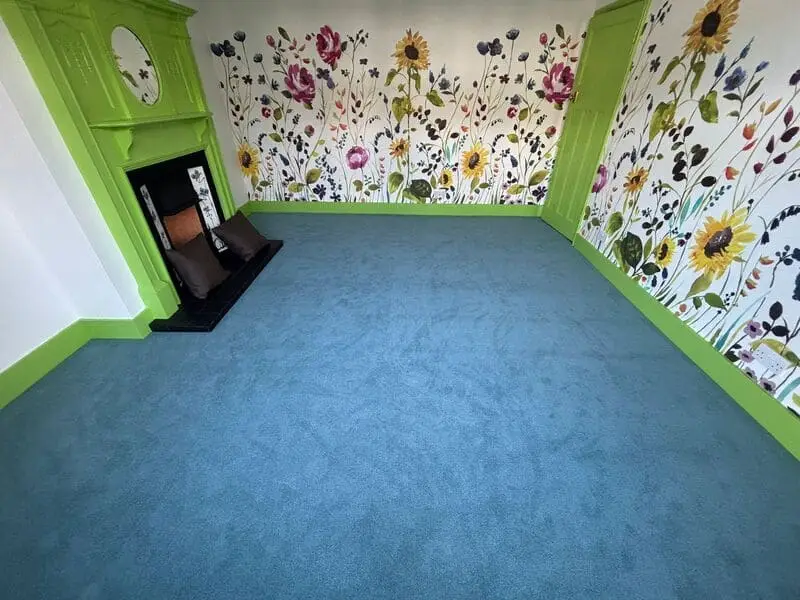 Penthouse Carpets Stateside in Atlanta, fitted over new underlay and gripper with threshold strips at the doorways, in North London. See the job, Ref 13566
Tell us what you know
You know your home better than we do, so tell us anything you can:
- Do you have underfloor heating? Where does it run, and does it cover the whole room?
- Where are the radiators, and where do the pipes come up to them?
- Are there floor sockets, a kitchen island with power, or outside lights fed through the floor?
- Has a builder or plumber left drawings or photos of the floor before it was screeded? Those are very useful.
- Has anything been moved since? A radiator taken out can leave its pipes behind in the floor.
If the answer to any of these is “I am not sure”, say so. That is a perfectly good answer, and it tells us to use adhesive. It is much better than guessing.
Pipes you can see
Sometimes the pipes are not hidden at all. They run along the skirting or rise out of the floor to a radiator. Our fitters cut the carpet neatly around them. On one real oak floor we also fitted new MDF skirting and boxed the pipes in, so the room looked complete once the floor was down.
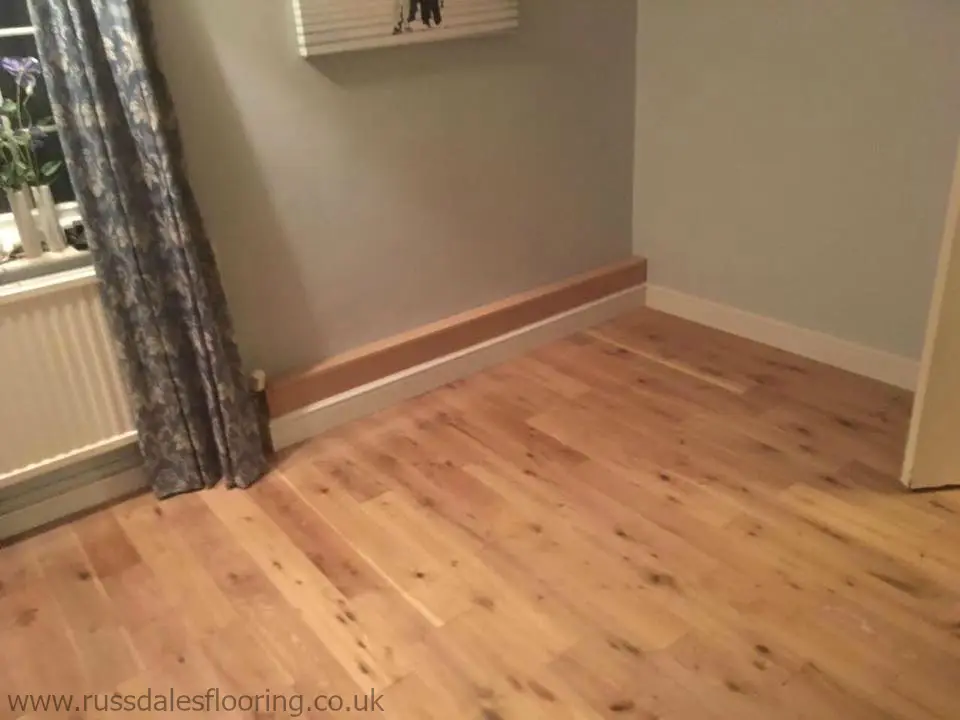 Real oak plank flooring with new MDF skirting and the pipes boxed in, in North London. See the job
Underlay on concrete
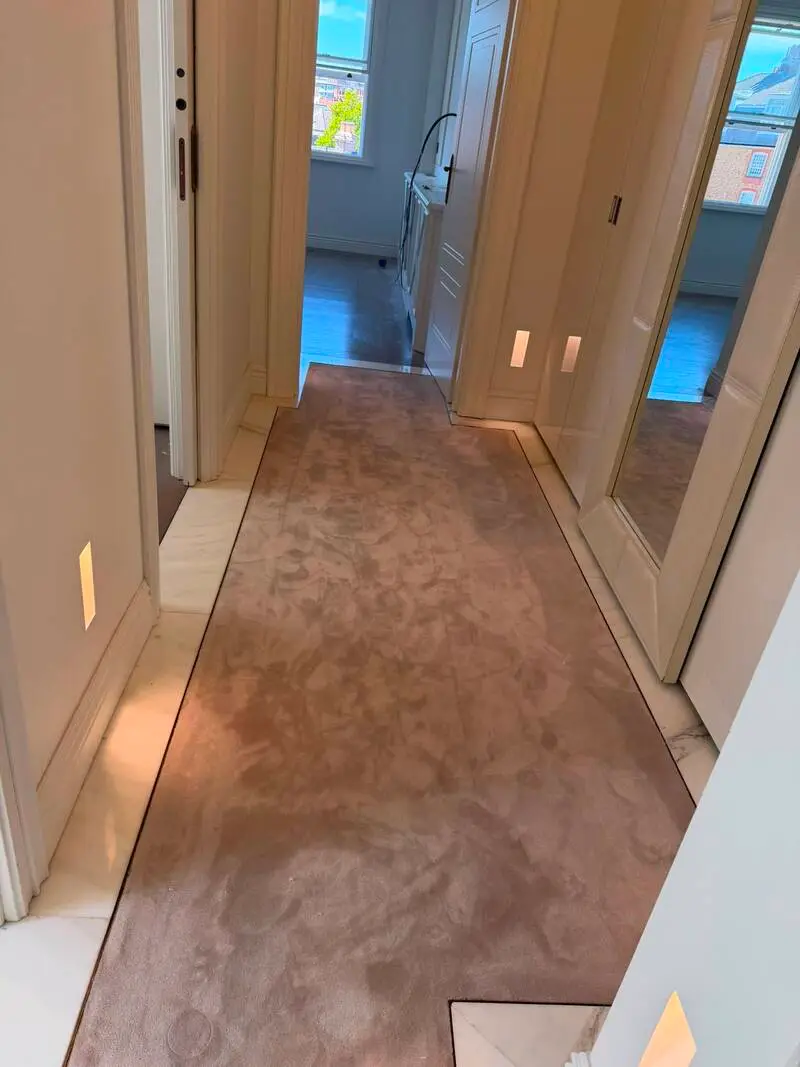
A concrete floor can feel hard and cool underfoot, so the underlay matters. We recommend Cloud 9, and good underlay can help a carpet last up to 40% longer. In the Regent’s Park apartment in our main photo, Artisans Seta in Verona went down over Cloud 9 Contract underlay along an 11 metre hallway, fitted without seams, with trims joining the carpet neatly to the marble edging. Our guide on why carpet underlay matters explains more.
If your concrete floor has underfloor heating, carpet can go over it, but the carpet and underlay together need to let the heat through. We covered that in our guide to underfloor heating and carpet, and we will check the combination for you before you order.
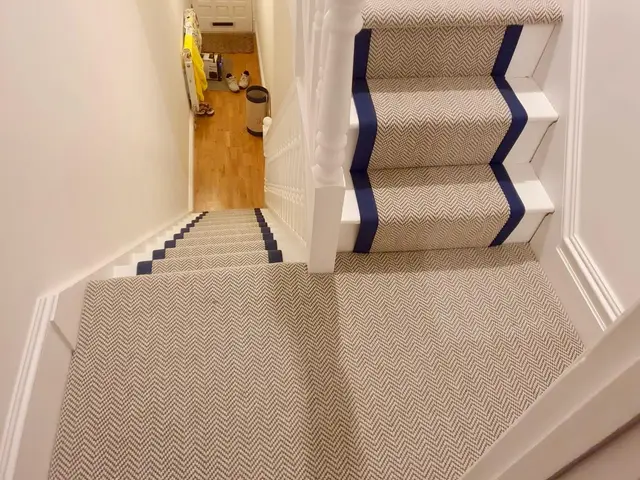
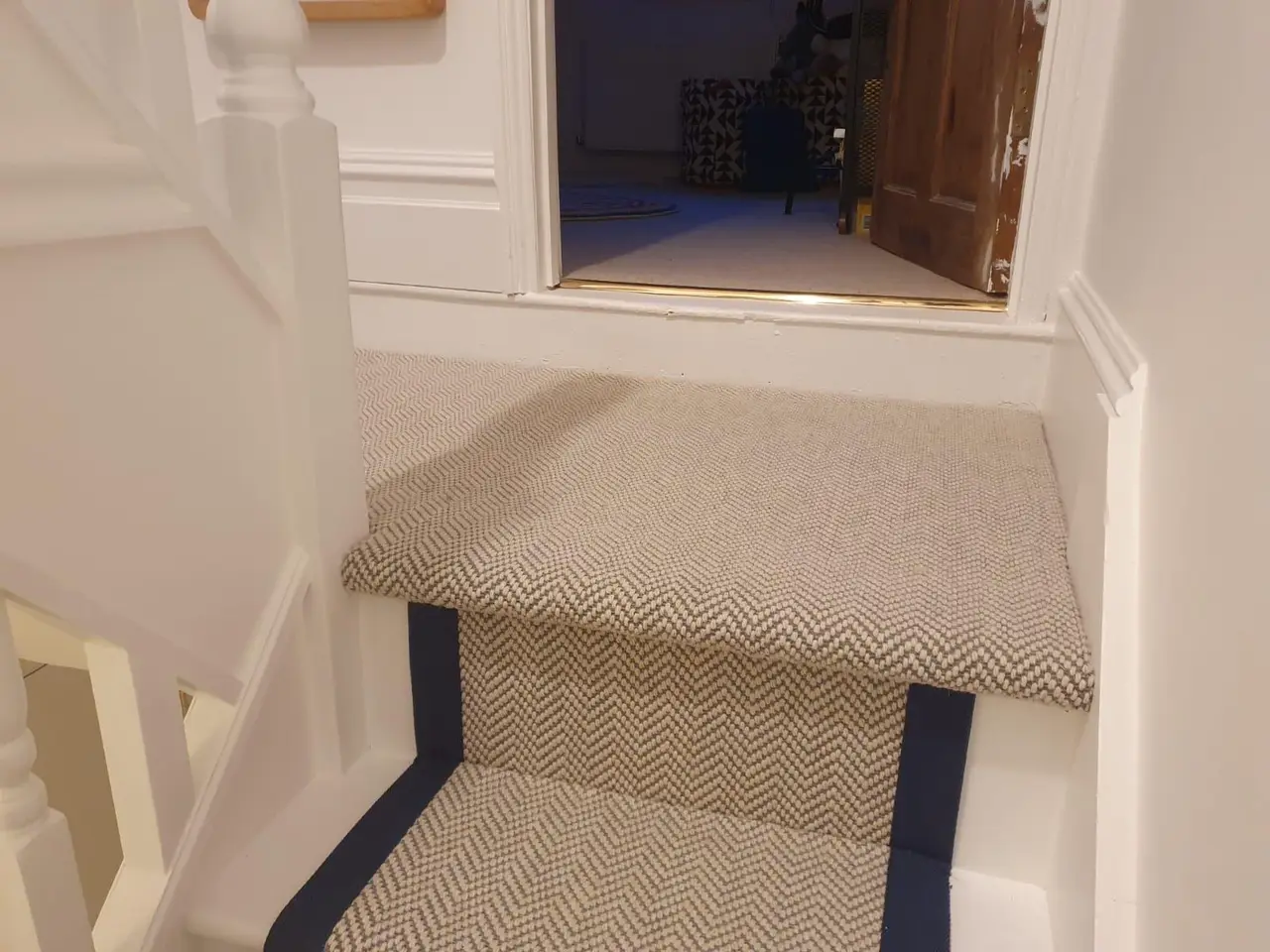 Fibre herringbone carpet fully fitted to the landings and made into a runner on the stairs, finished with solid brass Premier threshold strips, in North London. See the job, Ref 13001
Hard floors on concrete
The same care applies if you choose a hard floor. Most Amtico and Karndean is stuck down to a smooth screed, so nothing is nailed into the floor, but trims and thresholds still need fixing. Laminate, and many wood floors, float over an underlay. Whatever the floor, the question about pipes and cables is worth answering before the fitters arrive. Read what is screed? for how we prepare a concrete floor for Amtico. If the old floor needs lifting first, our post on uplift and disposal explains the options.
Book a design consultation with Russell
When you come in, tell us about the floor as well as the carpet you like. Book a free design consultation with Russell in the showroom at 774 Green Lanes, Winchmore Hill, or call us on 020 8360 1836. Measuring is free, and we will look at the floor and talk through the fixings before we quote. Book online.