
A velvet stair runner is made from a cut pile carpet with short, densely packed tufts, cut and bound to fit your stairs. It gives richer colour than most runners and a smooth, soft step underfoot. It suits a staircase that is the showpiece of the hall, in a home where you are happy to vacuum often and live with a little shading.
What makes velvet different
Most of the runners we fit are flatweaves, loops or sisal. A velvet is different. The yarn is cut rather than looped, and the tufts stand close together, so the surface is smooth and dense. Light sinks into the pile rather than bouncing off it, which is why a velvet in navy, red or deep green looks so much richer than the same colour in a loop.
The same quality brings two things to know about. Velvet shades: brush the pile one way and it looks lighter, brush it the other and it looks darker. That is normal for velvet and part of its look. It also shows footmarks for a while after someone walks on it. On a staircase you notice both more than in a bedroom, because you see every step from the hall.
Does velvet suit stairs?
It can, if you choose the right one. The best stair carpet has a low, tight pile or weave. Anything thick or soft wears on the stair nosing, where every foot lands and the carpet bends over the edge. So for stairs we steer you towards a short, dense velvet rather than a deep, soft one. We explained why in why stair carpet wears out on the nosing, and our older guide to what carpet is best for stairs covers the wider choice.
Velvet suits:
- A main staircase that is a feature of the hall.
- A hall with a hard floor, where the soft runner is a contrast.
- A strong colour you want to be the star.
- A household that is happy to vacuum the stairs regularly.
It is less suited to a very busy family staircase with dogs running up and down and grit coming in from the garden. There, a flatweave or loop will look smarter for longer. See flatweave stair runners explained and pet-friendly carpets.
Velvet runners we have fitted
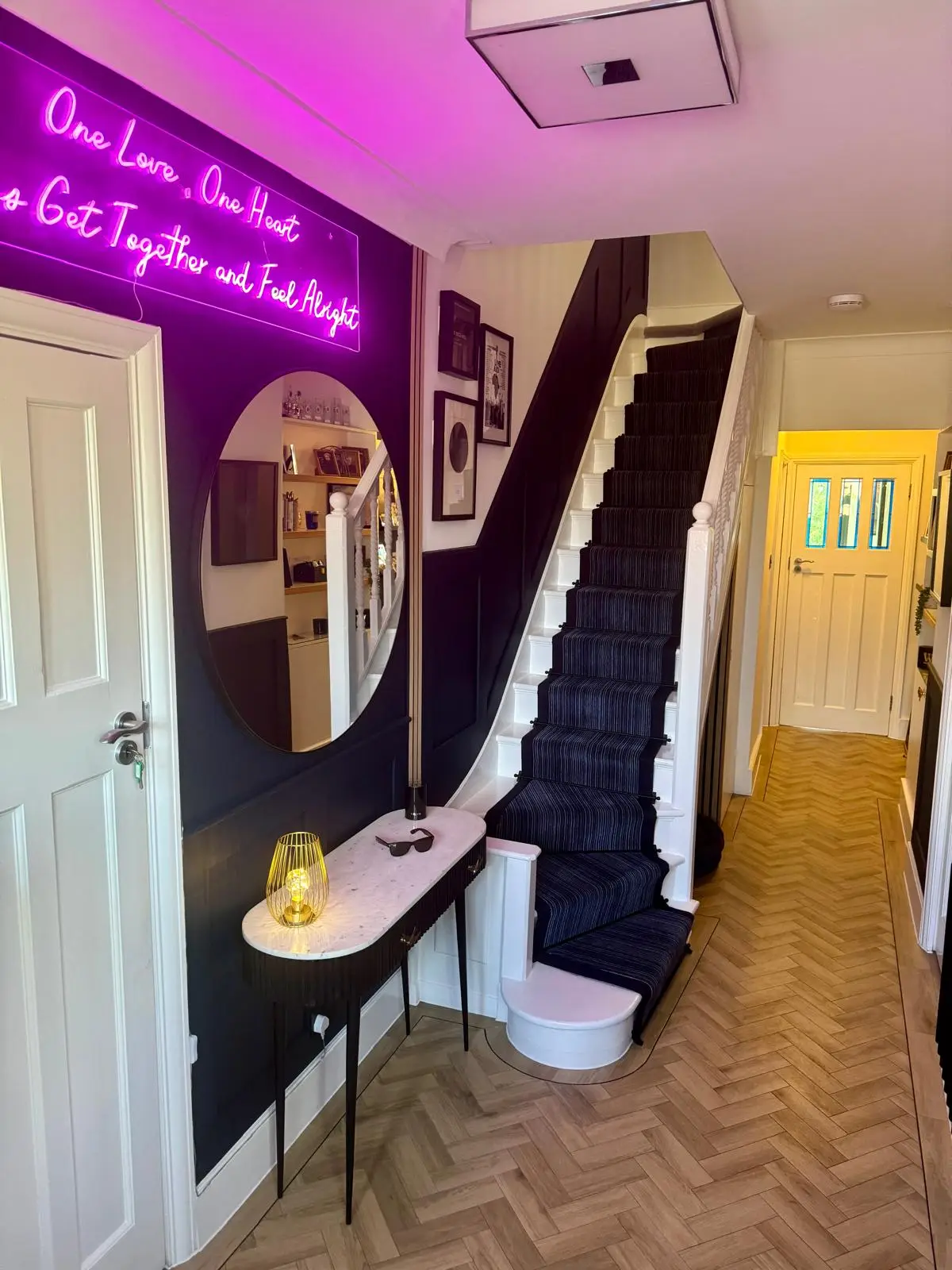
The runner in our main photo is a Louis De Poortere velvet, the Milfils design in colour 2021-16. It is finished with a taped edge in Marine Blue 8332 and black Jubilee rods. In the hall below we laid Amtico Cornish Oak small parquet with a 3mm black pencil line around the edge. The deep runner and the warm parquet suit each other well, and that pairing of a velvet stair with a hard hall floor is one we often suggest.
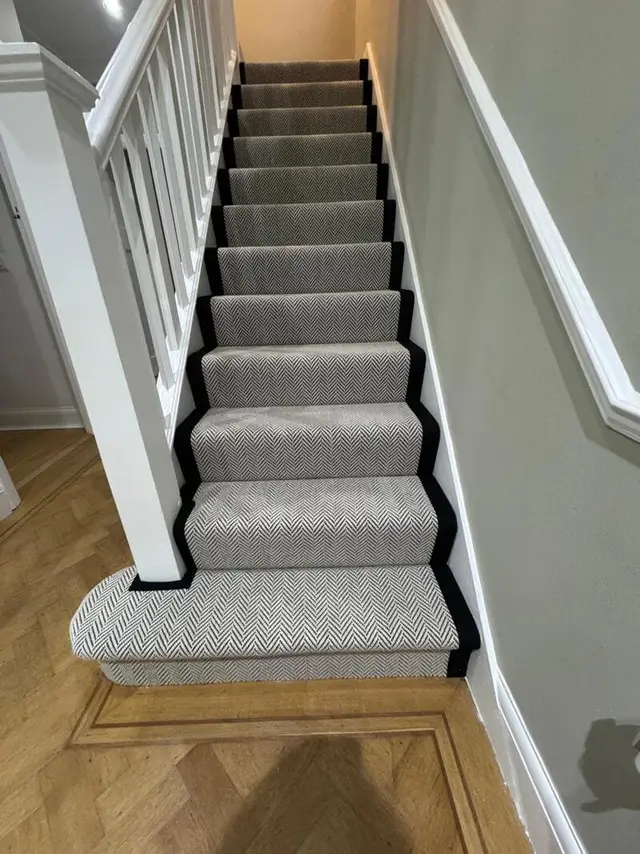
On The Chine in N21, the homeowners chose Westex Exquisite in Mushroom for four bedrooms, the stairs and the landing. We cut the stair carpet and made it into a runner with a black fabric edge, so the same soft velvet runs from the stairs into every bedroom.
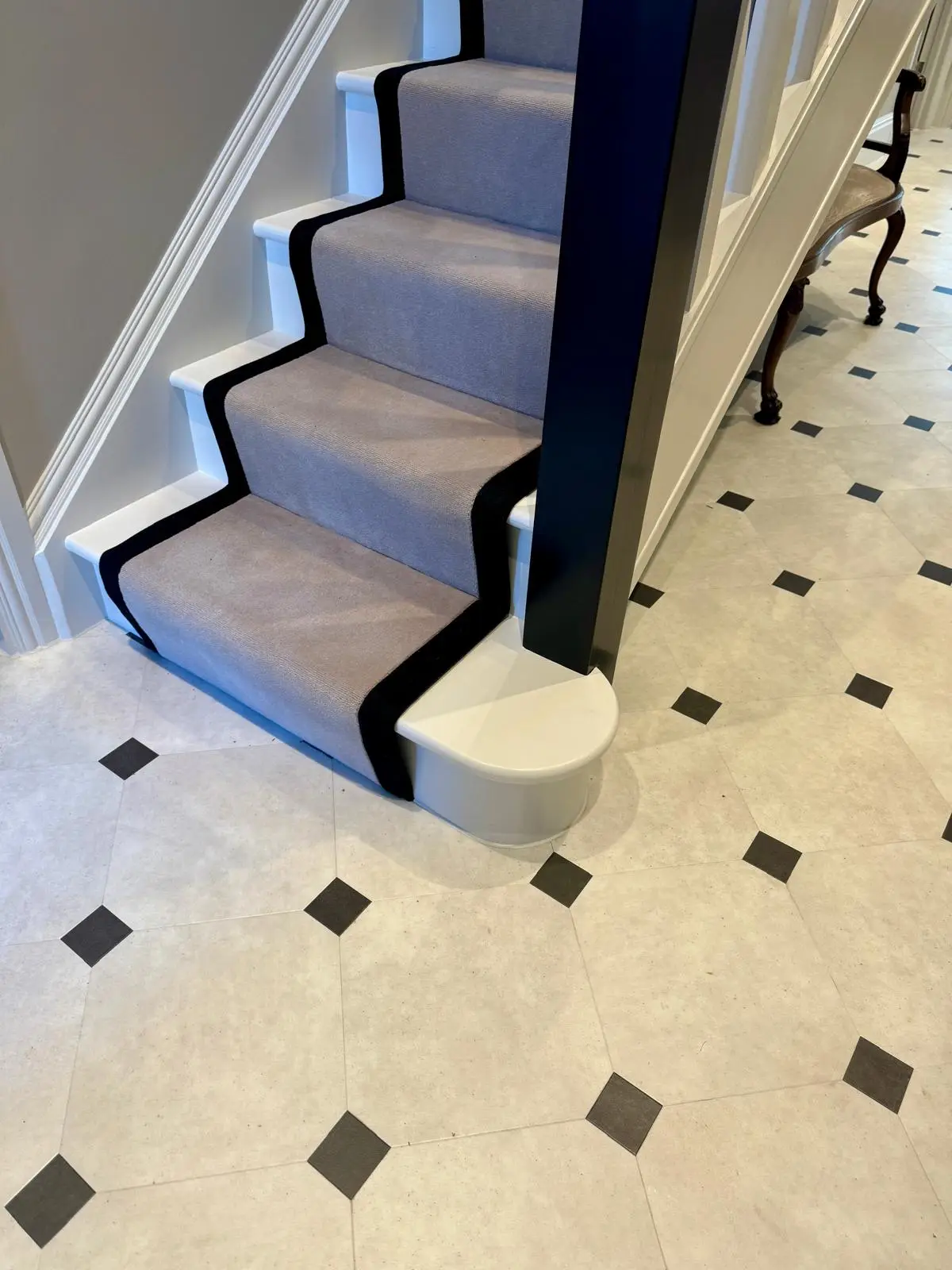 Westex Exquisite in Mushroom made into a runner with a black fabric edge, on The Chine, N21. See the job, Ref 13048
We have fitted Westex velvets as runners before, too. On this staircase the velvet runs down the centre of the stairs and round the winders, finished with dark rods.
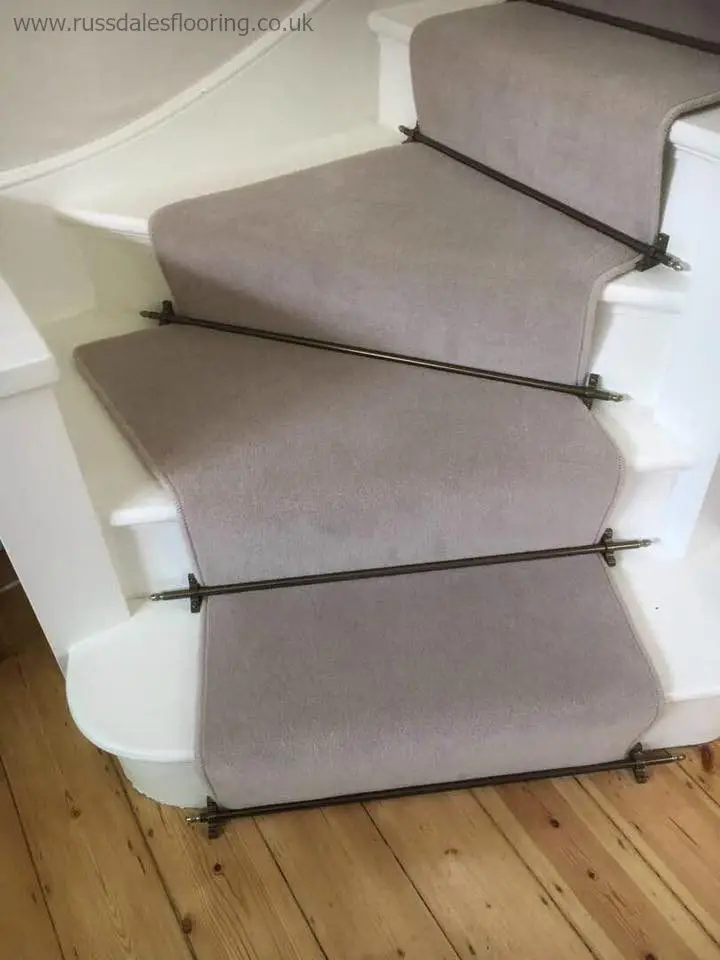 A Westex velvet stair runner with dark rods, carried round the winders in North London. See the job
And sometimes only red will do. A red velvet runner brings warmth and a sense of grandeur to a hallway, and we have finished them with brass rods and, on another staircase, a leather edge.
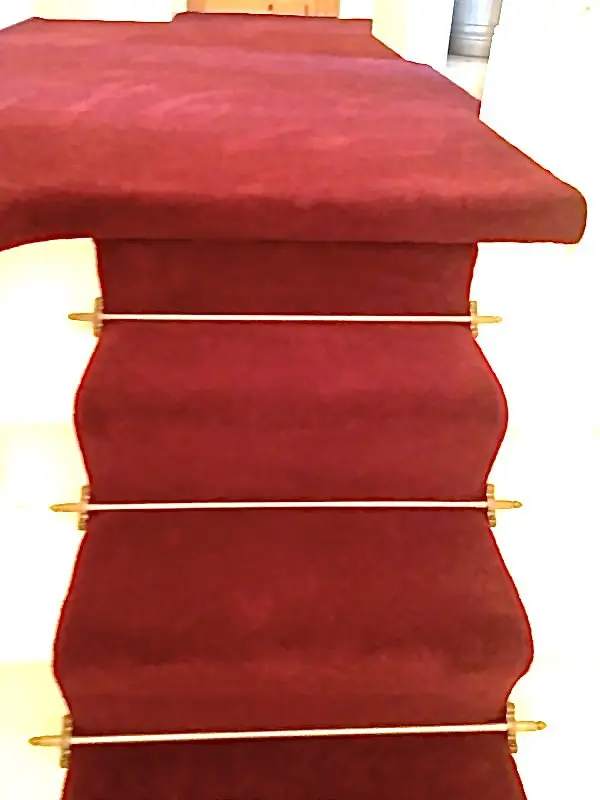 A red velvet stair runner finished with brass rods, in North London. See the job
Finishing a velvet runner
The edge. A whipped edge is finished with yarn, usually the same colour as the carpet, at £8 to £10 per linear metre. It keeps the look quiet and lets the colour speak. A taped edge wraps a fabric tape round the edge, usually about 50mm showing, at £30 to £40 per linear metre. A contrasting tape, like the Marine Blue on the Milfils runner or the black on the Westex, frames the velvet and sharpens it. Our post on whipped or taped edges has more on the choice.
The rods. Stair rods are decorative only, but they suit velvet well. Brass against red looks traditional. Black against a pale velvet looks crisp and modern. See the full range on our stair rods page.
The width. We leave a border of stair either side of at least 100mm and up to 150mm, made to order.
Underlay and fitting
A velvet shows the quality of the fitting more than most carpets, so the preparation matters. Our fitters lay runners over a contract double-stick underlay, similar to Cloud 9 Contract 8mm, with low or medium pin grippers, so the runner sits tight over each nosing. Every runner is measured, made to order and fitted by our own team.
As a guide, a runner on 13 straight stairs is £1,000 to £2,000 with a whipped edge, or £1,300 to £2,300 with a taped edge. A turn in the stairs needs a second visit to template it, at £150 to £300. Allow 3 to 4 weeks from order to fitting.
Living with a velvet runner
Vacuum it often, working in the same direction as the pile on each tread, and the surface will look more even. Deal with spills quickly by blotting, never rubbing. Our guide to removing stains from carpet takes you through it. If you love velvet but worry about the stairs, a velvet in the bedrooms with a harder-wearing runner on the stairs is a good compromise. Our bedroom carpet guide has ideas.
Book a design consultation with Russell
Velvet is a carpet you need to touch. Book a free design consultation with Russell in the showroom at 774 Green Lanes, Winchmore Hill, and feel the Westex and Louis De Poortere samples for yourself. We can also bring samples to your home so you can see the colour on your own stairs. Book online or call us on 020 8360 1836.