
A flatweave stair runner is a runner woven very flat, with almost no pile. Because nothing stands up from the surface, the design sits crisp and clear on every tread, which is why flatweaves come in so many herringbones, diamonds and stripes. They wear well on stairs, but they have very little give, so they need a fitter who knows them.
Flatweaves are behind a lot of the stairs in our portfolio. Here is what makes them different and what to think about before you choose one.
What flatweave means
Most carpets have a pile: tufts of yarn standing up from a backing, short or long, cut or looped. A flatweave has almost none. The yarns are woven together into a flat, tight surface, more like a good rug than a bedroom carpet.
That flat surface does two things. It shows the pattern sharply, because there is no pile to blur the lines. And it gives a staircase a tailored look, with each step clean and defined.
Why flatweave suits stairs
The front edge of each step, the nosing, takes most of the wear on a staircase. A thick, soft pile gets crushed there and goes bald. A flatweave has very little pile to crush, which is why the best stair carpet is a low, tight pile or a weave. We explained this in last week’s post on why stair carpet wears on the nosing.
The designs: herringbone, diamond and stripe
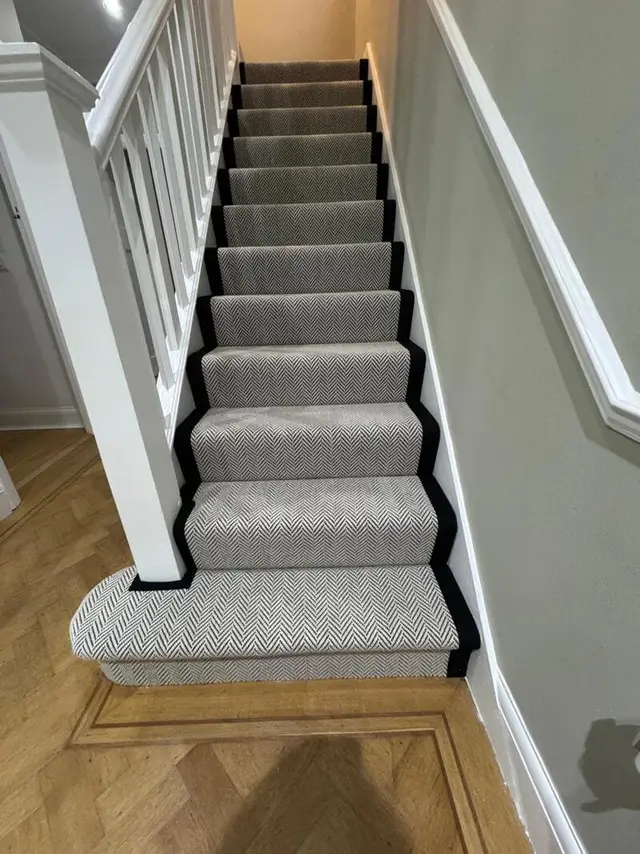
Herringbone is a favourite. The zigzag weave shows beautifully on a flatweave and suits period and modern stairs alike. We have fitted Fibre Flooring herringbone in Luna and Dapple, Lewis Abbott in Chalk and Riviera Sorrento in Canella. Our post on herringbone on stairs looks at runner or fully fitted.
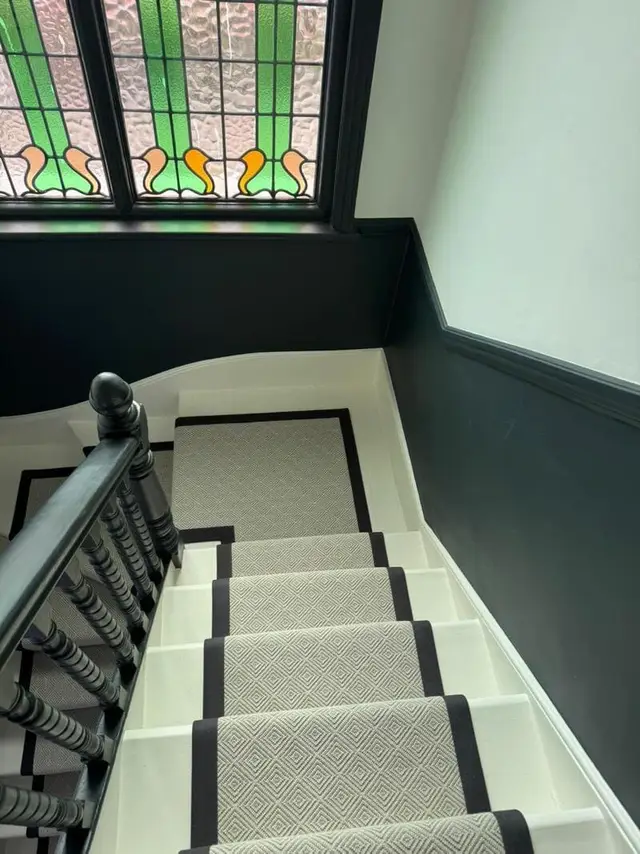
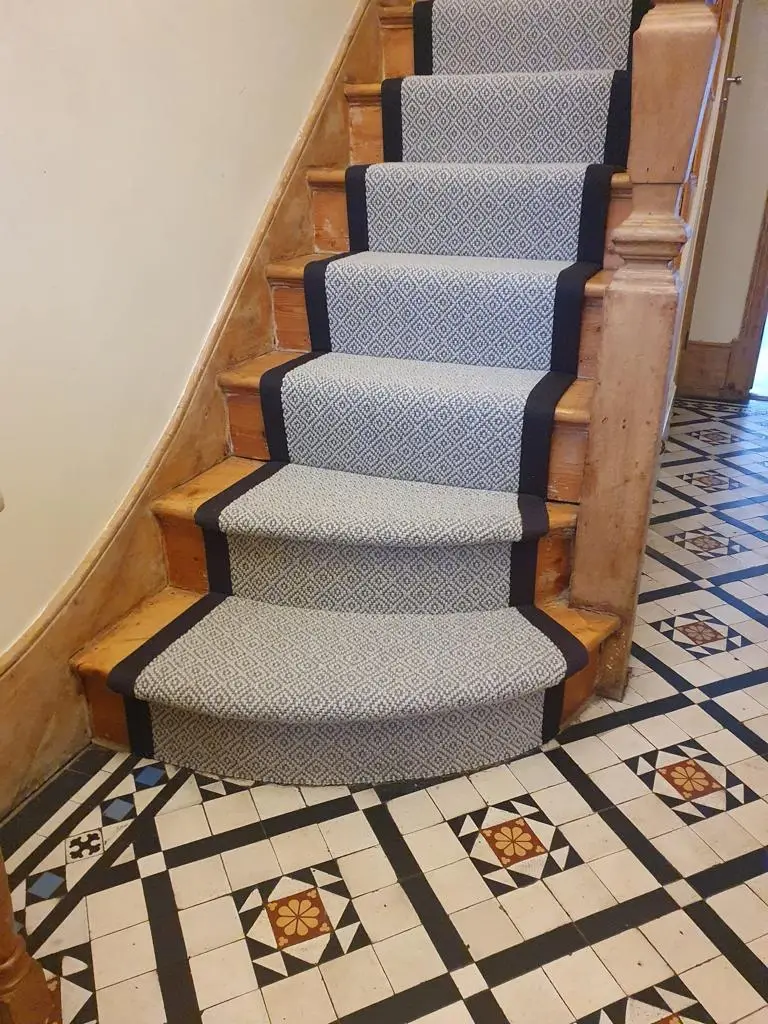
Diamond weaves give a small, regular geometric pattern. The Fibre Diamond in Puruzzie Grey at the top of this page is one; Fibre’s Mazarin designs are others.
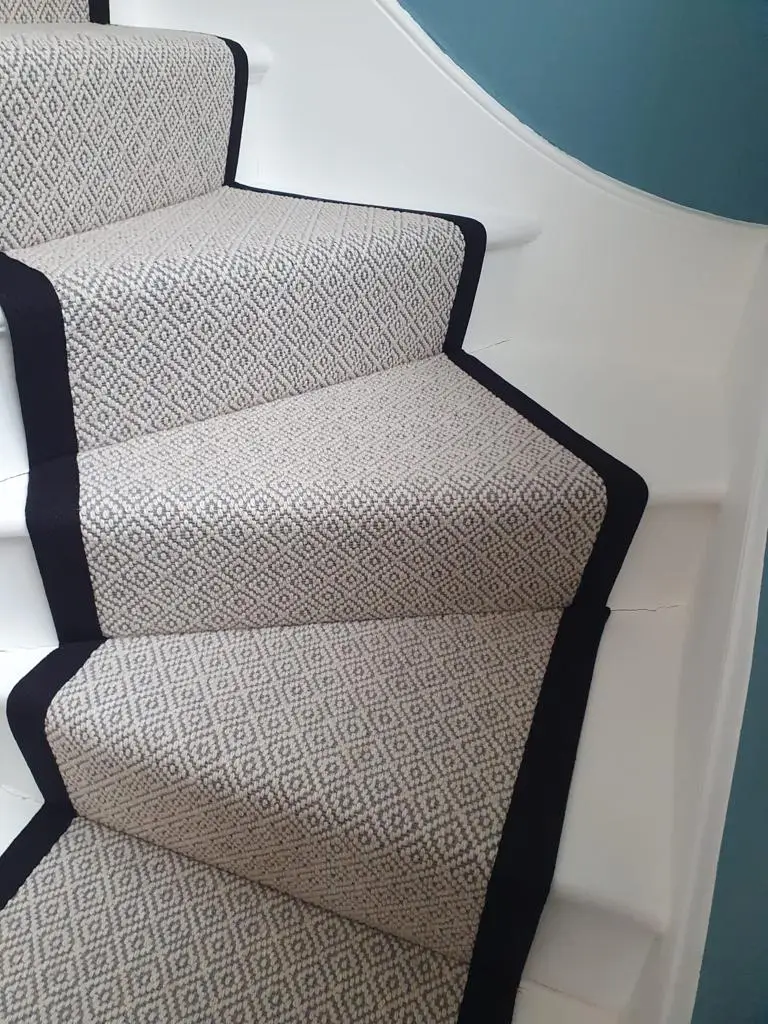 Fibre Flooring herringbone flatweave in Mazarin Diamond with a black fabric edge, North London. See the job, Ref 12930
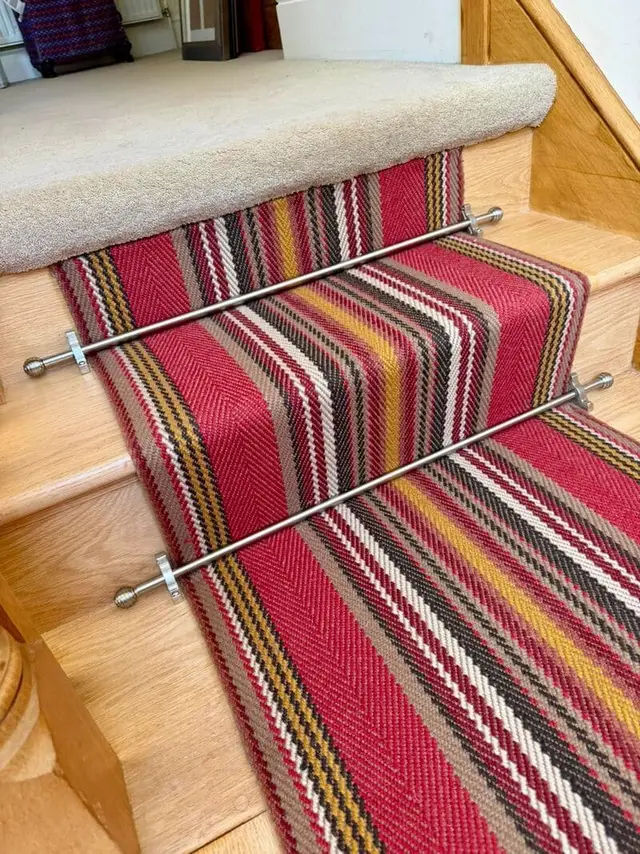
Stripes are where Roger Oates comes in. Their runners, in designs such as Franklin, Henley, Flaxman, Swanson and George, are flatweaves, many of them striped. Our post on the Roger Oates designs we fit most shows them on real stairs, and striped stair carpets covers choosing a stripe.
The brands we fit
- Roger Oates. We are an authorised Roger Oates supplier and fitter in North London, and it is the runner brand we have fitted most.
- Fleetwood Fox. We are also authorised for Fleetwood Fox flatweave runners, with designs including Tarleton and Woodville.
- Fibre Flooring. Herringbone and diamond flatweaves, behind many of the herringbone stairs in our portfolio.
- Lewis Abbott. Quiet, natural flatweave herringbones in colours such as Chalk.
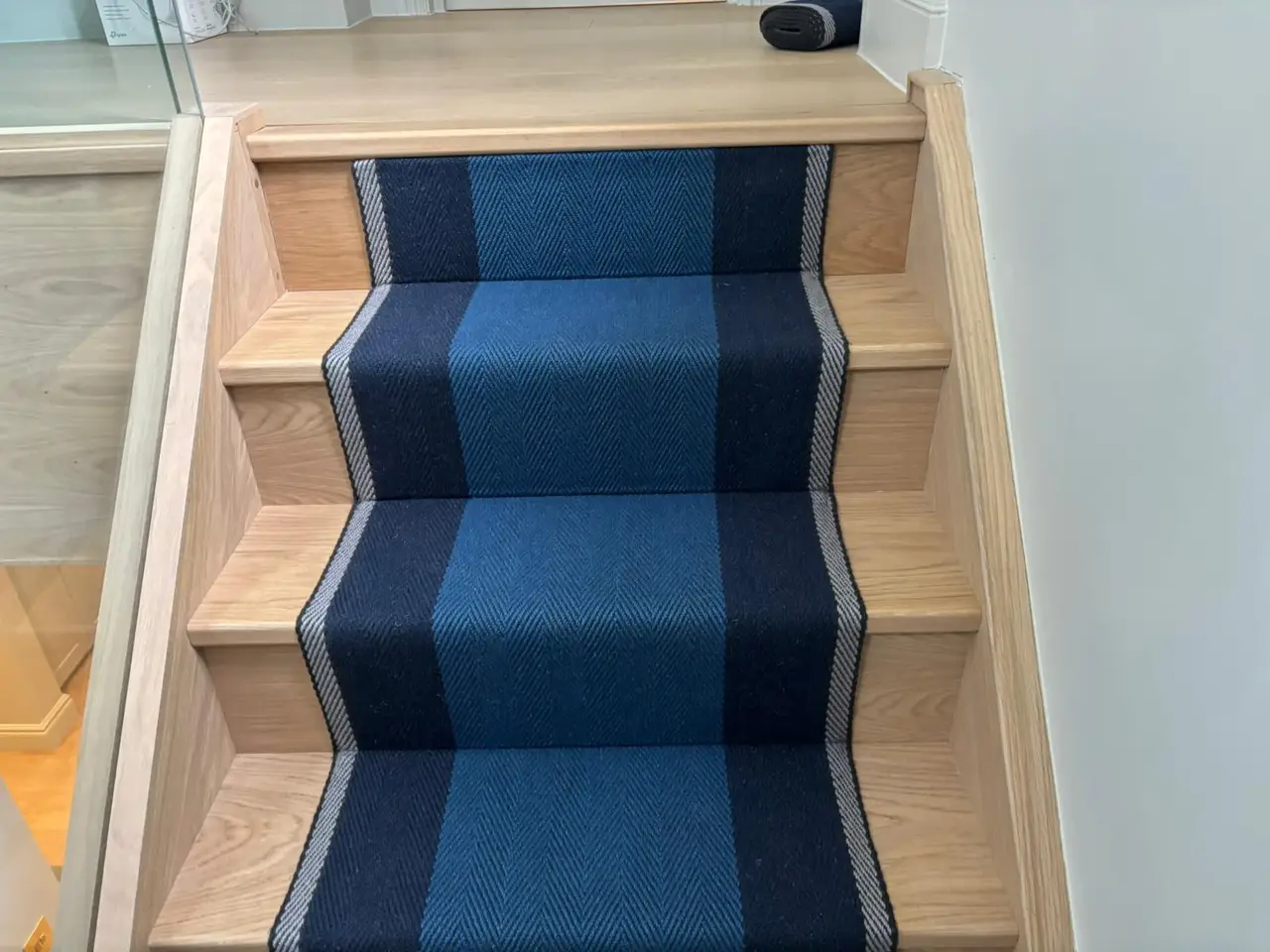 Roger Oates Franklin in Indigo on oak stairs in Hampstead, London. See the job, Ref 13038
Why flatweave needs a specialist fitter
Flatweave has very little stretch. A pile carpet can be eased and stretched a little to sit right; a flatweave cannot. So every stair is measured, the runner is cut and bound to the exact width, and the stripe or herringbone is kept straight from the bottom step to the landing. If it drifts, you will see it.
Turns make it harder. On winders we template the stairs on a separate visit, at £150 to £300 depending on the turn, and the runner is made to follow them. Some stairs test even an experienced fitter: in NW11 a Lewis Abbott herringbone had to sweep round a round newel post (Ref 13455), and we have fitted the same Chalk herringbone fully up a new loft staircase (Ref 13464). That is why we only use our own fitters.
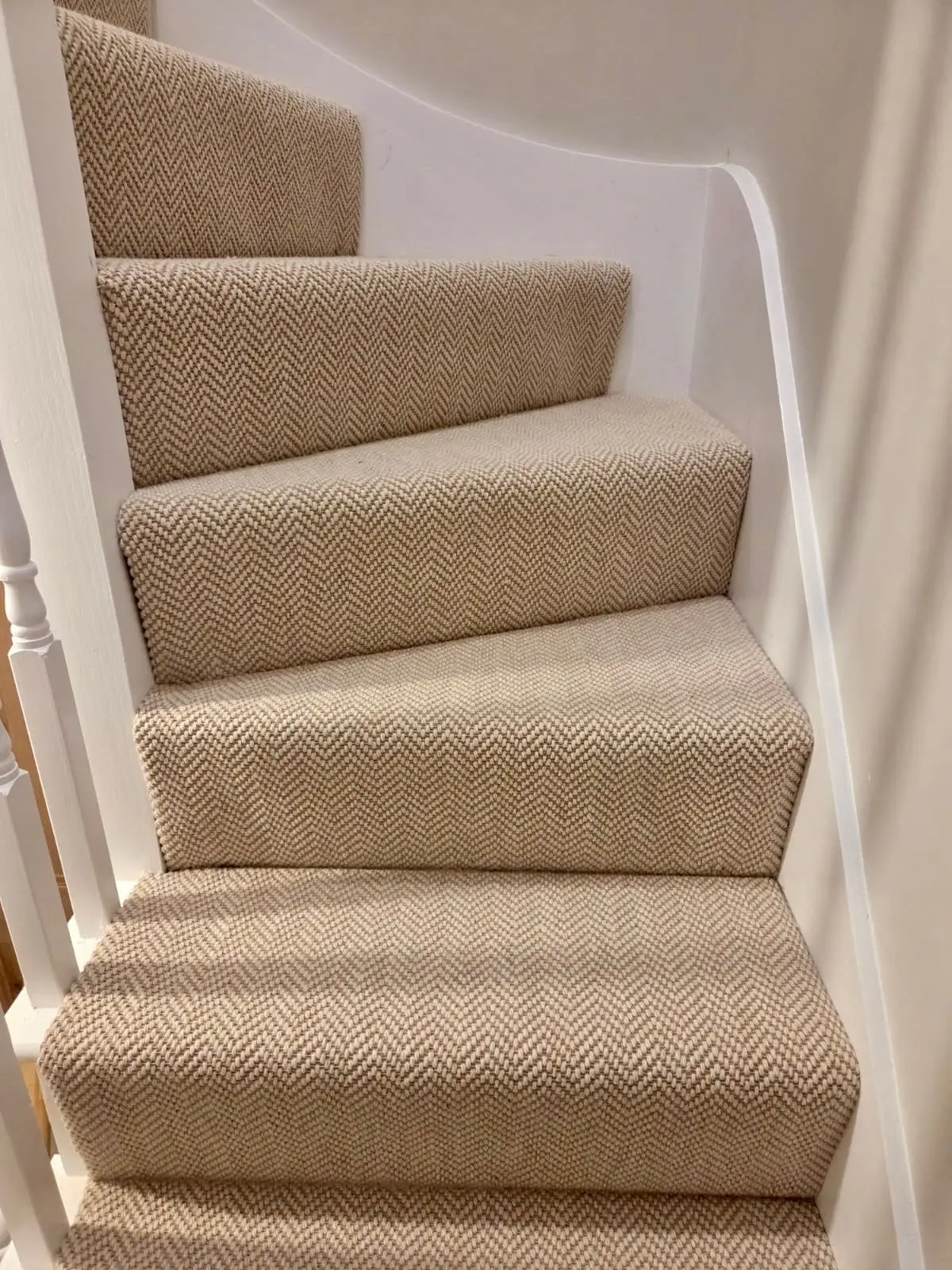 Lewis Abbott flatweave herringbone in Chalk on a new loft staircase, North London. See the job, Ref 13464
Underneath, a flatweave runner goes over contract double-stick underlay, similar to Cloud 9 Contract 8mm, with low or medium pin gripper. See what underlay goes under a stair runner.
Edges and rods
A flatweave runner is finished with either a whipped edge, in yarn usually the same colour as the carpet, or a taped edge, a fabric tape wrapped round the edge with about 50mm showing. A dark tape is a popular way to frame a herringbone. Our guide to whipped and taped edges has the details, and stair rods can finish the look.
Cost and timing
As a guide, a runner on 13 straight stairs costs £1,000 to £2,000 with a whipped edge, or £1,300 to £2,300 with a taped edge. The design and width decide where you land, and we confirm everything in your written quote. Allow three to four weeks from order to fitting.
See flatweaves in the showroom
Flatweave is best judged in your hands. Book a free design consultation with Russell in our showroom at 774 Green Lanes, Winchmore Hill, and bring a photo of your stairs. Book a consultation or call 020 8360 1836.