
A Victorian hall looks right with a patterned tile floor at the bottom and a runner climbing the stairs. You do not need cold ceramic tiles to get it. Amtico Décor and Marmoleum both give the tiled look, borders included, and the scheme can carry straight up the stairs with a runner and a set of rods.
Start with the hall floor
The hall floor sets the tone, so it is usually the place to start. Two floors give the look well.
Amtico Décor. Amtico’s patterned tiles recreate traditional hall designs. In Winchmore Hill, N21, we fitted Décor Classic Mono DC257 with a Graphite Slate plain border, a black and white pattern framed in a strong dark edge. Elsewhere we have laid Décor Victorian Star with Royal Oak herringbone in the rooms beyond (Ref 12692), and Décor Mono with a diamond border down a long, narrow hall (Ref 11976). Our post on Amtico Décor covers the patterns in more detail.
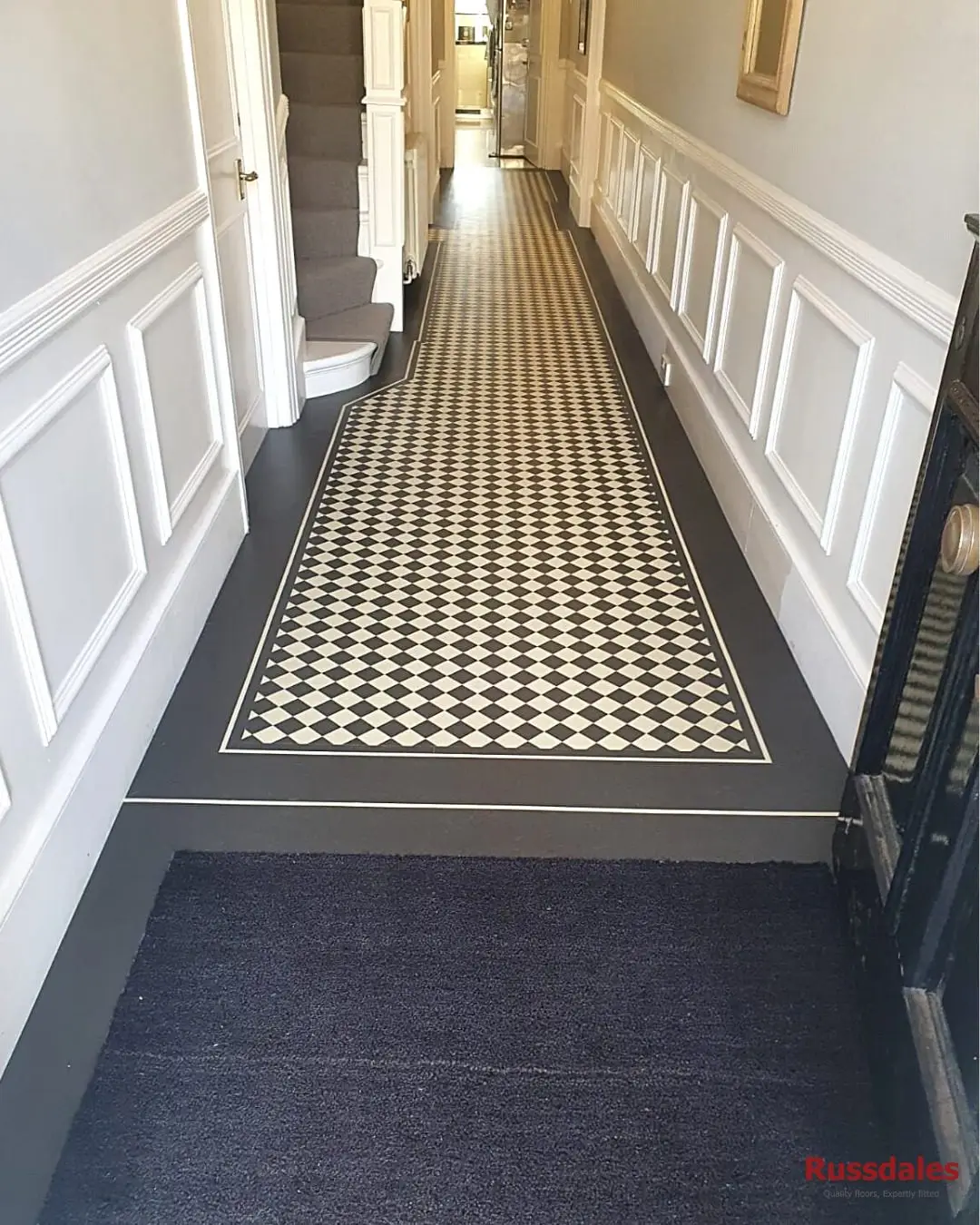
Marmoleum. Natural Marmoleum can be laid in small 50mm tiles, as a chequerboard or a bespoke pattern. The hall at the top of this page has black and cream tiles laid on the diagonal inside a wide black border, with a cream line that follows the bottom step. In Elm Park Road, N21, we laid a Marmoleum chequerboard with a border cut to order to complement the house’s original Victorian tiles (Ref 13333). Read more in Marmoleum for kitchens and hallways.
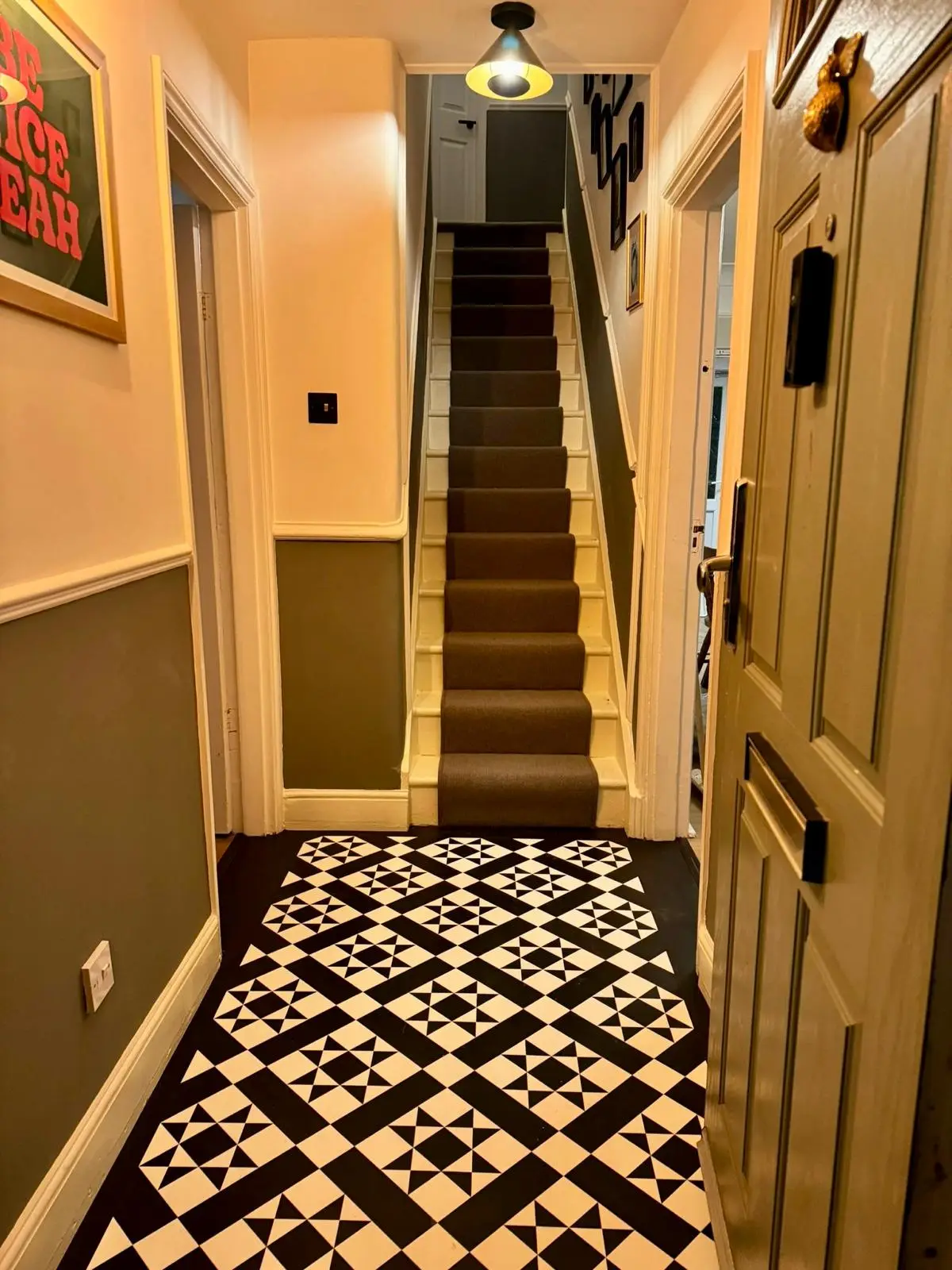 Amtico Décor Classic Mono DC257 with a Graphite Slate border in Winchmore Hill, N21. See the job, Ref 13212
Then the runner going up
With a patterned floor at the bottom, the runner needs to work with it rather than compete. A few ideas that suit a period hall:
- Pick a colour from the floor. A grey, charcoal or stone runner sits happily above black and white tiles, as on the grey loop in the photo at the top of this page.
- Use a fine stripe. A narrow stripe adds detail without fighting the tile pattern. Our guide to striped stair carpets explains why narrow stripes are easier on turns.
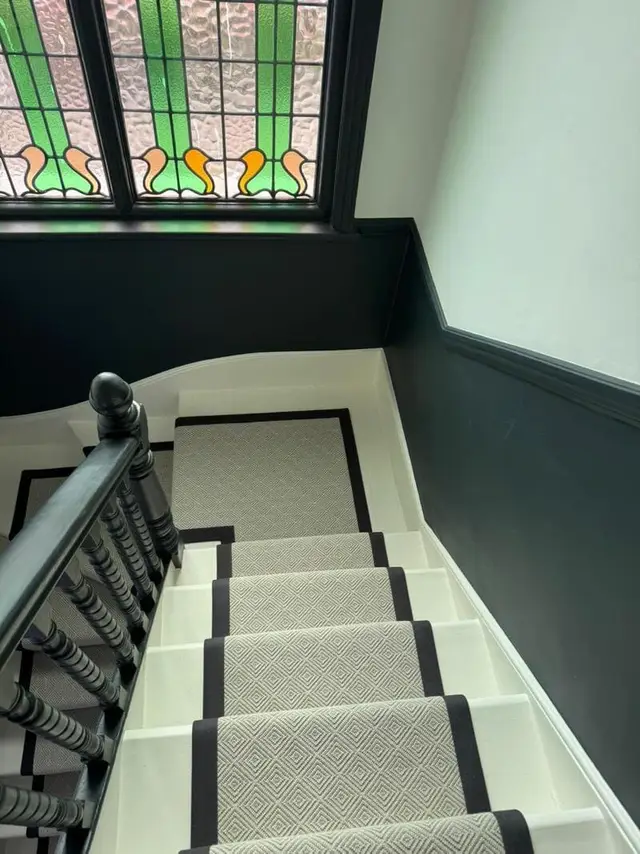
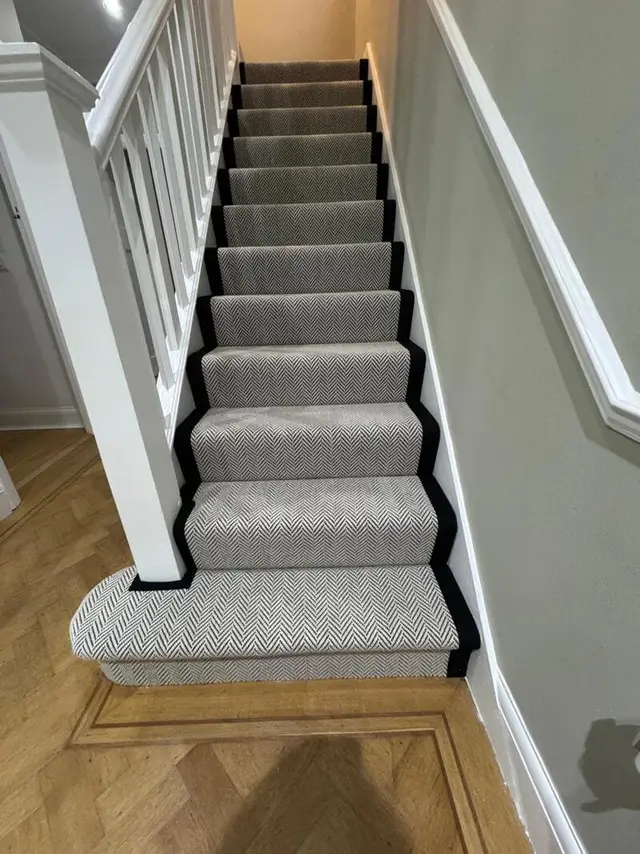
- Frame it with the edge. A black or dark fabric edge echoes the border on the hall floor.
- Show the timber. Leave 100mm (4 inches) to 150mm (6 inches) of painted stair each side, so the spindles and strings stay part of the picture.
In a Victorian house in Winchmore Hill, a Roger Oates Sudbury runner in Lichen climbs from a black and white hall, finished with antique brass Jubilee rods, with Victoria Carpets Tudor Loop on the landing. There are more ideas in Victorian stair runners.
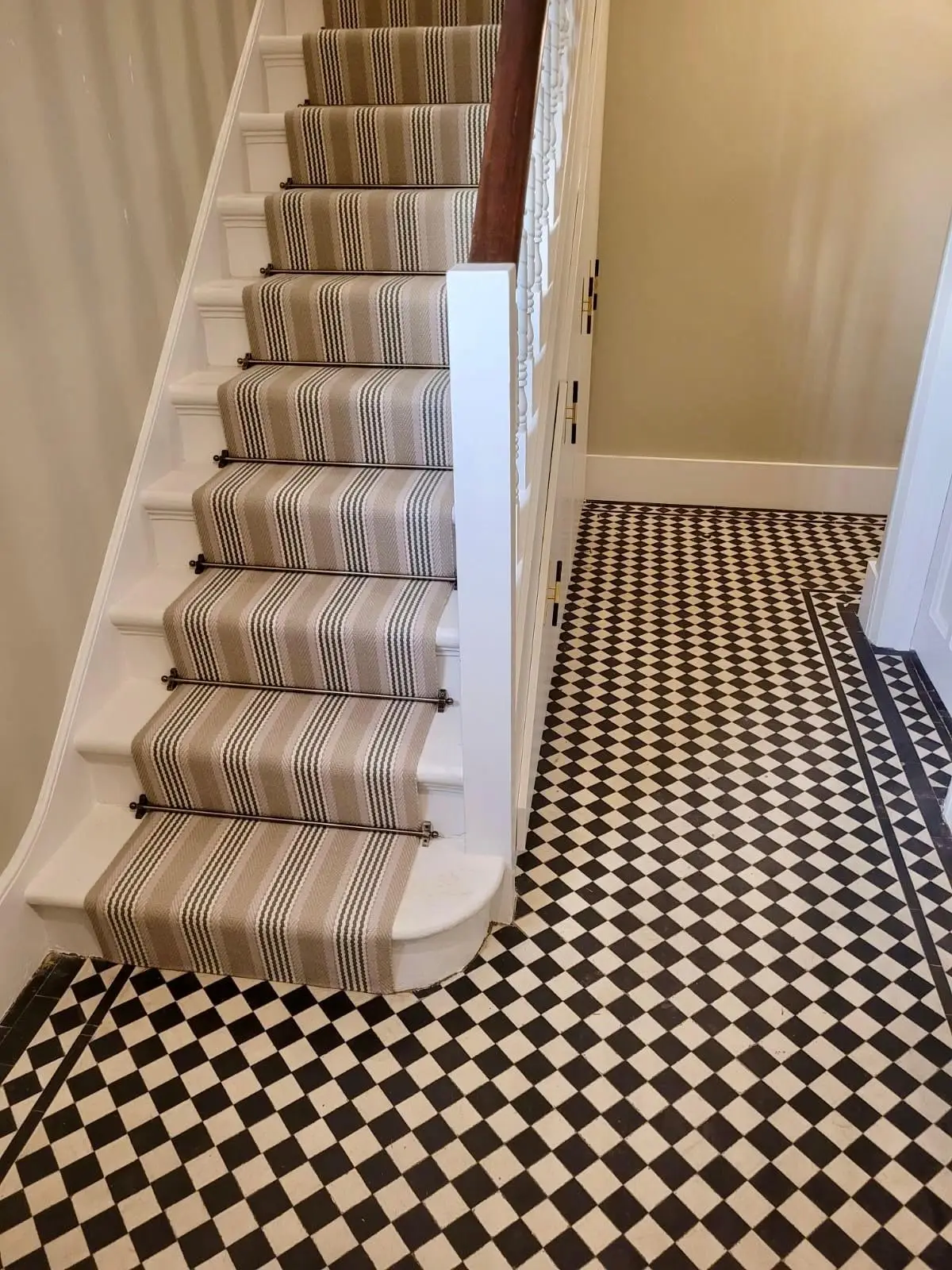 Roger Oates Sudbury in Lichen with antique brass Jubilee rods, in a Victorian house in Winchmore Hill, N21. See the job, Ref 13220
Where the floor meets the stairs
The bottom step is where the two halves of the scheme meet, so it is worth planning together. A border that runs round the foot of the stairs, as in the hall at the top of this page, makes the tiled floor look as if it was always there. Then the runner runs up from the bottom step, centred on the stair, with the same gap each side all the way to the top.
Because we fit both the hard floor and the runner, we can plan the hall and the stairs together and put the whole scheme in one written quote.
Rods to finish
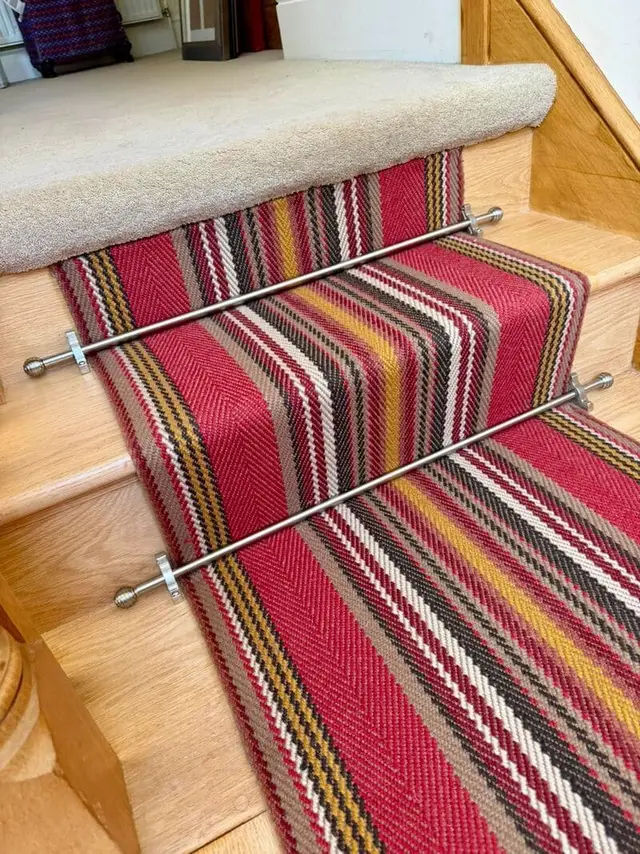
Stair rods are decorative only, as the runner is held by grippers and underlay, but in a period hall they are often what makes the scheme look finished. Brass and antique brass suit most Victorian halls, especially next to brass door furniture.
Our Victorian range is clips, sold at £20 a pair. Jubilee rods start from £15, and across our 11 ranges rods run from about £15 to £60 each, plus fitting. Our stair rod finishes guide helps you match them to the rest of the hall.
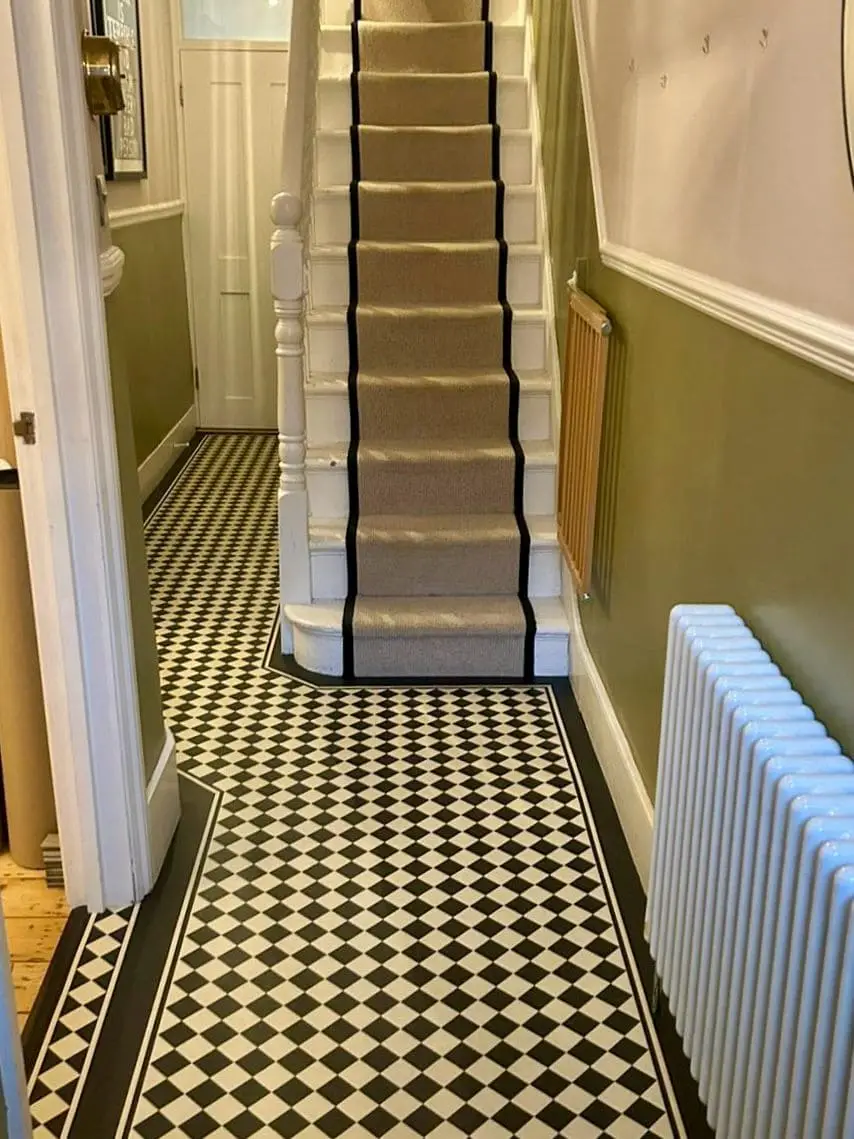 Black and white Marmoleum 50mm tiles with a border in a North London hall. See the job, Ref 12968
Practical points for a busy hall
A hall takes grit and wet shoes straight from the street, so plan for them. A good mat at the front door catches most of the dirt before it reaches the tiles or the runner. For the stairs, choose a low, tight pile or weave, which wears far better on the nosings than anything thick or soft. Our post on hard-wearing hallway floors has more, and if you are still choosing between a black and white Amtico and Marmoleum, see black and white floors.
What it costs
As a guide, Amtico costs from about £30 to £130 per m², plus fitting at about £30 to £60 per m² depending on how complex the design is. A runner on 13 straight stairs costs £1,000 to £2,000 with a whipped edge, or £1,300 to £2,300 with a taped edge, and a turn needs a templating visit at £150 to £300. Marmoleum prices depend on the range and on the preparation your subfloor needs. We confirm everything in a written quote.
Book a free design consultation
Restoring a period hall? Book a free private design consultation with Russell at 774 Green Lanes, Winchmore Hill, and bring photos of your hall, stairs and any original tiles. We will put tile patterns, runners and rods side by side so you can see the whole scheme before you choose. Book online or call 020 8360 1836.