
Most Palmers Green houses were built in one burst before the First World War, so the flooring questions are often the same: a long hall, a tall staircase, and sometimes a turn at the top. The answer that works in most of them is a hard-wearing hall floor, in a tile look or a wood look, with a runner and rods going up the stairs. Our showroom is just over a mile up Green Lanes from the Triangle, so we know these houses well.
Palmers Green homes
Palmers Green station opened in 1871, but most of the streets came later, in a building boom in the years before the First World War. That gave the area its terraces and semis off Green Lanes, Aldermans Hill and Fox Lane, with bay windows, tiled front paths and tall staircases. Plenty have since been split into flats, and there are more flats above the shops along Green Lanes. The housing is mostly Edwardian, with some older houses and some later interwar ones mixed in.
The layout inside is familiar. A hall runs from the front door towards the back of the house, longer than it is wide, with the stairs rising along one side. The staircase is usually tall, and some turn at a quarter landing or with winders on the way up. Those two things, the long hall and the tall stair, are where the flooring decisions matter most.
The hall: long, busy and the first thing you see
A hall like this takes all the traffic of the house, so it needs a floor that copes with grit and wet shoes and is easy to clean. Because it is long and narrow, it also needs a design that looks deliberate from the front door.
A tile look suits the period best. Amtico Décor and Marmoleum can both give you a patterned hall in the spirit of the original Victorian and Edwardian tiles, without the cold, hard surface. We wrote about the patterns in Amtico Décor: Victorian tile patterns, and about putting tiles, runner and rods together in Victorian hallway flooring.
A wood look works well too, especially as parquet with a border to frame the length of the hall. In one Palmers Green house the hall already had a patterned Amtico floor. We laid Amtico Spacia Honey Oak in a large herringbone in the room next to it, with a Wild Walnut pencil line and a plank on edge around the walls, and made a bespoke doorway detail so the two floors meet neatly.
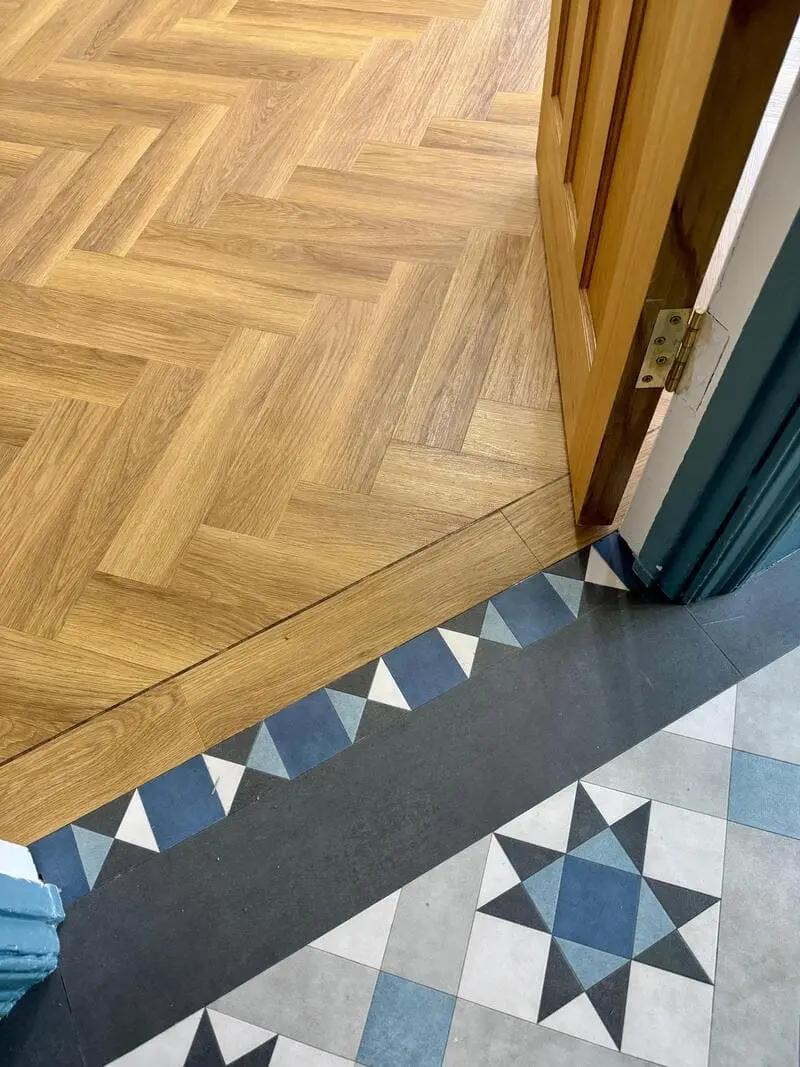 Amtico Spacia Honey Oak herringbone meeting the existing patterned Amtico hall at a bespoke doorway detail, Palmers Green N13. See the job, Ref 13452
The stairs: tall flights and quarter landings
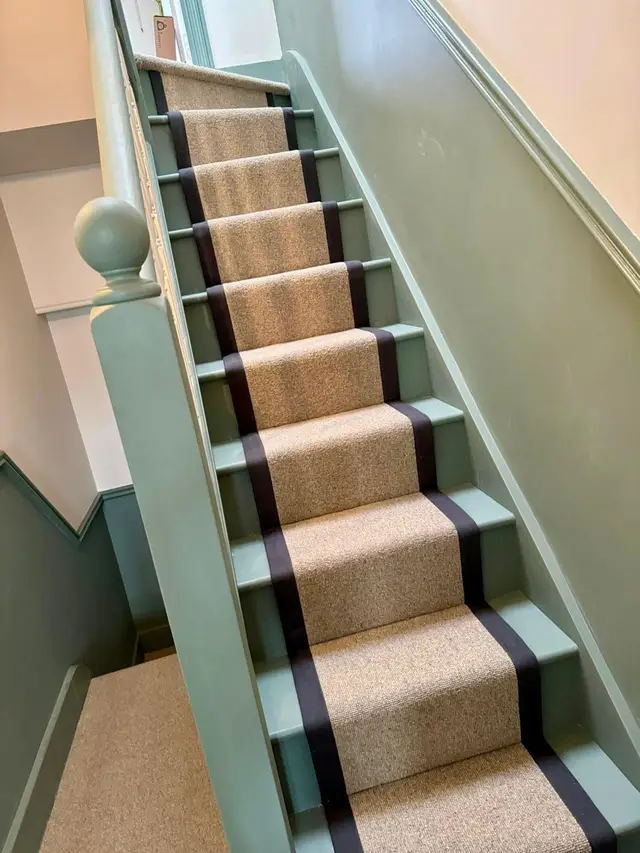
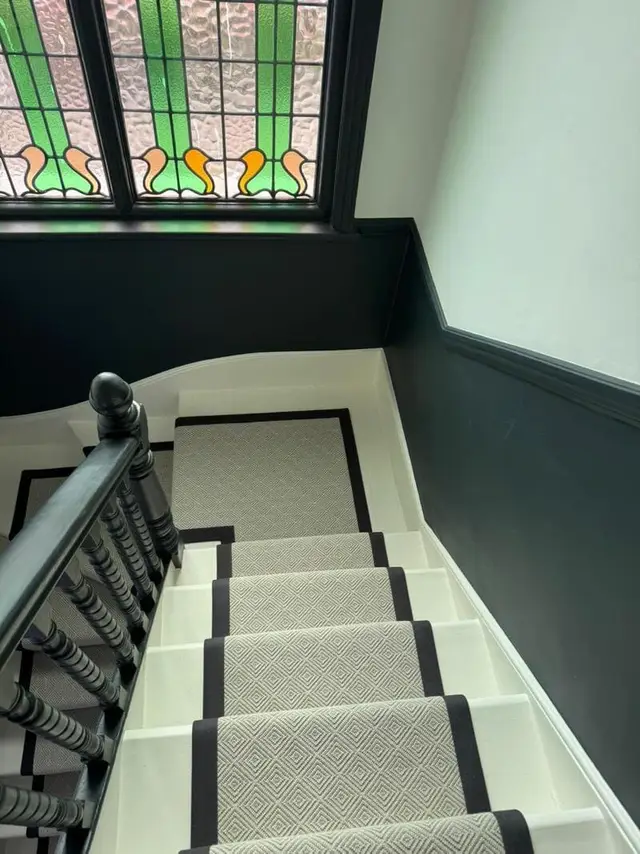
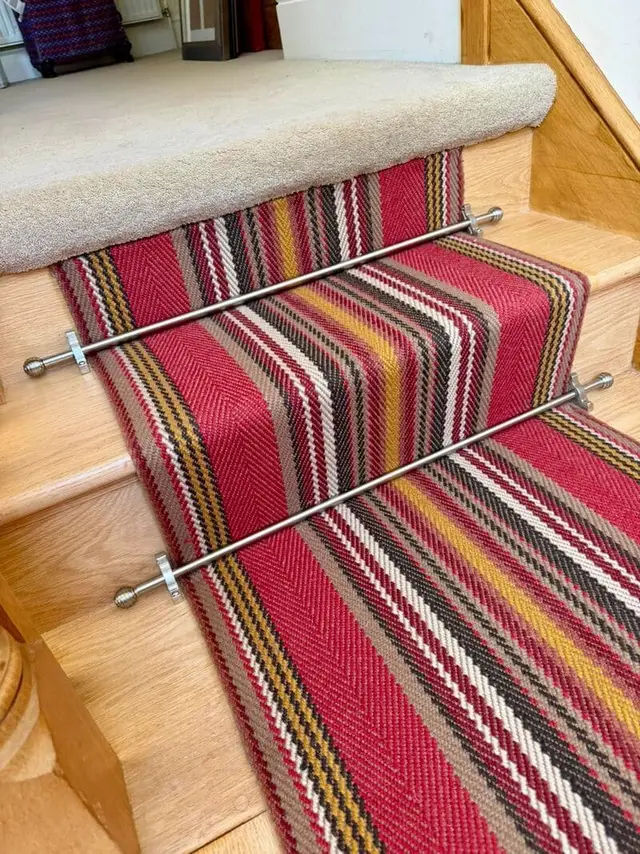
A runner suits these staircases because it keeps the painted or stained stair on show and draws the eye up the flight. For a staircase that gets a lot of use, choose a low, tight weave or pile. Flatweaves are very flat, so the design shows clearly from the hall.
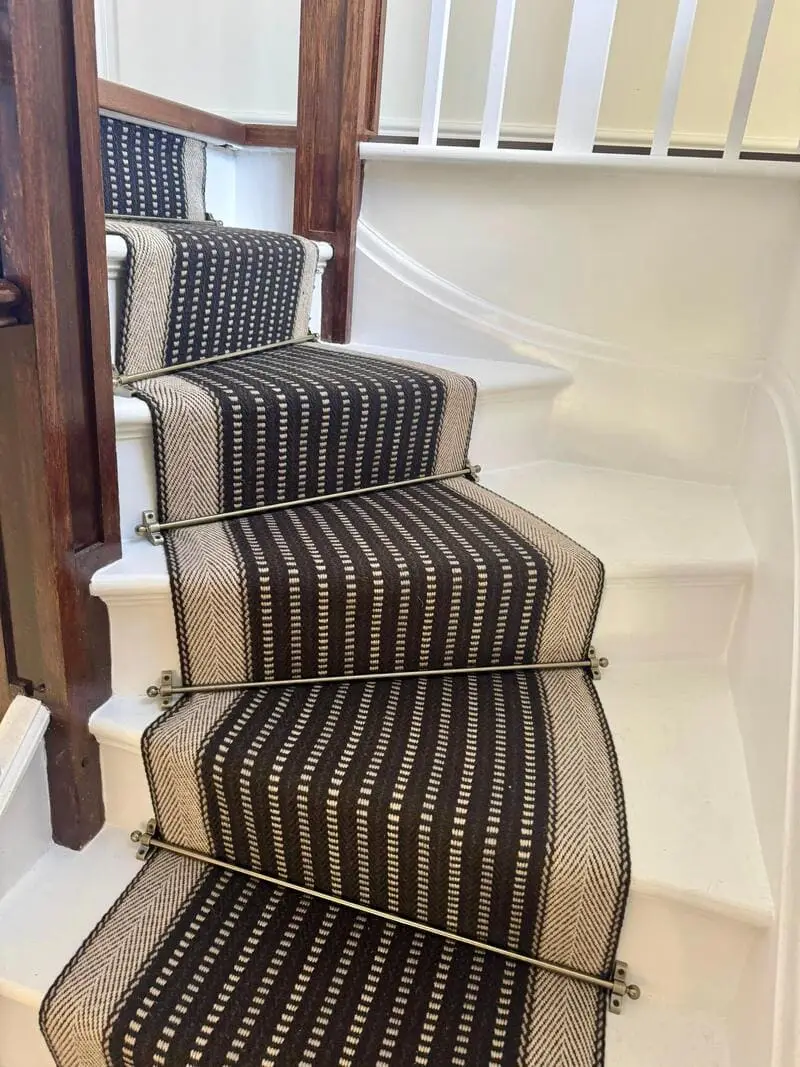
In the staircase in our main photo, the homeowners chose a Roger Oates George runner in black, 62cm wide. Our fitters mitred it at the quarter landing so the design turns the corner cleanly, and finished it with Jubilee rods in antique brass. The warm brass against the black runner suits the period of the house (see the job, Ref 13345). You can read more about rods on a turn in should you have stair rods on a turning staircase?.
A few points to plan for on these stairs:
- Width. We leave a border of stair either side of at least 100mm and up to 150mm. Our guide on how wide a stair runner should be explains how we choose.
- The turn. A quarter landing or winders need a second visit to template the turn, at £150 to £300, so the runner can be made to follow it.
- The edge. A whipped edge is finished in yarn, usually the same colour as the runner. A taped edge wraps a fabric tape round the edge, often in a contrasting colour, and can pick up a colour from a tiled hall below.
- Timing. Allow 3 to 4 weeks from order to fitting.
The back of the house
Many Palmers Green houses now have a kitchen extension at the back, and the trick is to make the new space feel part of the old house. In one N13 house, a period property with a contemporary extension, we laid Amtico Signature Cornish Oak large parquet in herringbone with a plank-on-edge border. The warm oak ties the original rooms to the new space.
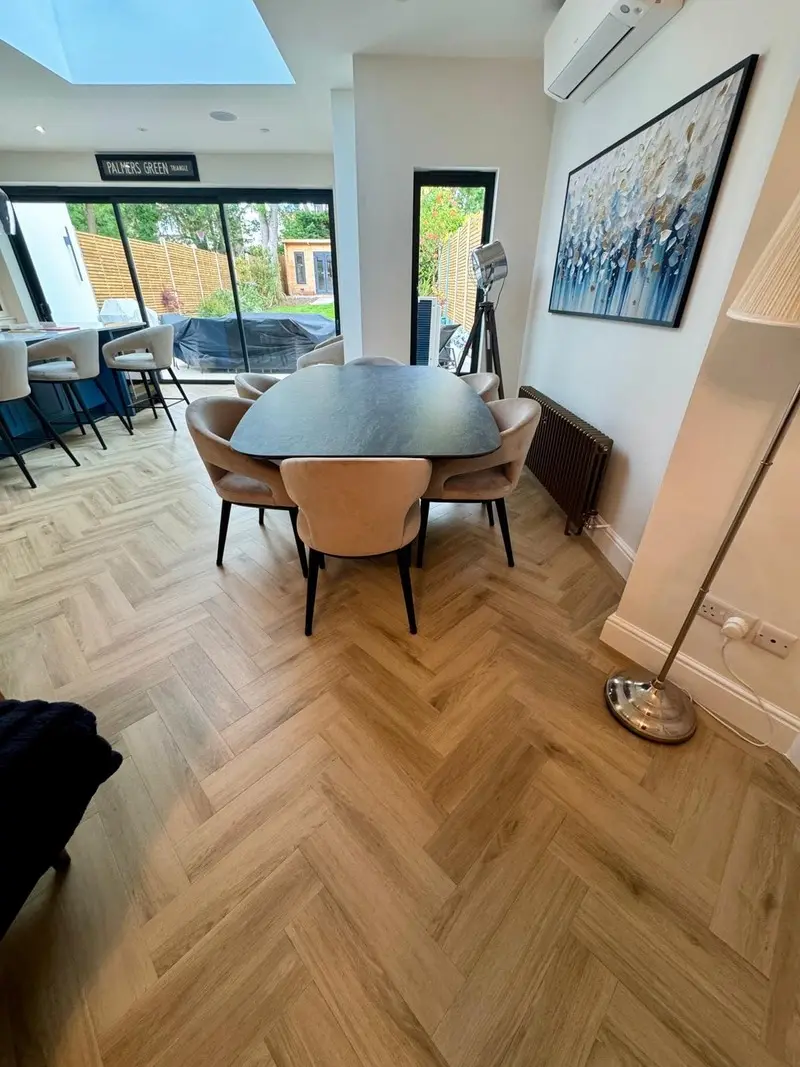 Amtico Signature Cornish Oak large parquet in herringbone, in a period house with a modern extension, Palmers Green N13. See the job, Ref 13556
Putting the hall and stairs together
The hall floor and the runner are seen together every time you open the front door, so choose them together. Bring a photo of the hall to the showroom, or a sample of the hall tile, and we will lay runner samples and edge tapes next to it. If you are keeping original tiles, a runner edge that picks up one of the tile colours is a simple way to link the two. If the hall is new, start with whichever you love most and build the rest around it.
Book a design consultation with Russell
Palmers Green is a few minutes from the showroom by car, and buses run straight up Green Lanes. Book a free design consultation with Russell at 774 Green Lanes, Winchmore Hill, or ask us to bring samples to your home so you can see them against your own walls and spindles. Book online or call us on 020 8360 1836.