
On stair runner installation day, our fitters arrive in a sign-written van, check the stairs, fit new gripper and a contract double-stick underlay, then lay the runner one step at a time and add any stair rods last. Before they leave they take away the waste, go over the finished stairs with you and, once you are happy, ask for the balance.
If you have never had a runner fitted, it helps to know what happens and what you can do to make the day go smoothly. Here it is, start to finish.
Before the day
By fitting day the hard decisions are behind you. You have chosen the runner, the edge and any rods, we have measured the stairs for free, and you have a written quote. On a straight flight, the guide price includes the runner, the underlay, the grippers and the fitting.
Your runner is cut and made to order, so allow three to four weeks from order to fitting. If your stairs turn, we will already have been out to template them so the runner is made to the exact shape. Our guides to how long a stair runner takes and runners on winders and turning stairs explain both.
Who turns up
Our own fitters, not subcontractors. Every one has public liability insurance and at least ten years’ experience, some as many as 40, and our carpet fitters are NICF-approved. They arrive in sign-written vehicles, wearing polo shirts with our logo, so you know you have the right people at the door. They will introduce themselves before anything else happens.
Step 1: Look at the stairs
First, the fitters inspect the stairs and the landing. If there is anything that needs putting right, such as a loose tread or a door at the top that will catch on the new carpet, they tell you before they start. Doors often need trimming after a new floor goes down, and we can organise it. Our post on doors catching on new carpet explains why.
If the old stair carpet is still down, it needs to come up now. Ideally you will have lifted it already, but if not, ask about our uplift and disposal service, which is a small extra charge.
Step 2: Gripper and underlay
Next, new gripper goes onto each step, low or medium pin depending on how thick the runner is. Then a contract double-stick underlay, similar to Cloud 9 Contract 8mm, is cut to the width of the runner. It is firm rather than soft, which is exactly what a stair needs. A thick, soft underlay would let the runner move and wear early on the nosing. We explain the choice in what underlay goes under a stair runner?
Step 3: The runner goes down
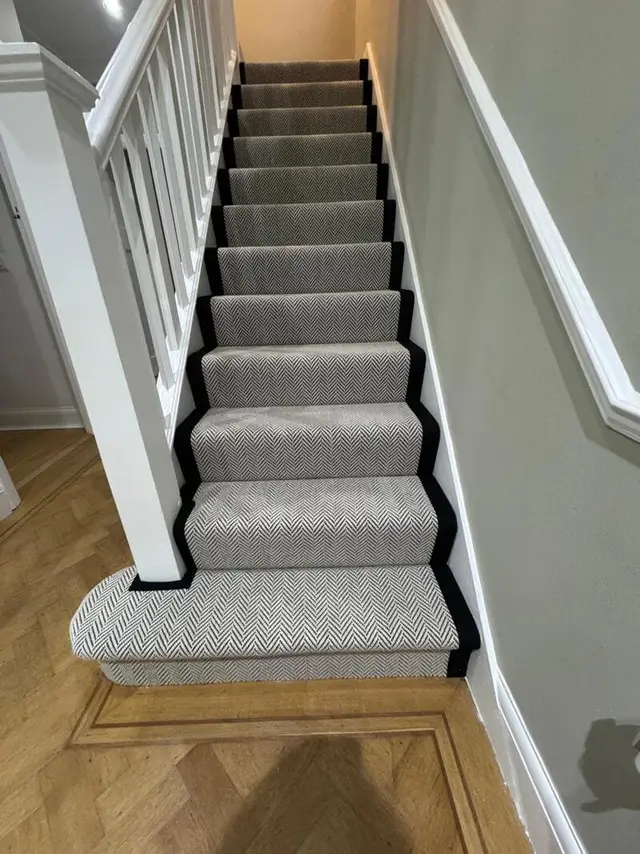
Now the runner itself. The fitters keep an even border of stair showing each side, usually 100mm to 150mm, and keeping any pattern straight from step to step. A herringbone or stripe shows every wobble, so this is where experience counts. Flatweaves in particular need a fitter who knows how to handle them, which we cover in flatweave stair runners explained.
On a turning stair, the pieces cut from the template are joined so the runner looks like one continuous piece.
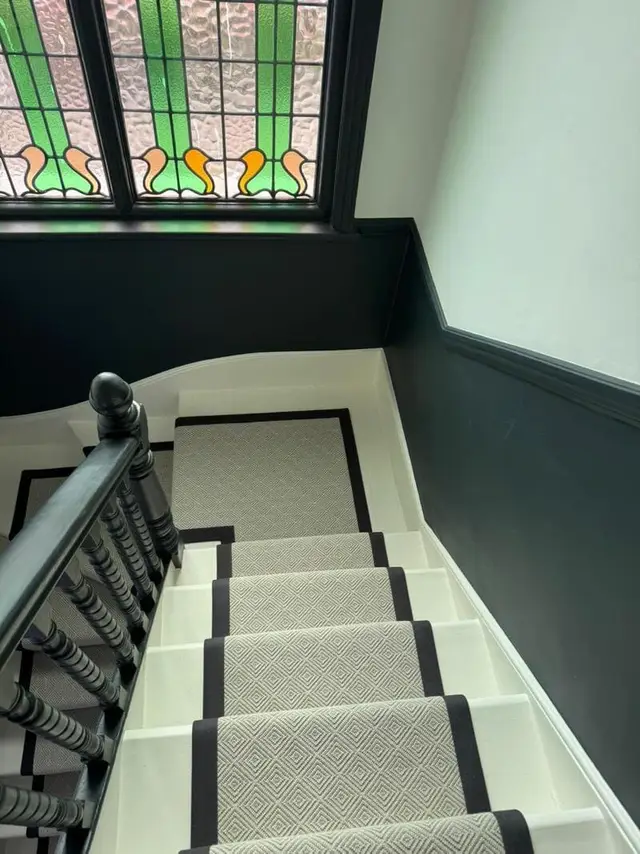
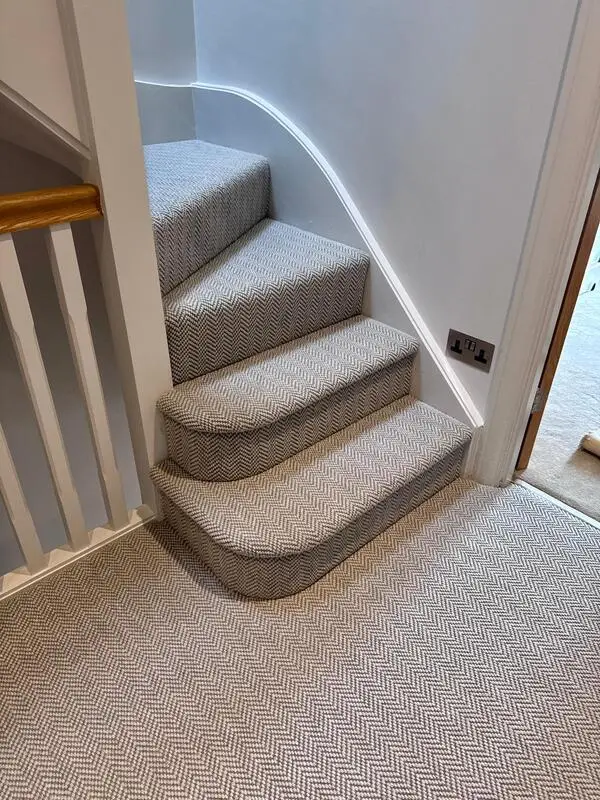 Fibre Flooring herringbone flatweave in Quicksilver across a double H staircase and landing, Hillcrest, N21. See the job, Ref 13729
Step 4: Stair rods, if you chose them
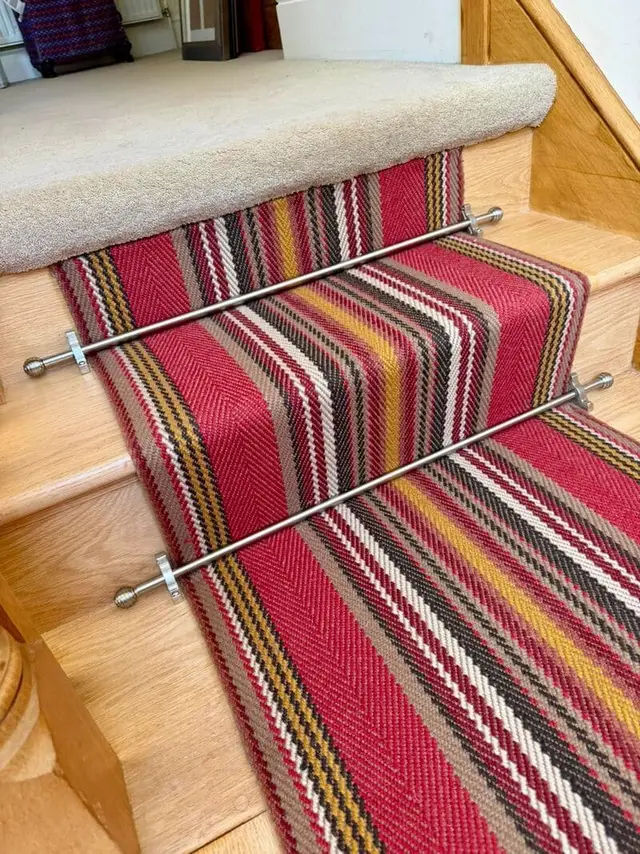
Rods go on last. They do not hold the runner in place, the grippers and underlay do that, but they finish it off and on a turn they help disguise the joins. Each one is fitted across the step where the tread meets the riser. Our guide to stair rods explained covers the ranges and what they cost.
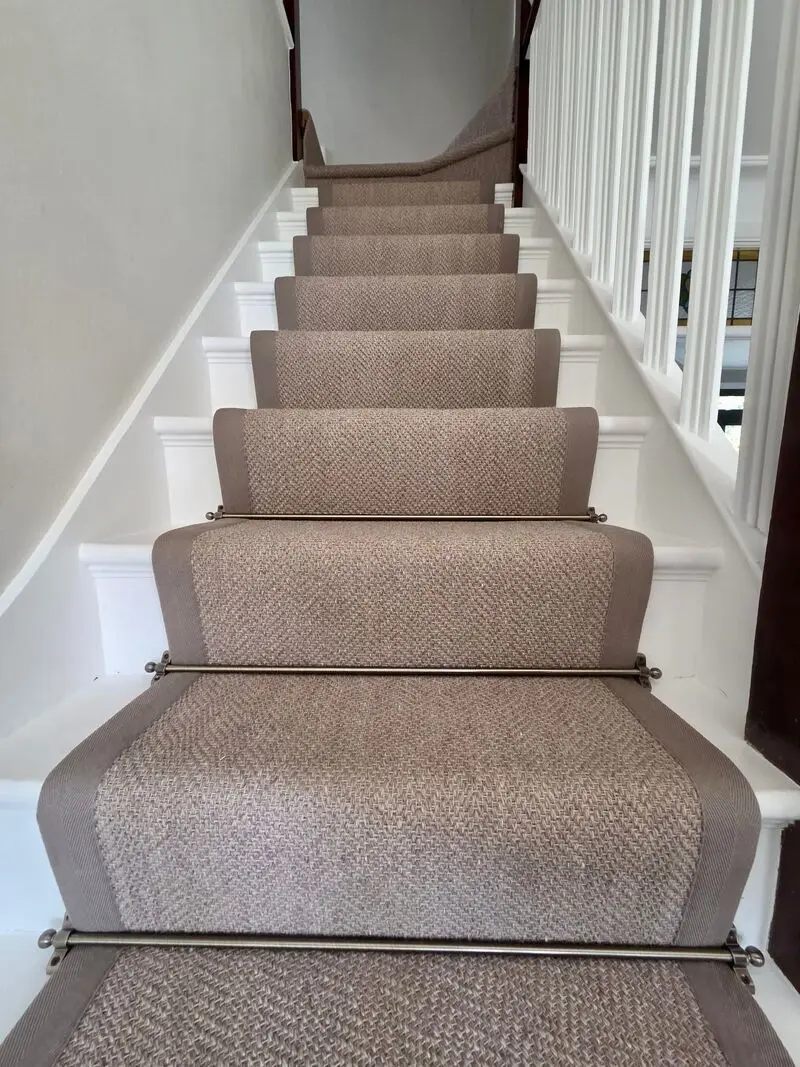 Fibre Flooring Classic Herringbone in Arbour with a Parma Powder taped edge and antique brass Jubilee rods, North London. See the job, Ref 13632
Step 5: Clear up and look it over
When the runner is down, the fitters take away all the rubbish and waste from the job. Then they go over the stairs with you. Walk up and down, look at the edges, check the rods. After your final inspection, they ask for the balance and sign your invoice to say it has been paid.
How you can help on the day
There is always some disruption when work goes on at home, and a little preparation keeps it short:
- Clear the stairs and landing. Shoes, baskets, bags and anything on the steps.
- Take pictures off the stair walls, so nothing gets knocked as materials go up and down.
- Arrange parking. A space near the door, or a permit if your road needs one.
- Keep pets and small children off the stairs while the fitters are working.
- Paint first. If you plan to repaint the stairs either side of the runner, do it beforehand and let it dry.
Can’t be home? With our key-holding service we let ourselves in, fit the runner, clear up and leave everything as we found it. It costs extra, and our post on new floors while you are on holiday explains how it works.
After the fitters leave
Like any new carpet, a runner may shed a little fluff at first. That is normal, and it lessens with time, so just vacuum it away. Our carpet care guide covers everyday vacuuming and what to do about spills. For the full checklist, see our page on what to expect at installation.
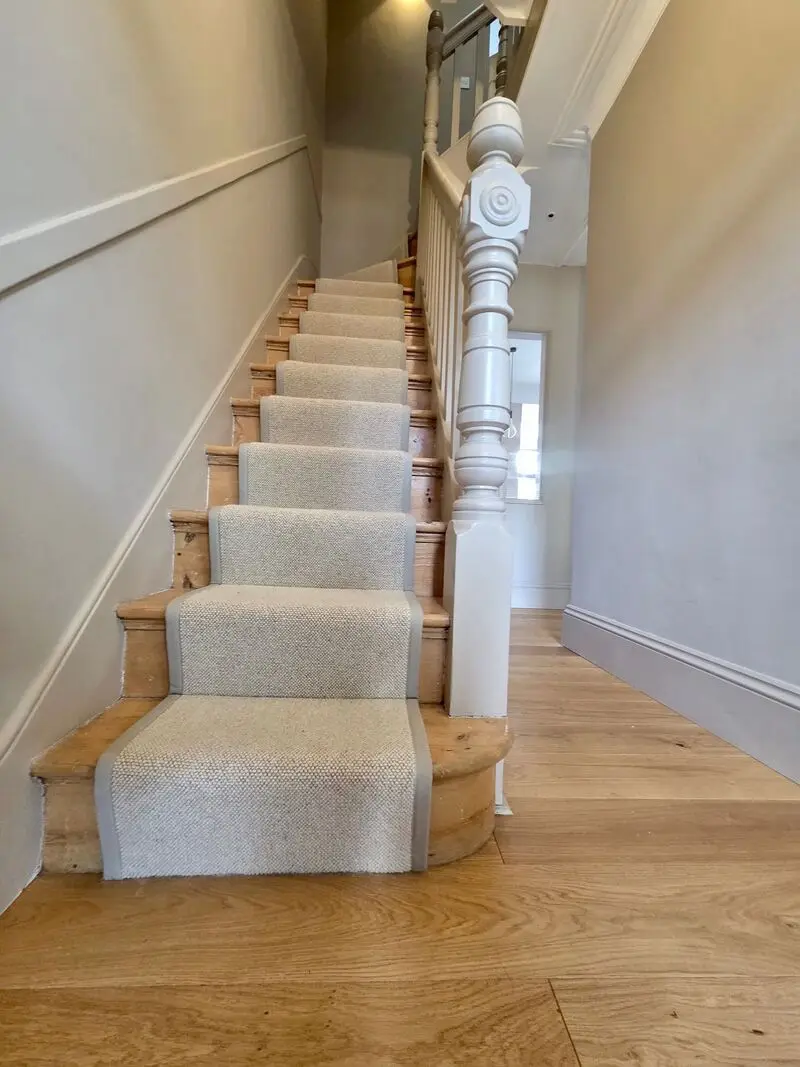
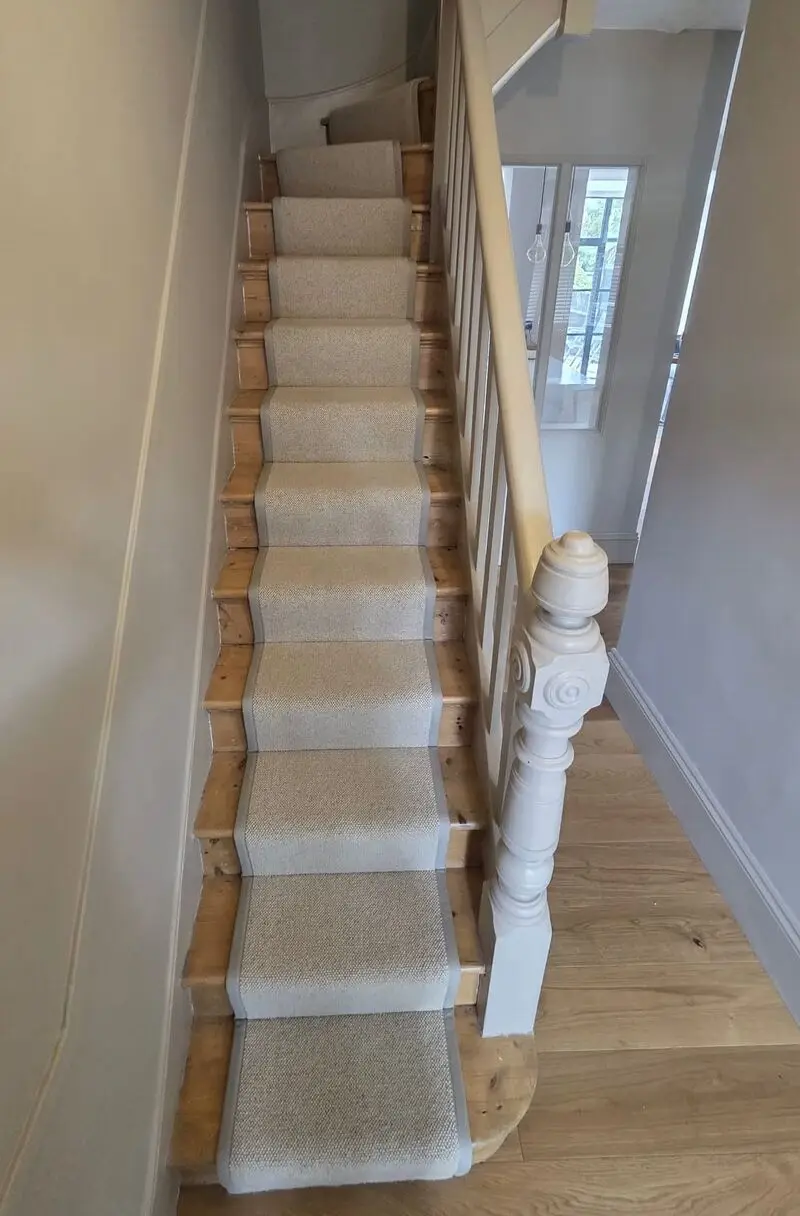 The finished Cormar Fairisle runner in Bush Hill Park, EN1, fitted over new gripper and underlay. See the job, Ref 13698
Ready to start?
Every runner starts with a free design consultation with Russell in our showroom at 774 Green Lanes, Winchmore Hill, N21, or a home visit with samples. Book a consultation or call us on 020 8360 1836.